


Plants in Bloom
February highlights
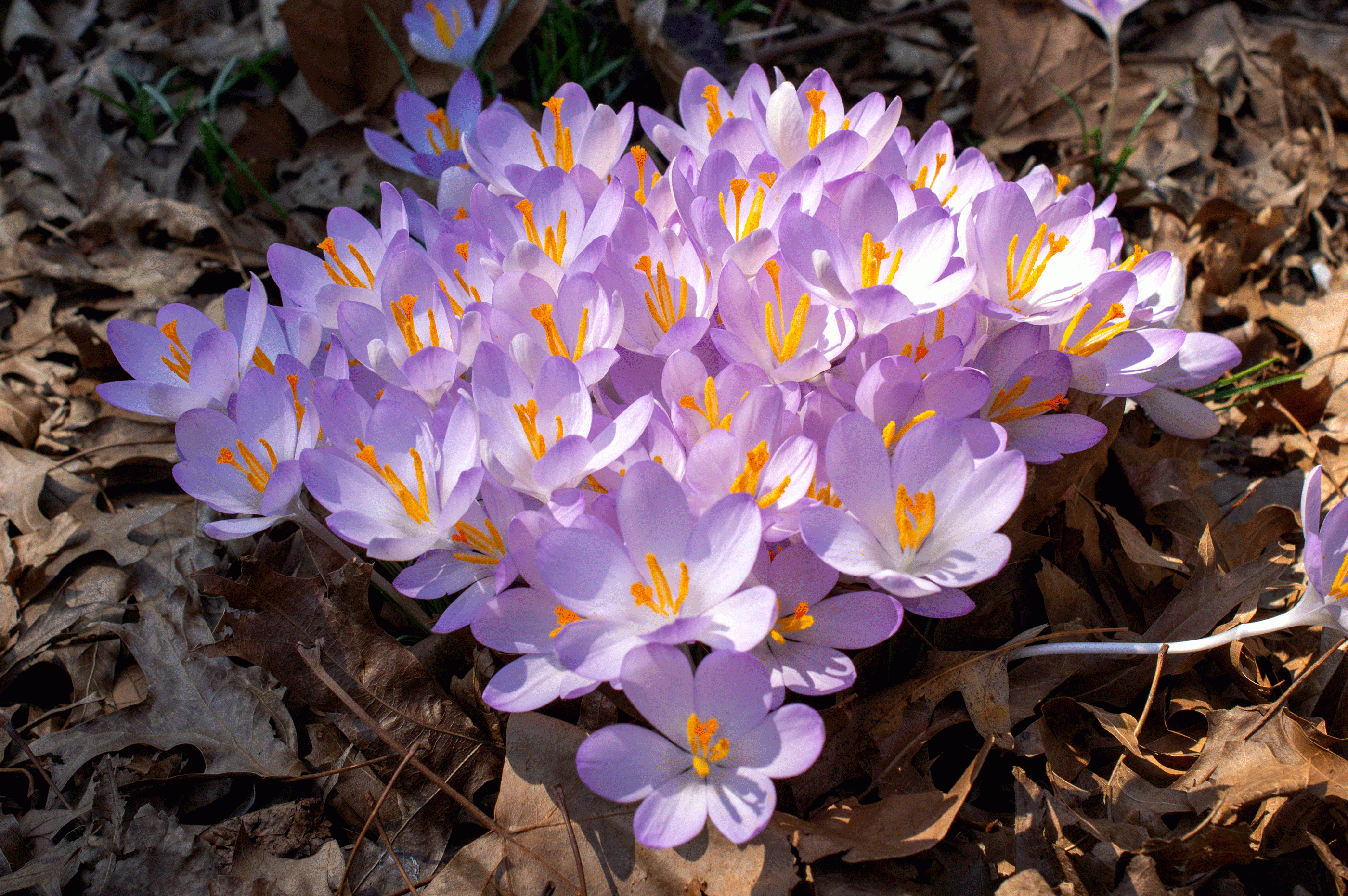
Crocus
Crocuses begin popping up in small numbers at at first and soon start to blanket large stretches of lawns and beds all over the Garden. They’re a welcome sign of spring and also a source of nectar and pollen for hungry bees and other pollinators.
Crocus (crocus) in the Plant Family Collection. Photo: Michael Stewart.
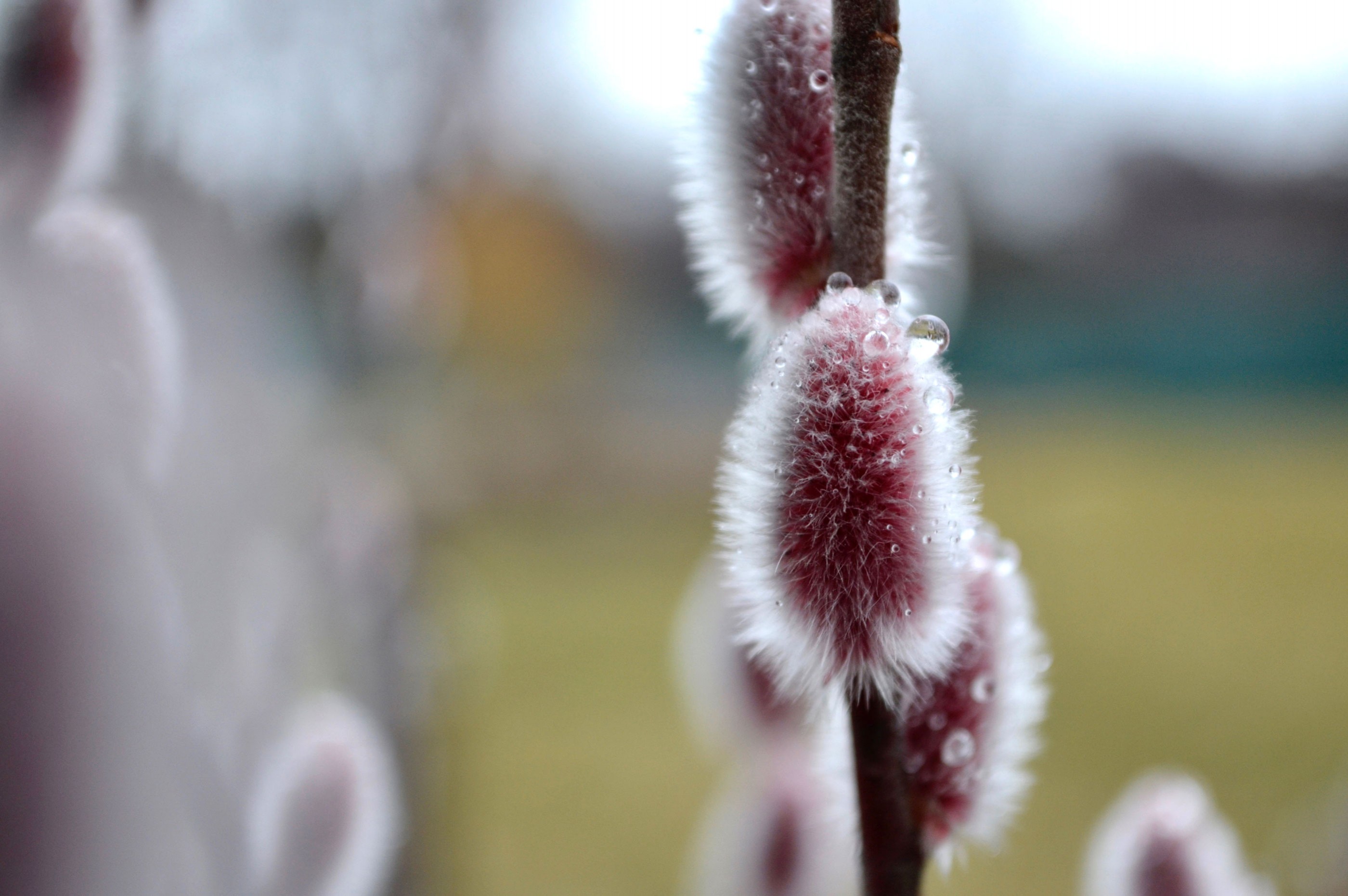
Japanese Pink Pussy Willow
Pussy willows are starting to pop, including this pretty pink cultivar in the Water Garden. The fuzzy nubs are the male catkin flowers just before they fully blossom. They’re a delightful harbinger of spring.
Salix gracilistyla ‘Mt. Aso’ (Japanese pink pussy willow) in the Water Garden. Photo: Blanca Begert.
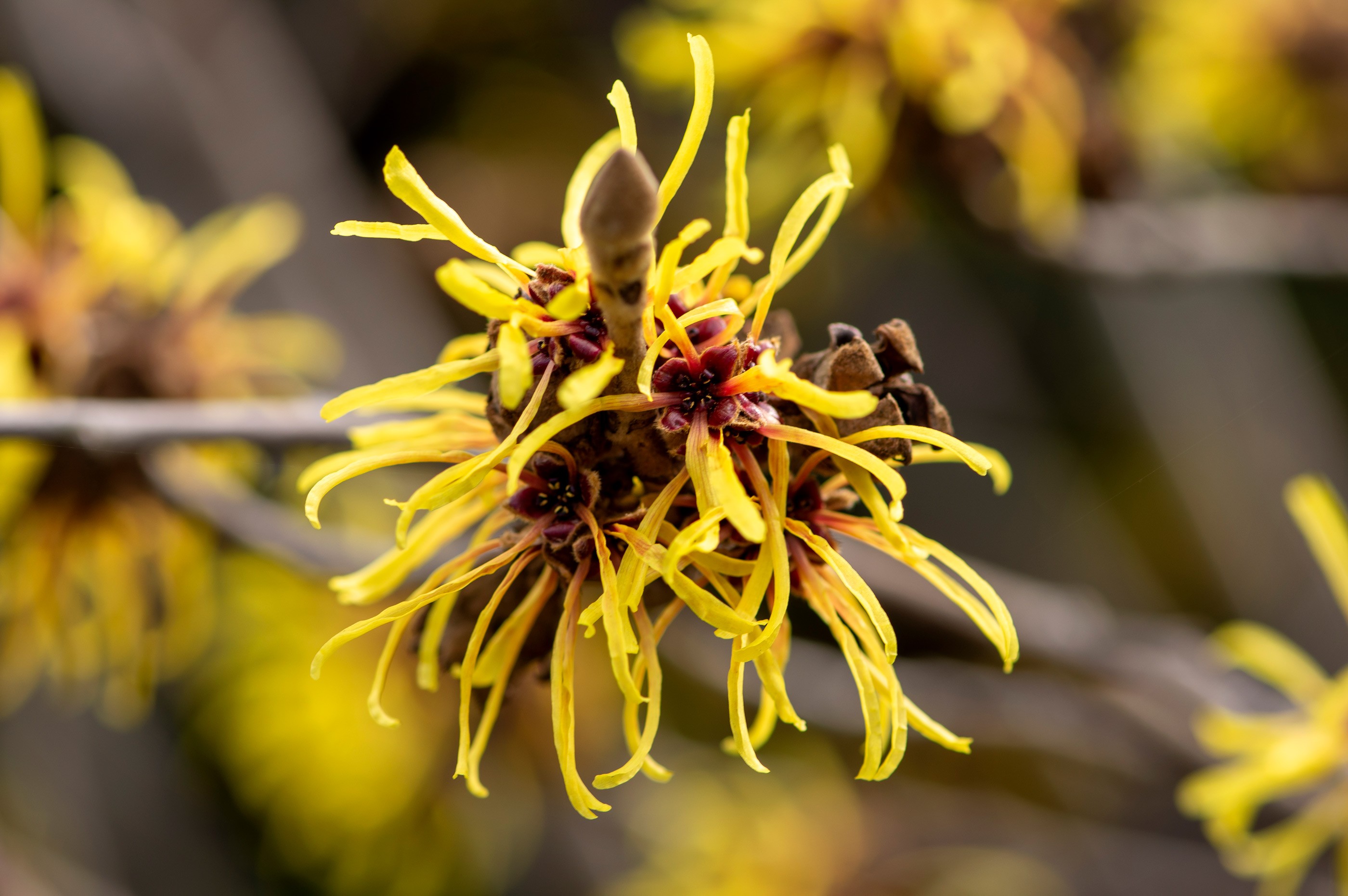
Witch-Hazel ‘Wisley Supreme’
Witch-hazel blooms in winter, usually during a warm spell, but the flowers persist after the temperature drops back down. The ribbonlike petals curl up temporarily, and as soon as the temperature rises, they unfurl again.
Hamamelis mollis ‘Wisley Supreme’ (witch-hazel) in the Plant Family Collection. Photo: Michael Stewart.
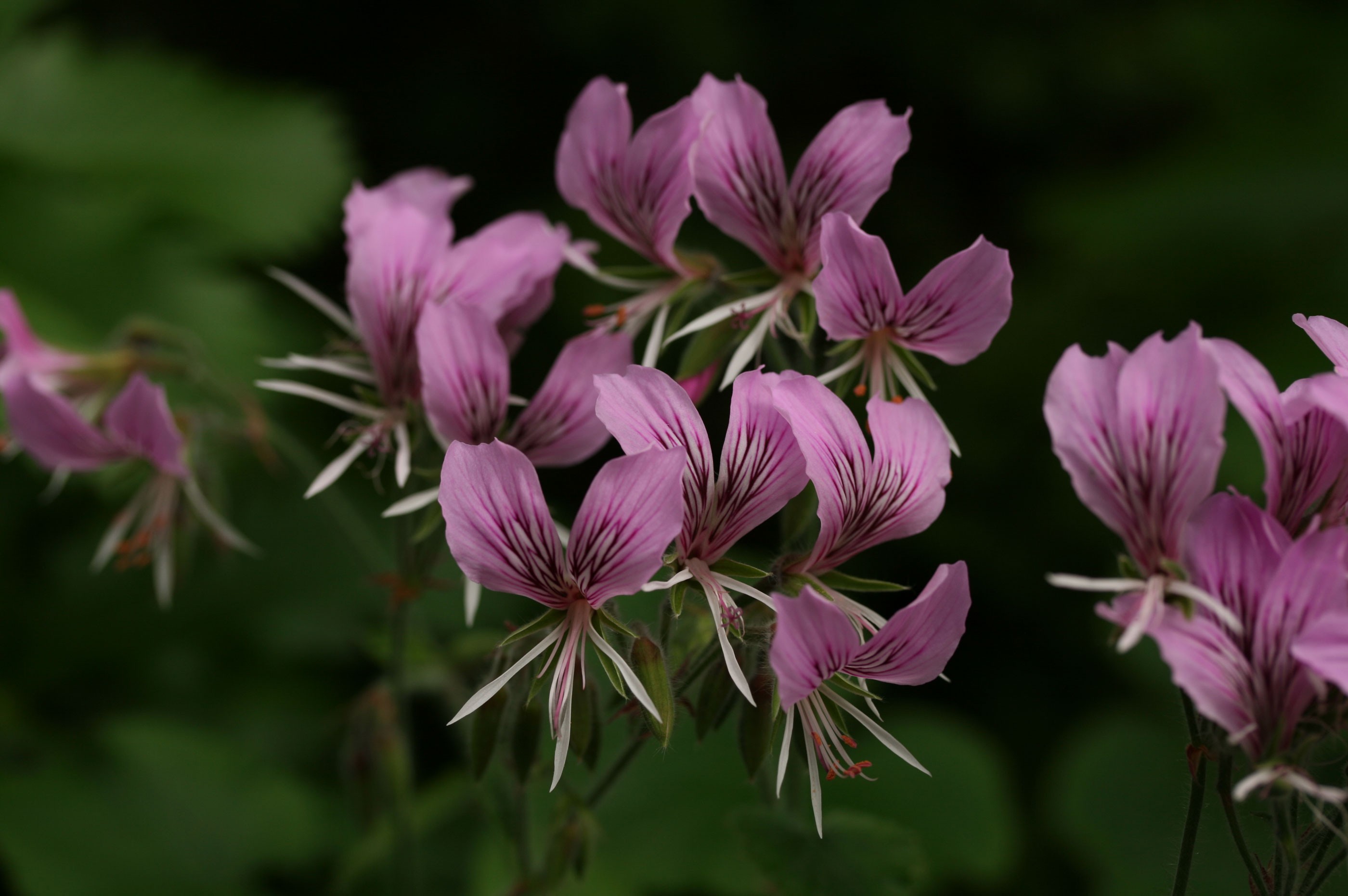
Heart-Leaved Pelargonium
The heart-leaved pelargonium, a perennial with lightly-scented pink flowers, is native to a highly biodiverse shrubland region of South Africa.
Pelargonium cordifolium (heart-leaved pelargonium) in the Warm Temperate Pavilion. Photo: Uli Lorimer.
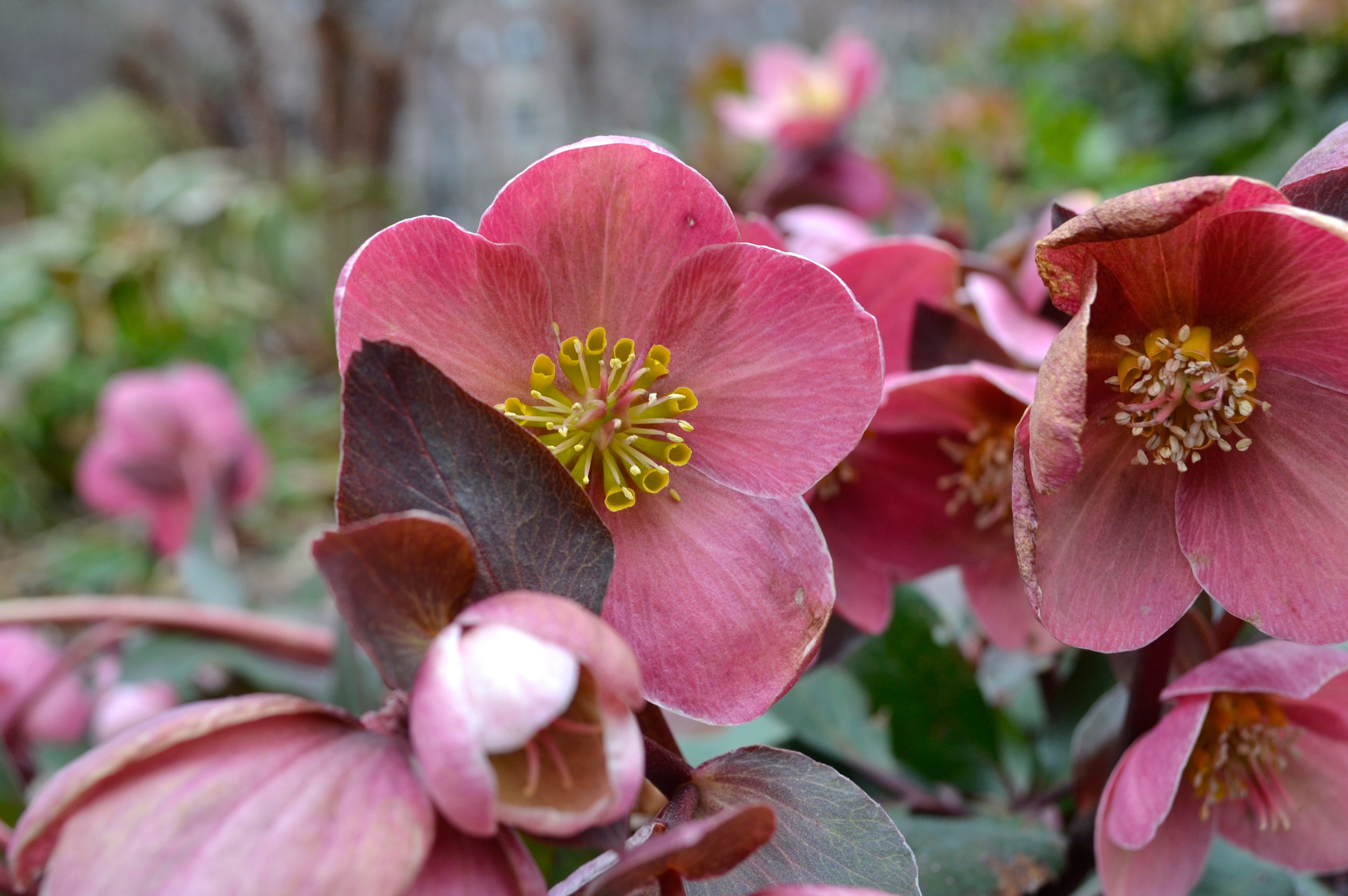
Hellebore
Hellebores bloom in winter and early spring, when few other plants do. Helle- comes from the Greek helein: “to injure”; -bore comes from the Greek word for food. In other words: Don’t eat it! All parts of this plant are toxic if ingested.
Helleborus sp. (hellebore) in the Osborne Garden. Photo: Blanca Begert.

Dawn Arrowwood
In early spring, clusters of fragrant, light pink blossoms open from dark pink buds along the bare branches of this deciduous shrub.
Viburnum × bodnantense ‘Dawn’ (dawn arrowwood) in the Plant Family Collection. Photo: Michael Stewart.

Ozark Witch-Hazel
Ozark witch-hazel appears along streams and at the bases of rocky hillsides in the Ozark highlands of Missouri, as well as in parts of Arkansas and Oklahoma.
Hamamelis vernalis (Ozark witch-hazel) in the Discovery Garden. Photo: Michael Stewart.
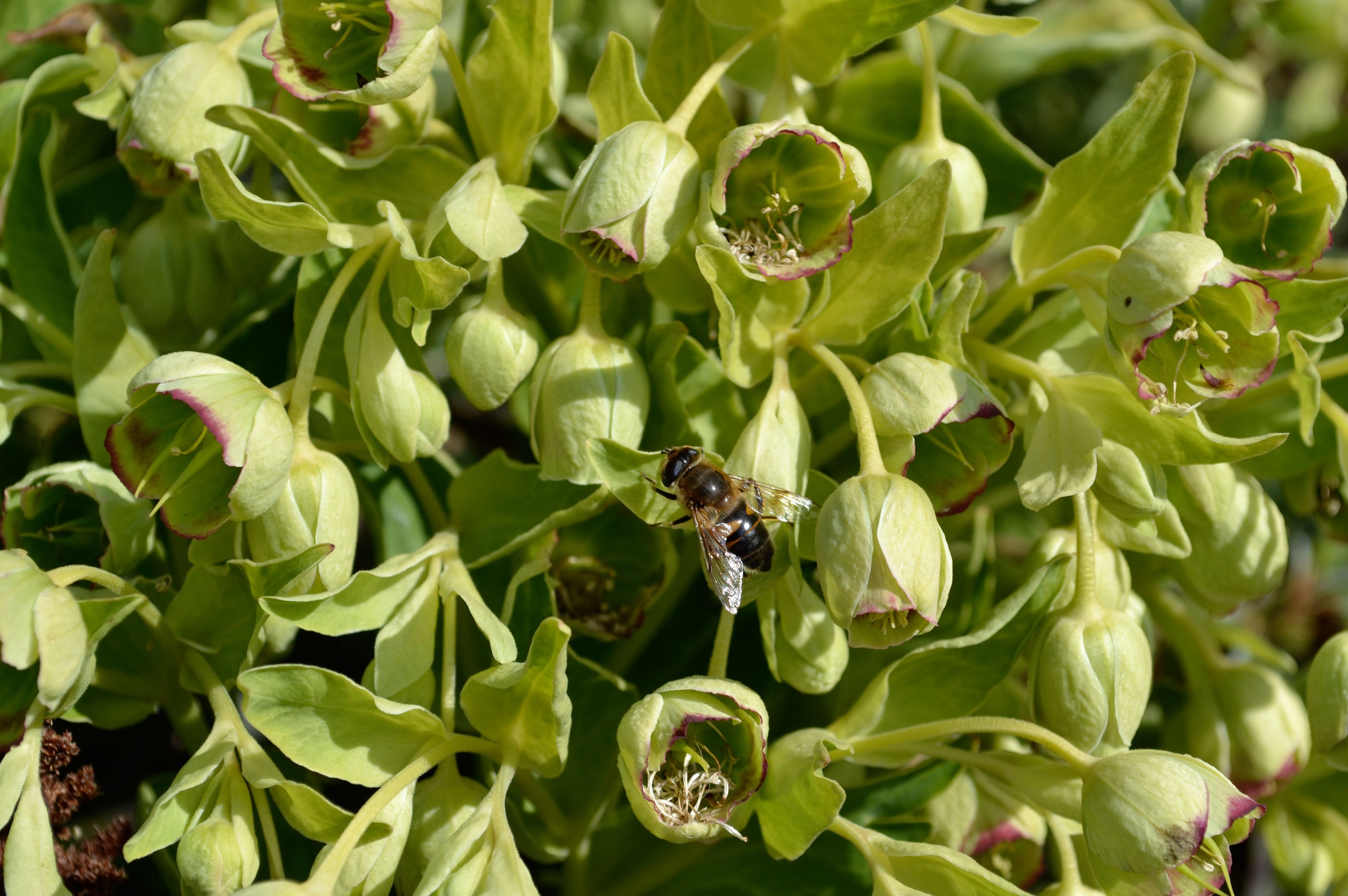
Stinking Hellebore
The stinking hellebore does, indeed, stink—but only if you crush its leaves. Look closely, and you‘ll notice a delicate line of purple along the edges of its pale green flowers.
Helleborus foetidus (stinking hellebore) in the Perennial Border. Photo: Elizabeth Peters.
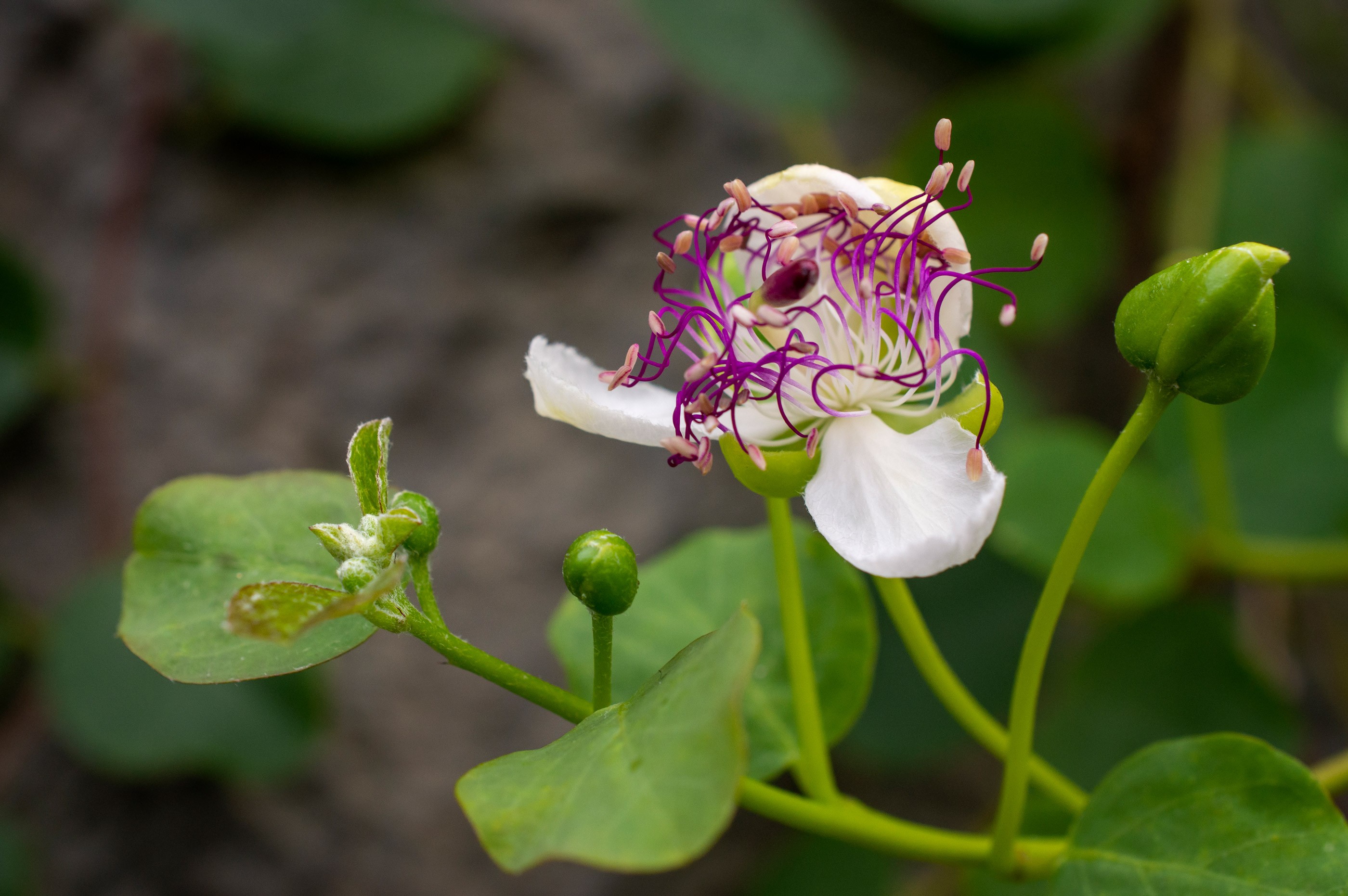
Caper Bush
Capers—the immature green buds of this Mediterranean shrub—are a delicious culinary staple. Left unharvested, the buds transform into blooms that hold a cluster of long purple stamens.
Capparis spinosa var. inermis (caper bush) in the Warm Temperate Pavilion. Photo: Michael Stewart.
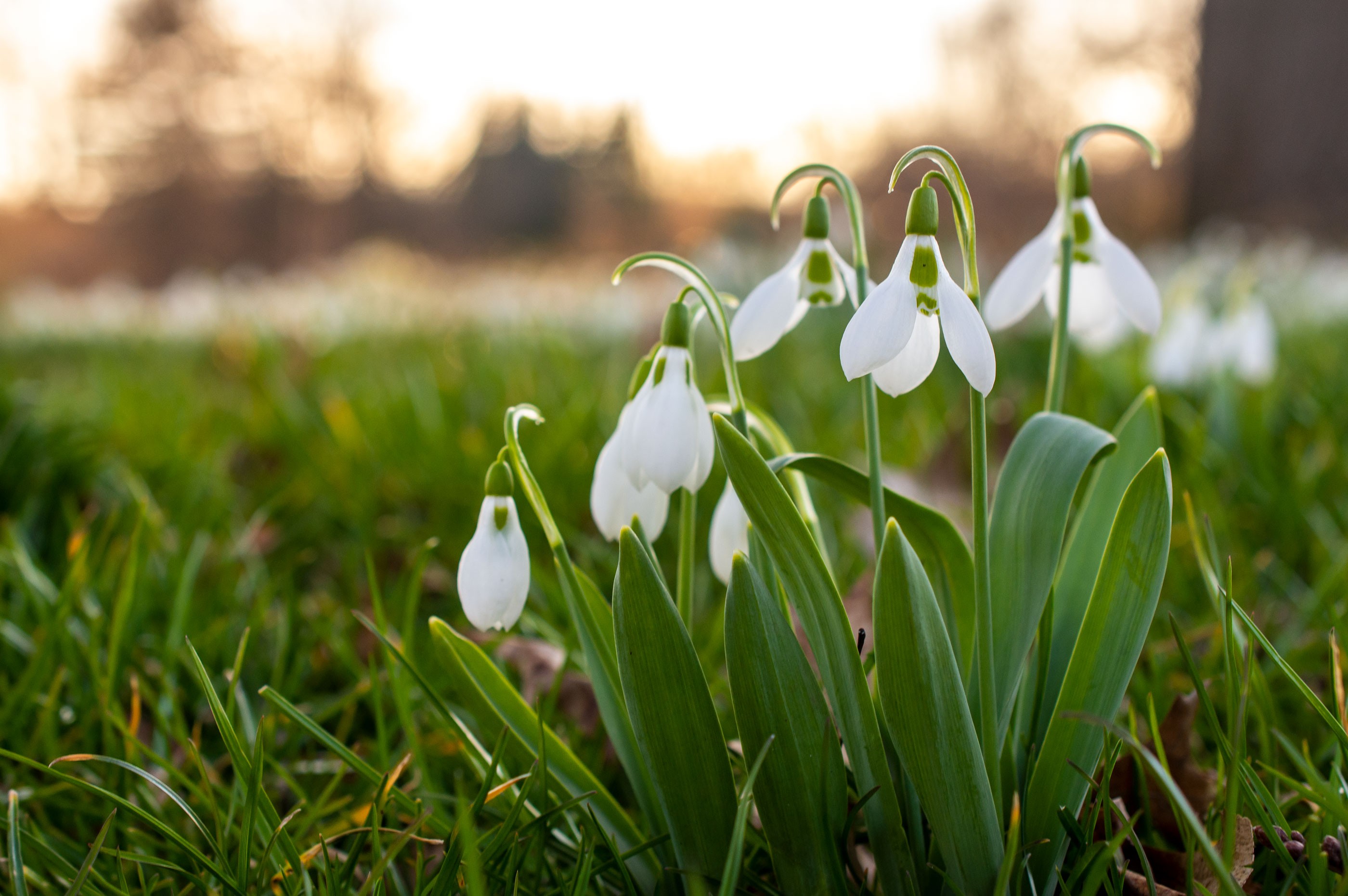
Snowdrop
Snowdrops are usually the first bulbs to bloom and a sign of more to come. As the snow melts, these white blossoms appear, blanketing the Garden and other parks and gardens around Brooklyn.
Galanthus nivalis (snowdrop) in the Plant Family Collection. Photo: Michael Stewart.
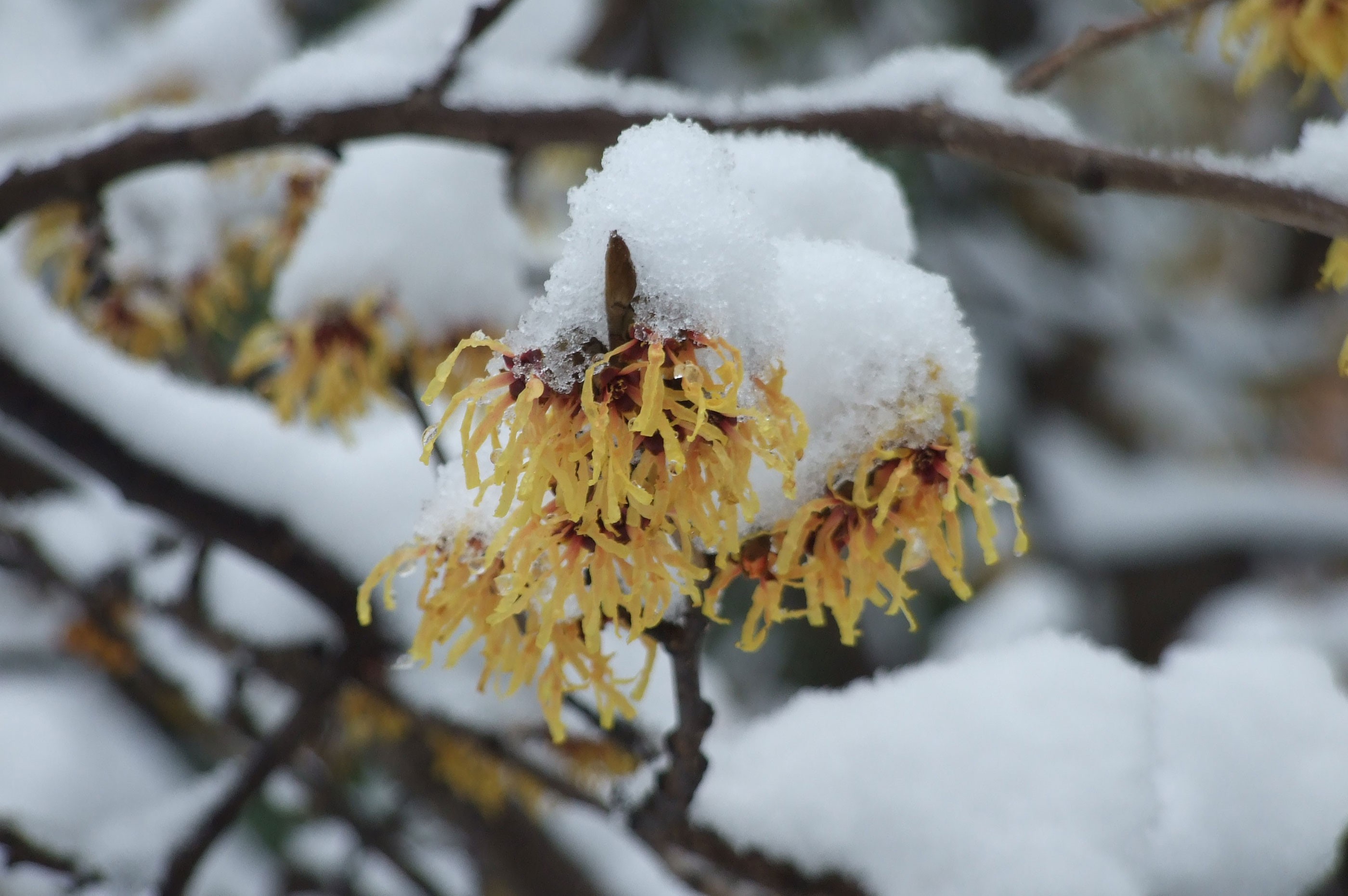
American Witch-Hazel
This native shrub grows throughout the eastern half of North America and is an important host plant to 68 species of butterflies and moths. It takes time to flower—around six years—but growers are rewarded by a fragrant, creamy-yellow inflorescence and fruit for the birds.
Hamamelis virginiana (witch-hazel) in the Plant Family Collection. Photo: Dave Allen.
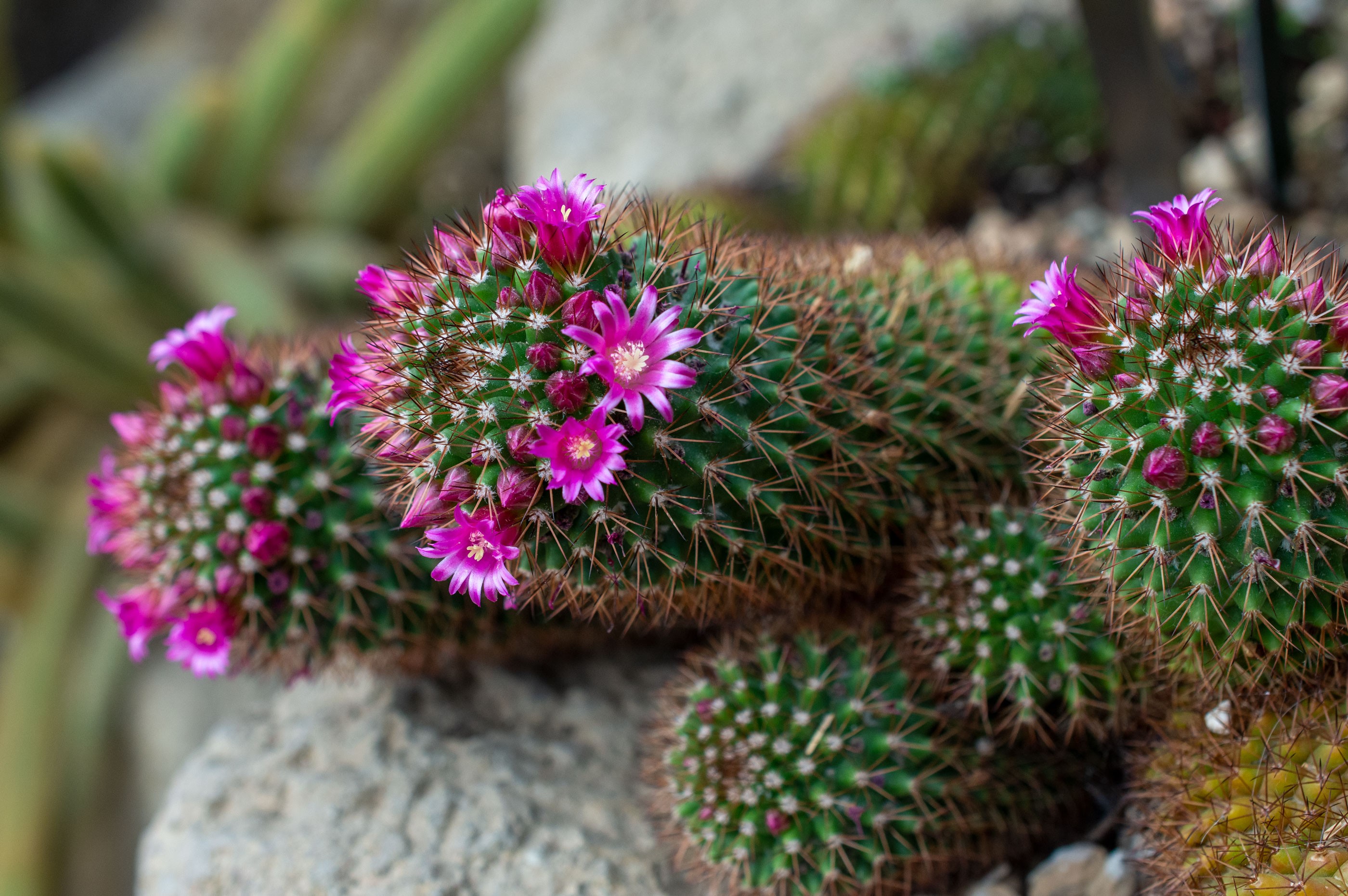
Mexican Pincushion
This perennial cactus is covered in spines and features small, delicate pink flowers.
Mammillaria magnimamma (Mexican pincushion) in the Desert Pavilion. Photo: Michael Stewart.
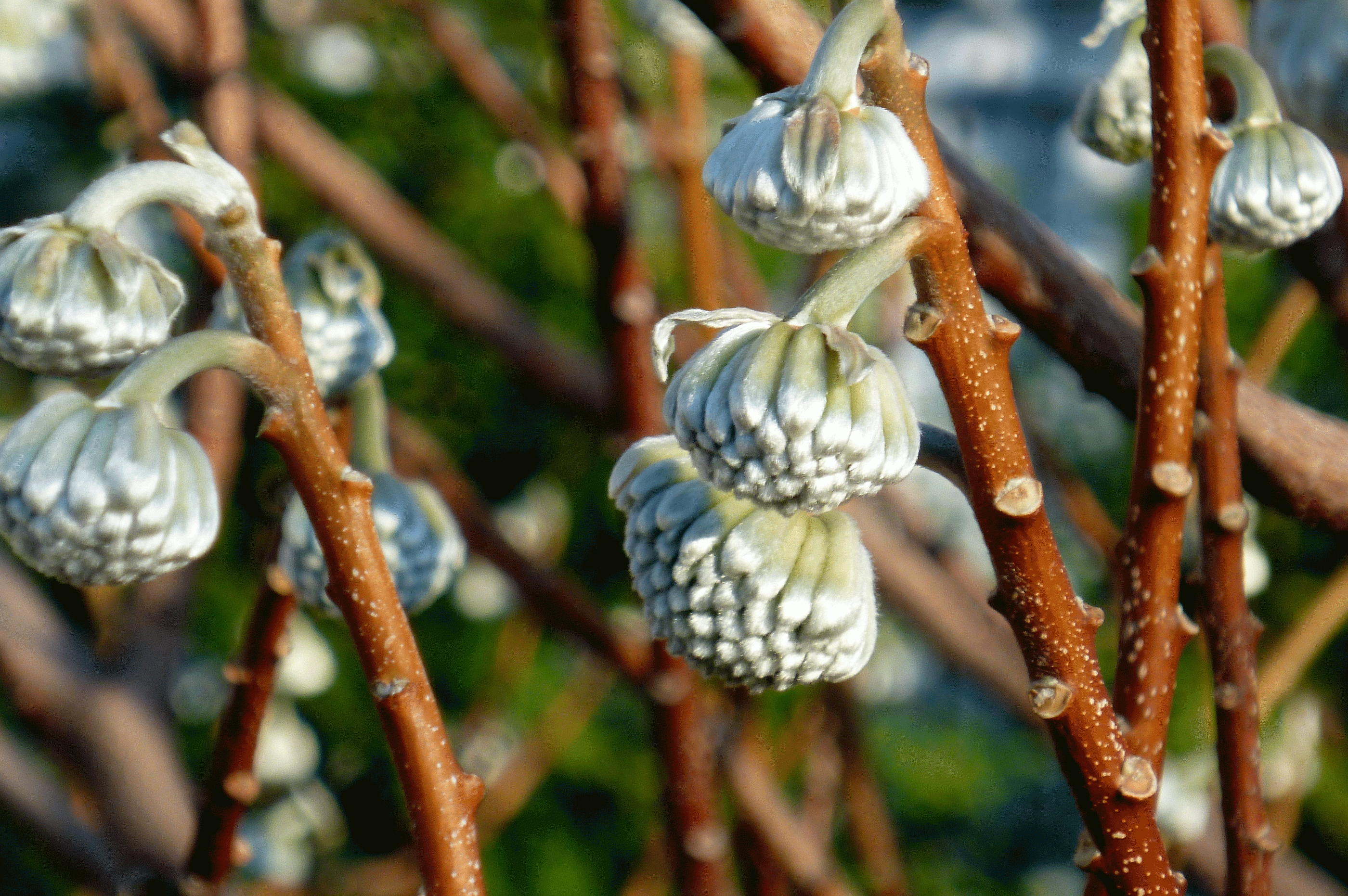
Paperbush Buds
This shrub’s downy, golden-gray buds hang in tight clusters from its bare branches. The buds are protected by fine hairs that give them a shimmery quality so they sparkle in the winter sun.
Edgeworthia chrysantha (paperbush) in the Fragrance Garden. Photo: Elizabeth Peters.
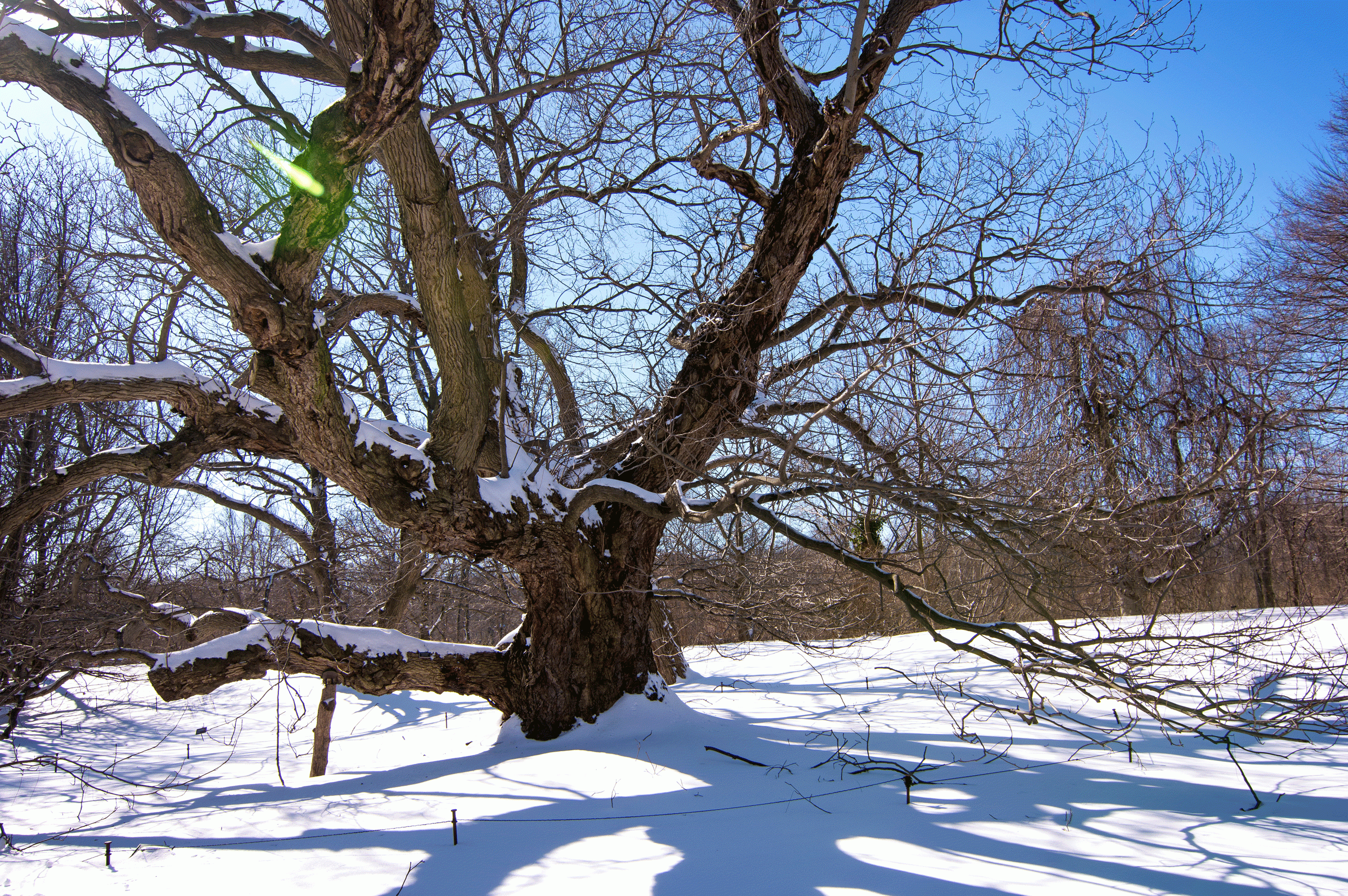
Caucasian Wingnut
The century-old Caucasian wingnut is one of the most beloved trees at the Garden. It is 60 feet across—as wide as it is tall—and its trunk is nine feet feet in diameter. Its delicate branches have been carefully trimmed and supported by the Garden’s staff over the years.
Pterocarya fraxinifolia (Caucasian wingnut) in the Plant Family Collection. Photo: Michael Stewart.
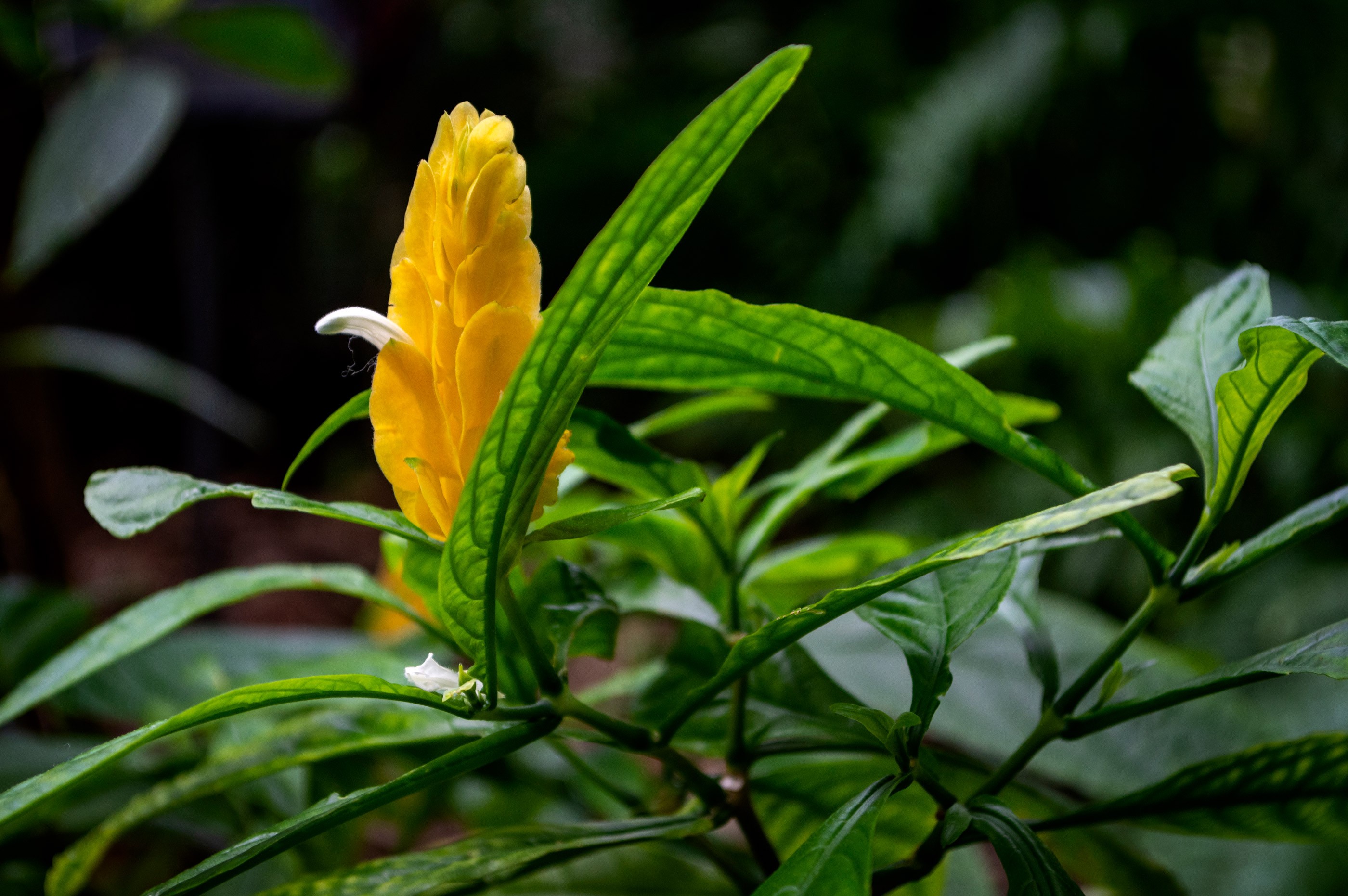
Golden Shrimp Plant
The gently curved flower clusters of Pachystachys lutea resemble a shrimp (if you squint a bit).
Pachystachys lutea (golden shrimp plant) in the Tropical Pavilion. Photo: Michael Stewart.
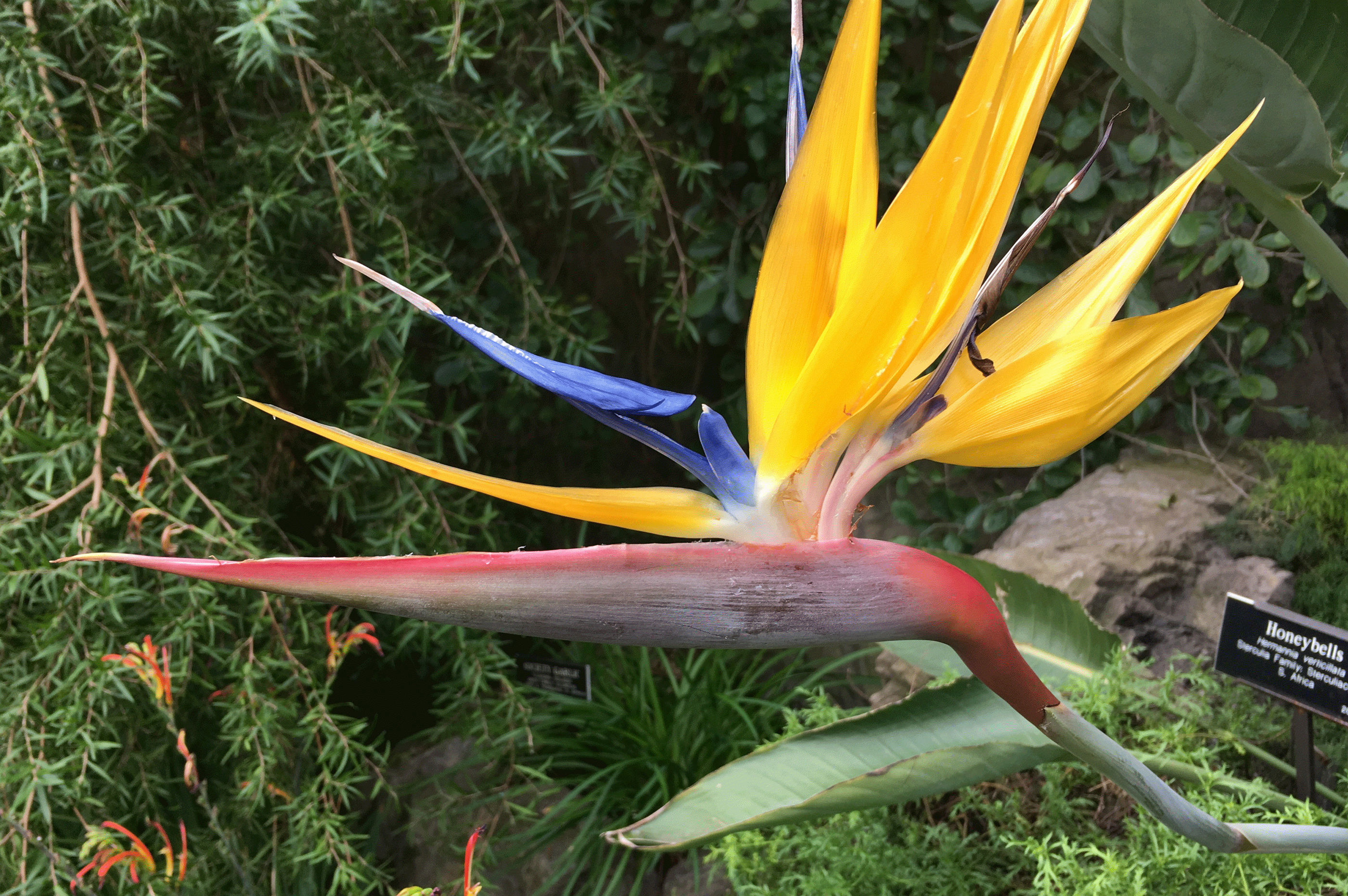
Bird-of-Paradise
This plant, in bloom in the Warm Temperate Pavilion, was grown at BBG from seed provided by Kirstenbosch National Botanic Garden in Cape Town, South Africa. The cultivar is prized for its distinctive yellow sepals and was named for Nelson Mandela.
Strelitzia reginae ‘Mandela’s Gold’ (bird-of-paradise cultivar) in the Warm Temperate Pavilion. Photo: Sarah Schmidt.
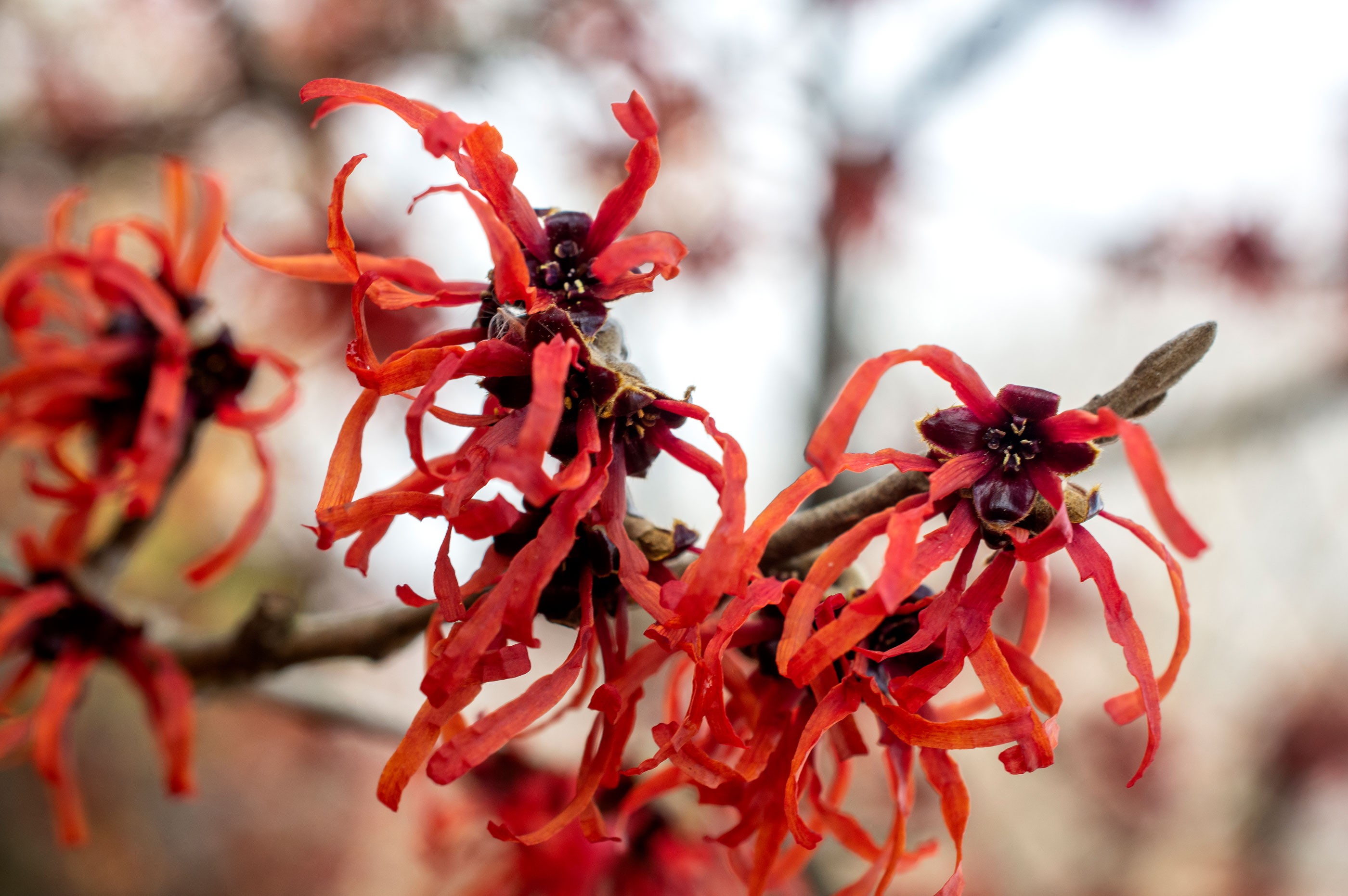
Witch-Hazel ‘Diane’
Witch-hazel blooms in winter, usually during a warm spell, but the flowers persist after the temperature drops back down. The ribbonlike petals curl up temporarily, and as soon as the temperature rises, they unfurl again.
Hamamelis × intermedia ‘Diane’ (witch-hazel ‘Diane’) in the Rock Garden. Photo: Michael Stewart.
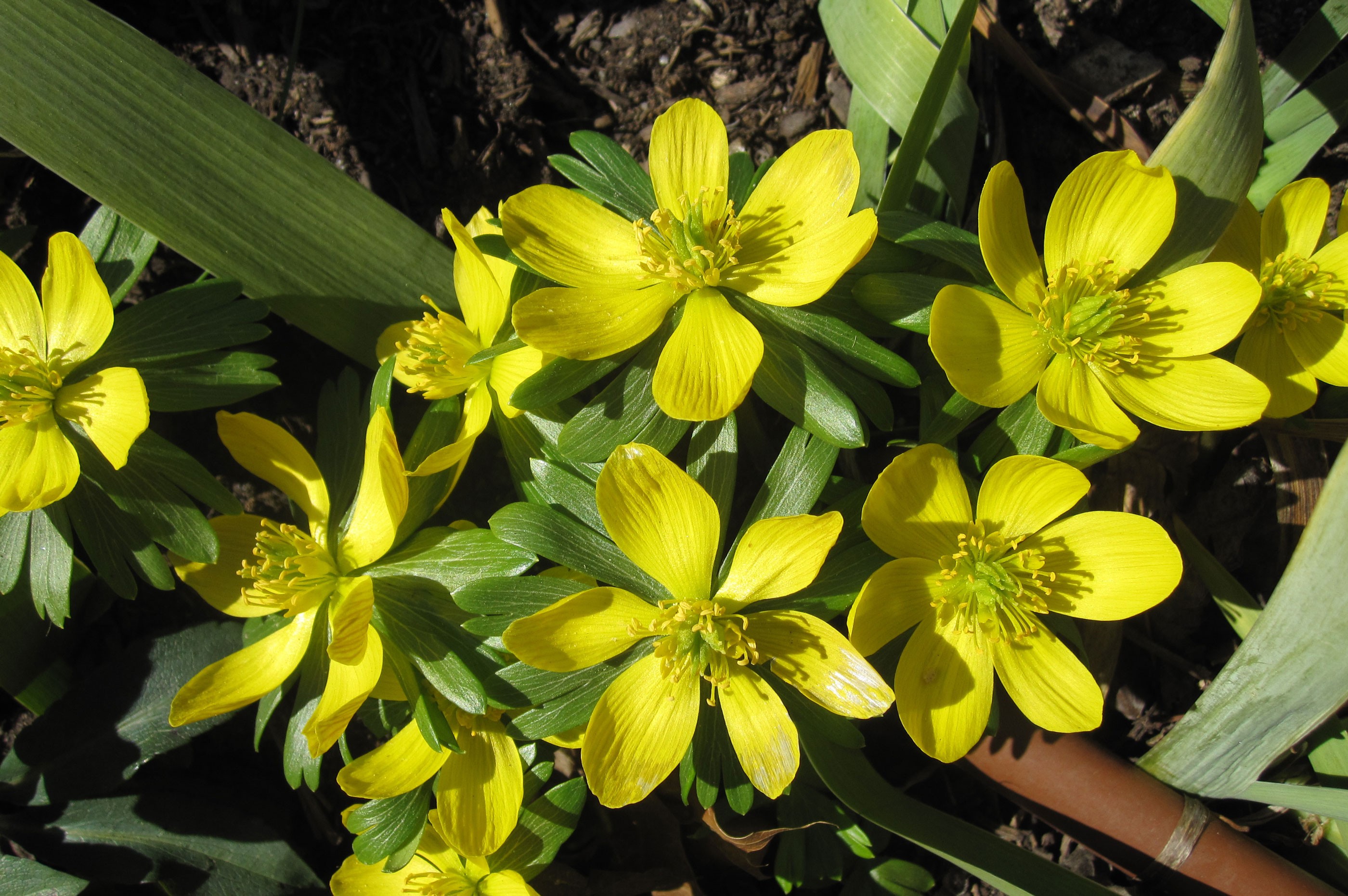
Winter Aconite
The small, delicate cups of Eranthis hyemalis are one of the earliest blooms of the year. Native to Europe, this perennial tuber is often planted near the base of a deciduous tree.
Eranthis hyemalis (winter aconite) in the Shakespeare Garden. Photo: Sarah Schmidt.

Australian Rosemary
Native to the east coast of Australia, this fragrant shrub is drought and salt-tolerant.
Westringia fruticosa (Australian rosemary) in the Warm Temperate Pavilion. Photo: Michael Stewart.

Japanese Apricot
Prunus mume produces beautiful, delicate, fragrant flowers over many weeks in winter just when we need them most. Because of its tiny flowers, the species has long been a favorite with bonsai practitioners; this tree in the Bonsai Museum is over 20 years old.
Prunus mume ‘Bonita’ (Japanese apricot ) in the Bonsai Museum. Photo: Michael Stewart.
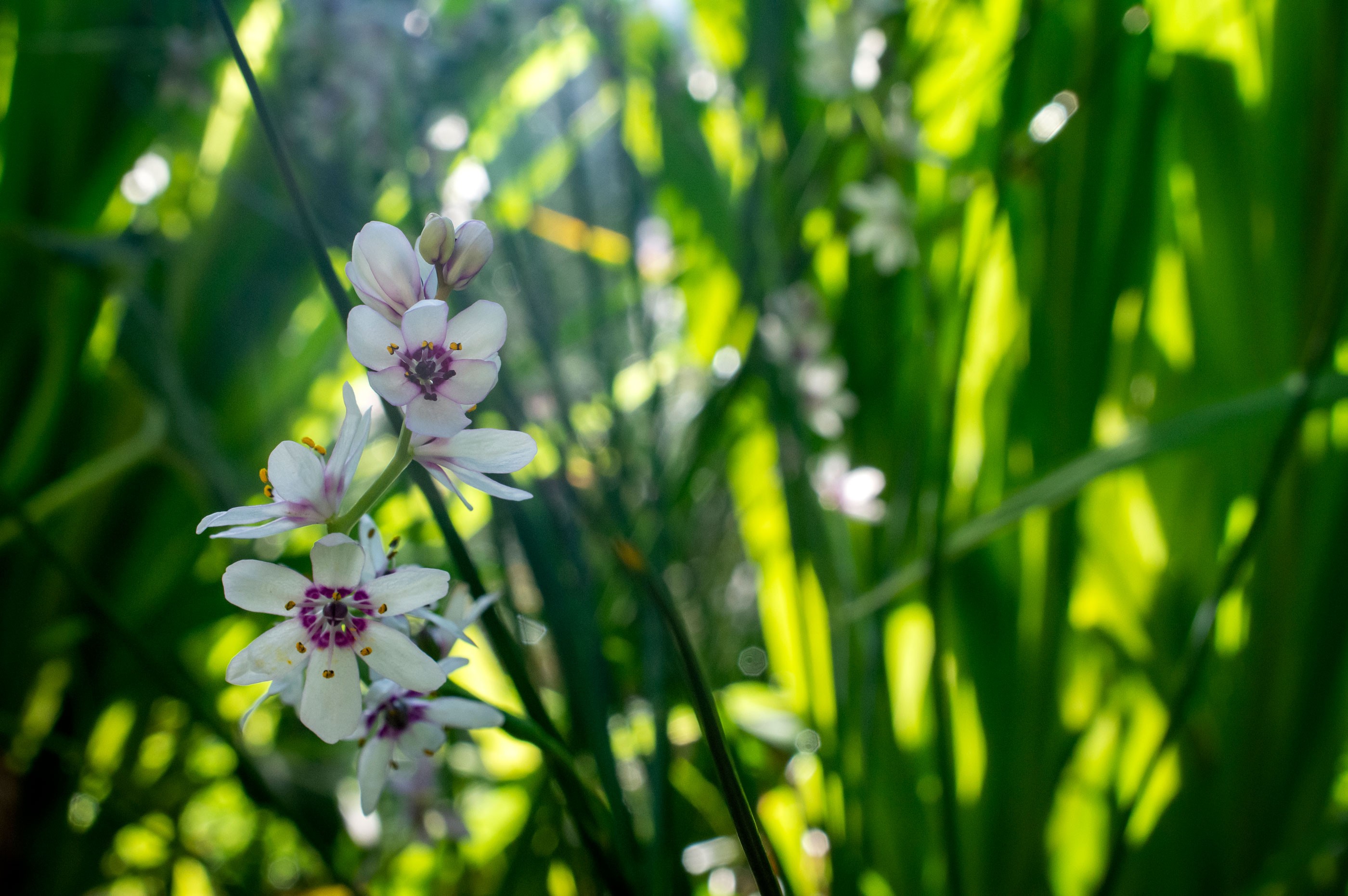
Wurmbea Stricta
This South African bulb features fanciful pink-and-white flowers. In its native range, Wurmbea stricta is found in the clay soils of swamps, roadside ditches, and other seasonally wet areas.
Wurmbea stricta (wurmbea stricta) in the Warm Temperate Pavilion. Photo: Michael Stewart.
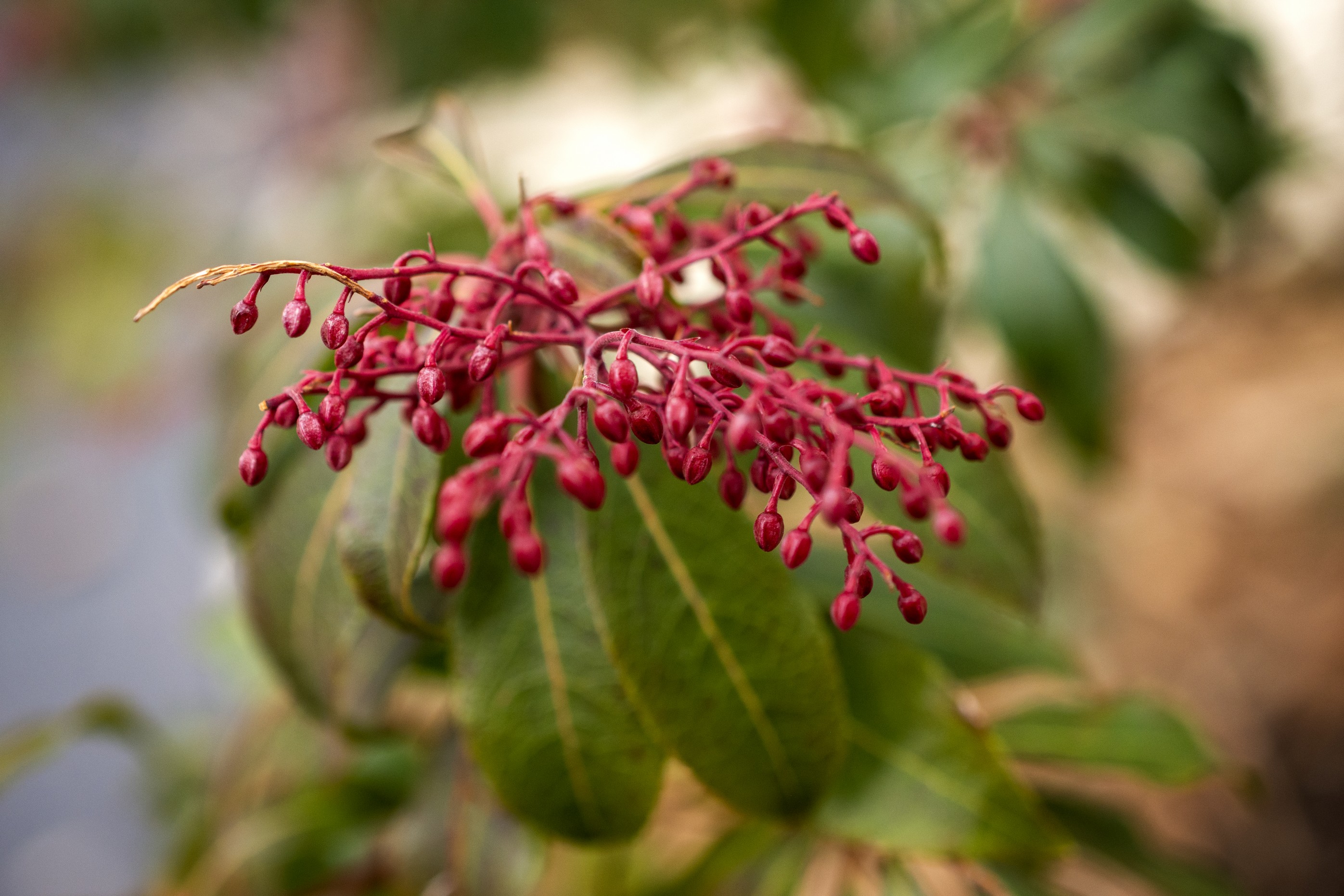
Japanese Pieris Buds
These buds are so rich in color that people often mistake them for berries. They droop gracefully in long clusters that contrast with the dark green evergreen foliage.
Pieris japonica ‘Dorothy Wyckoff’ (Japanese pieris cultivar) in the Japanese Hill-and-Pond Garden. Photo: Michael Stewart.
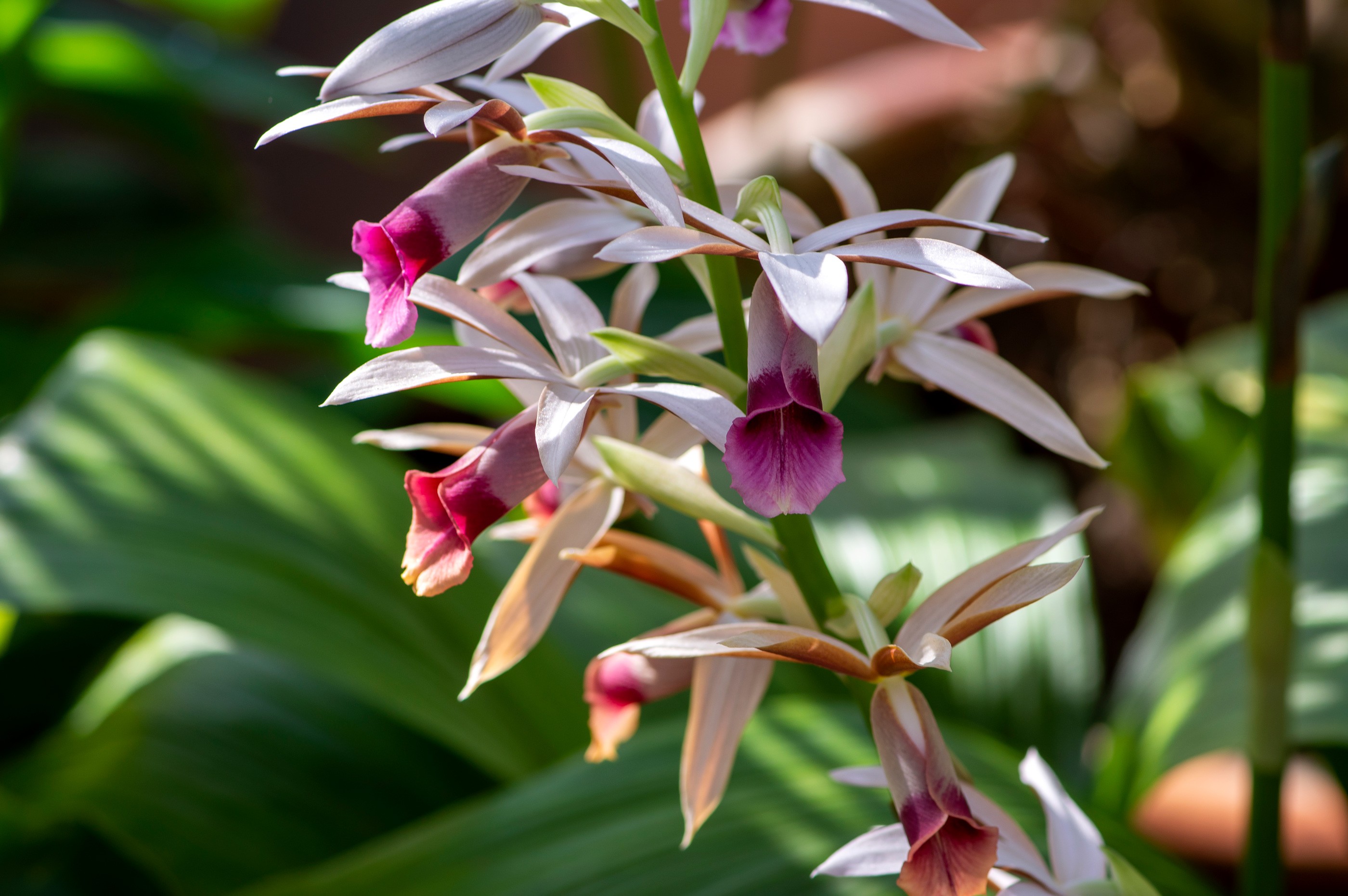
Nun Orchid
Phaius tankervilleae (nun orchid) in the Entry House. Photo: Michael Stewart.

Watsonia
Watsonia borbonica subsp. borbonica (watsonia) in the Warm Temperate Pavilion. Photo: Michael Stewart.
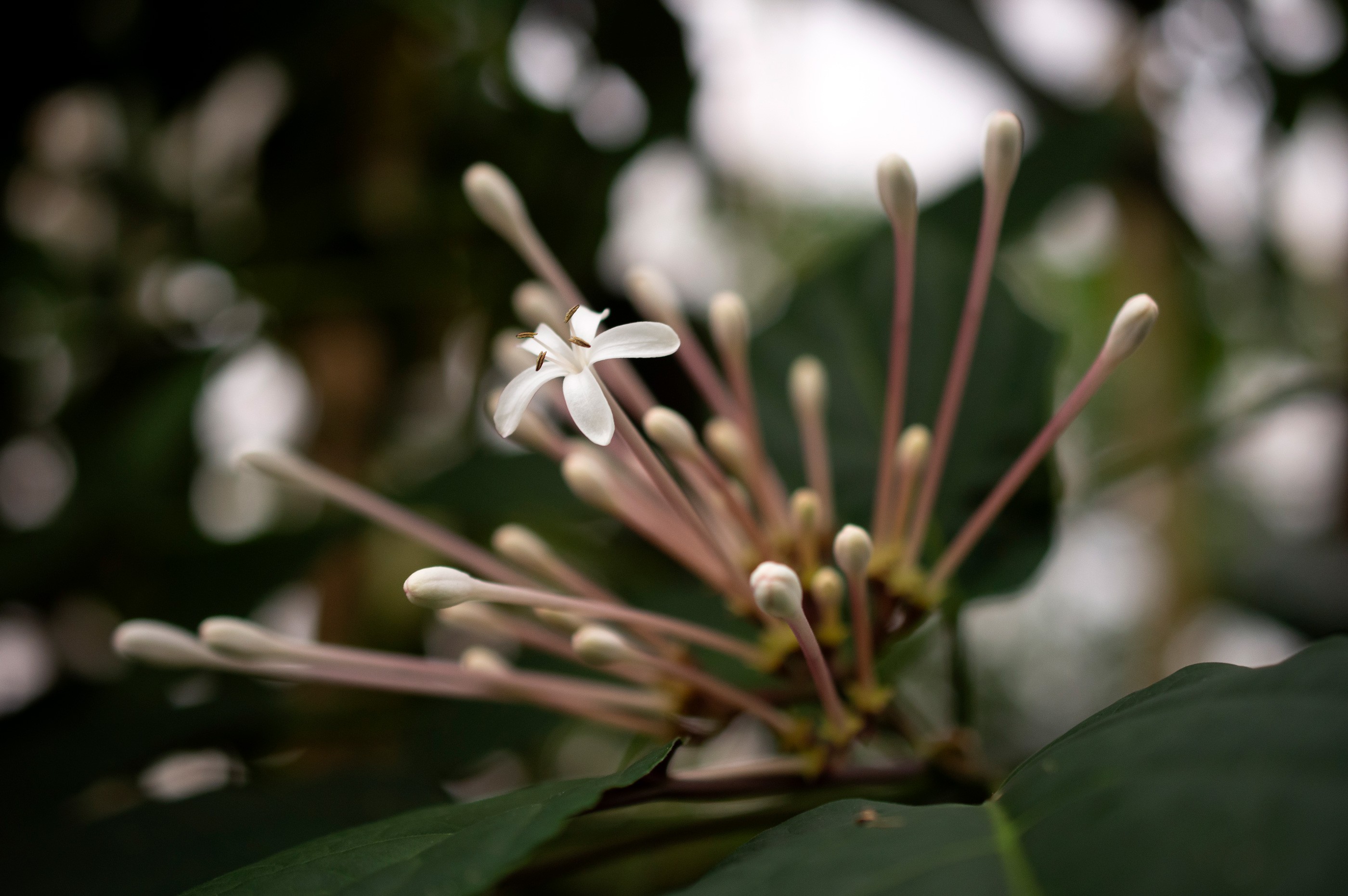
Starburst
The starburst clerodendrum, native to New Guinea and the Philippines, gets its name from the delicate white and pink blooms that fan out in a burst of welcome color.
Clerodendrum quadriloculare (starburst) in the Tropical Pavilion. Photo: Michael Stewart.
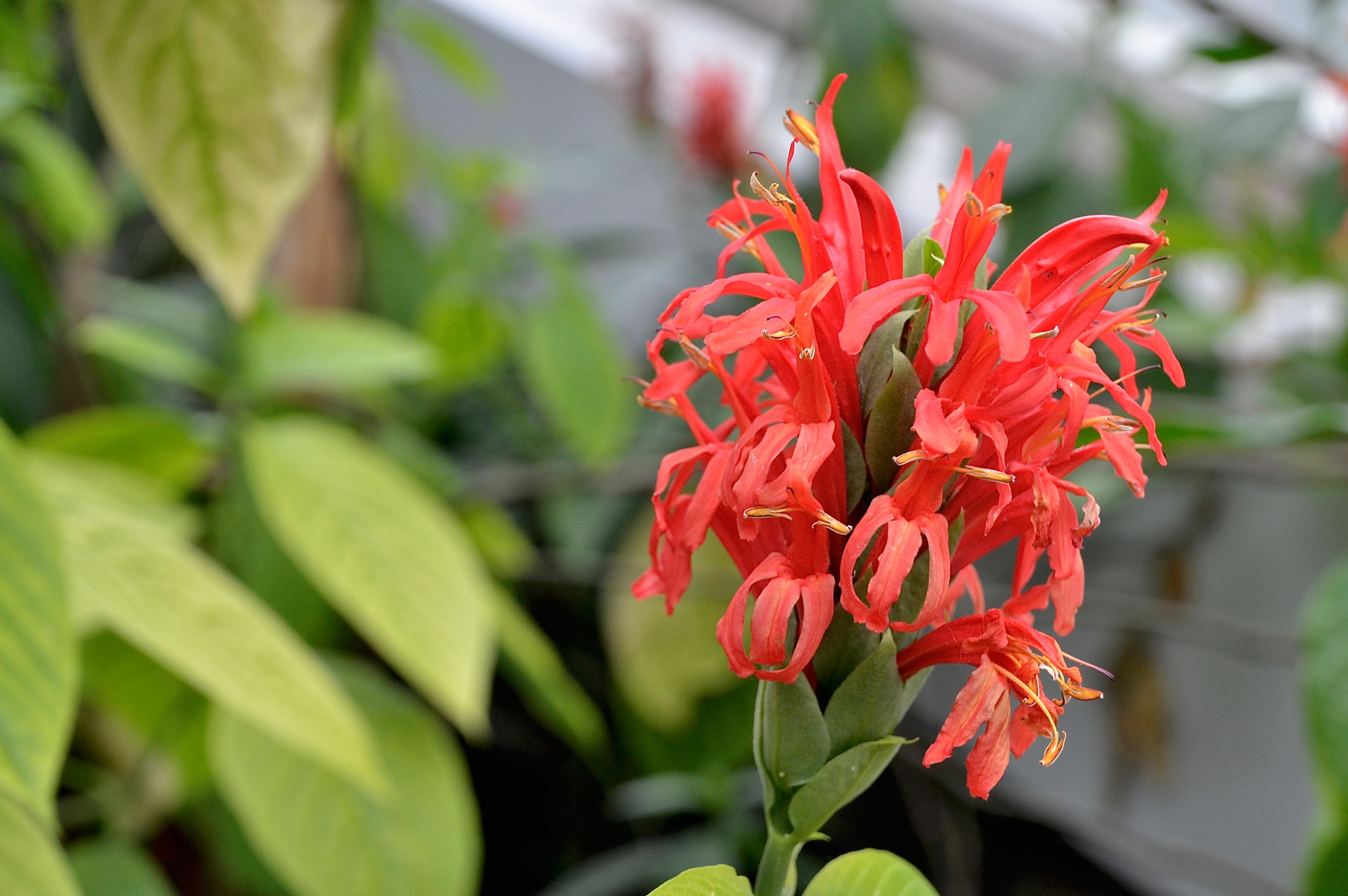
Cardinal’s Guard
Native to parts of South America, including French Guiana, Brazil, and Peru, this evergreen shrub blooms throughout the year in the Tropical Pavilion.
Pachystachys coccinea (cardinal’s guard) in the Tropical Pavilion. Photo: Blanca Begert.
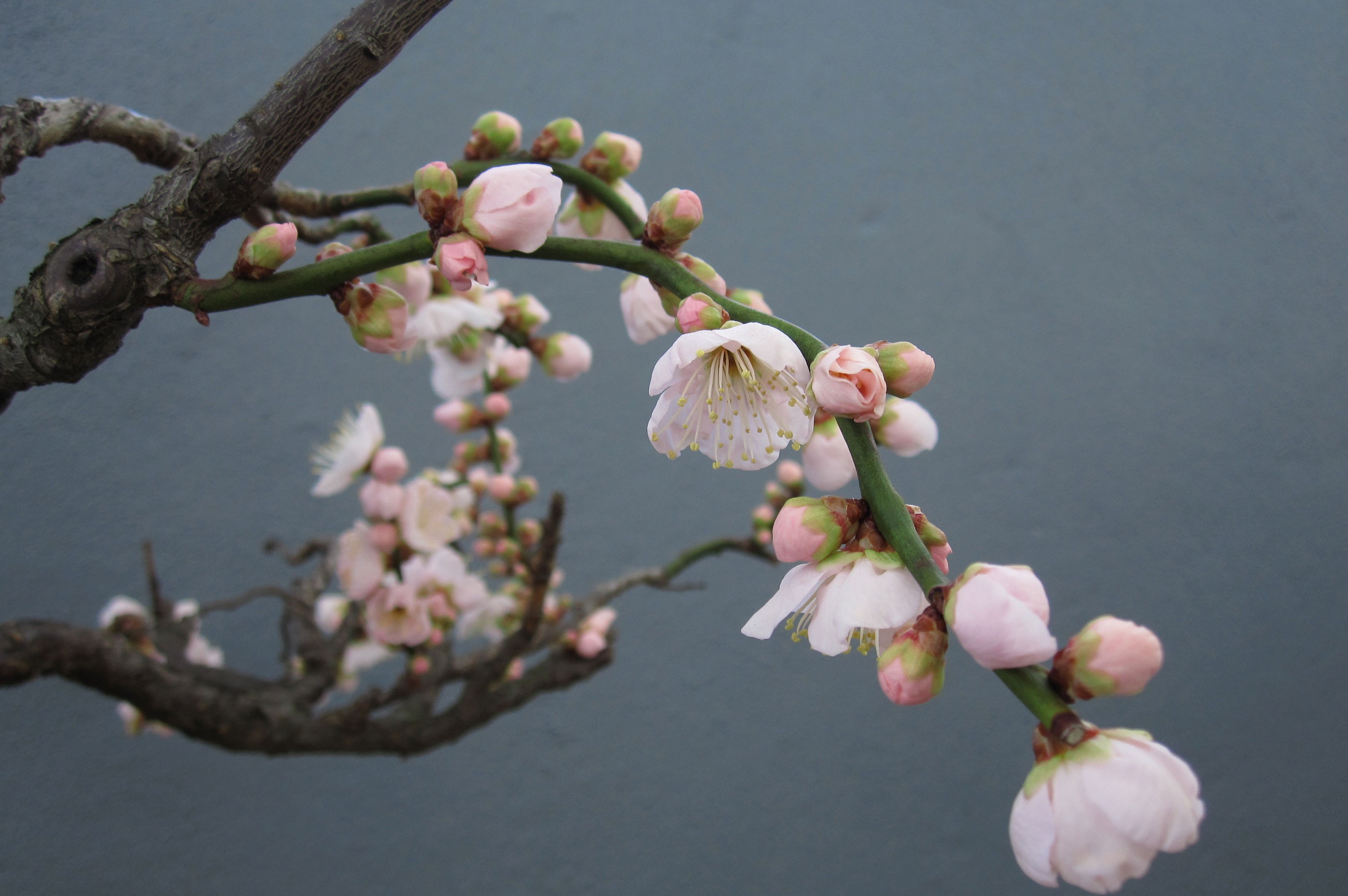
Japanese Apricot
The beautiful pale pink flowers of Prunus mume, seen here in the Bonsai Museum, bloom in January and February.
Prunus mume ‘Andoh’s White’ (Japanese apricot ) in the Bonsai Museum. Photo: Rebecca Bullene.
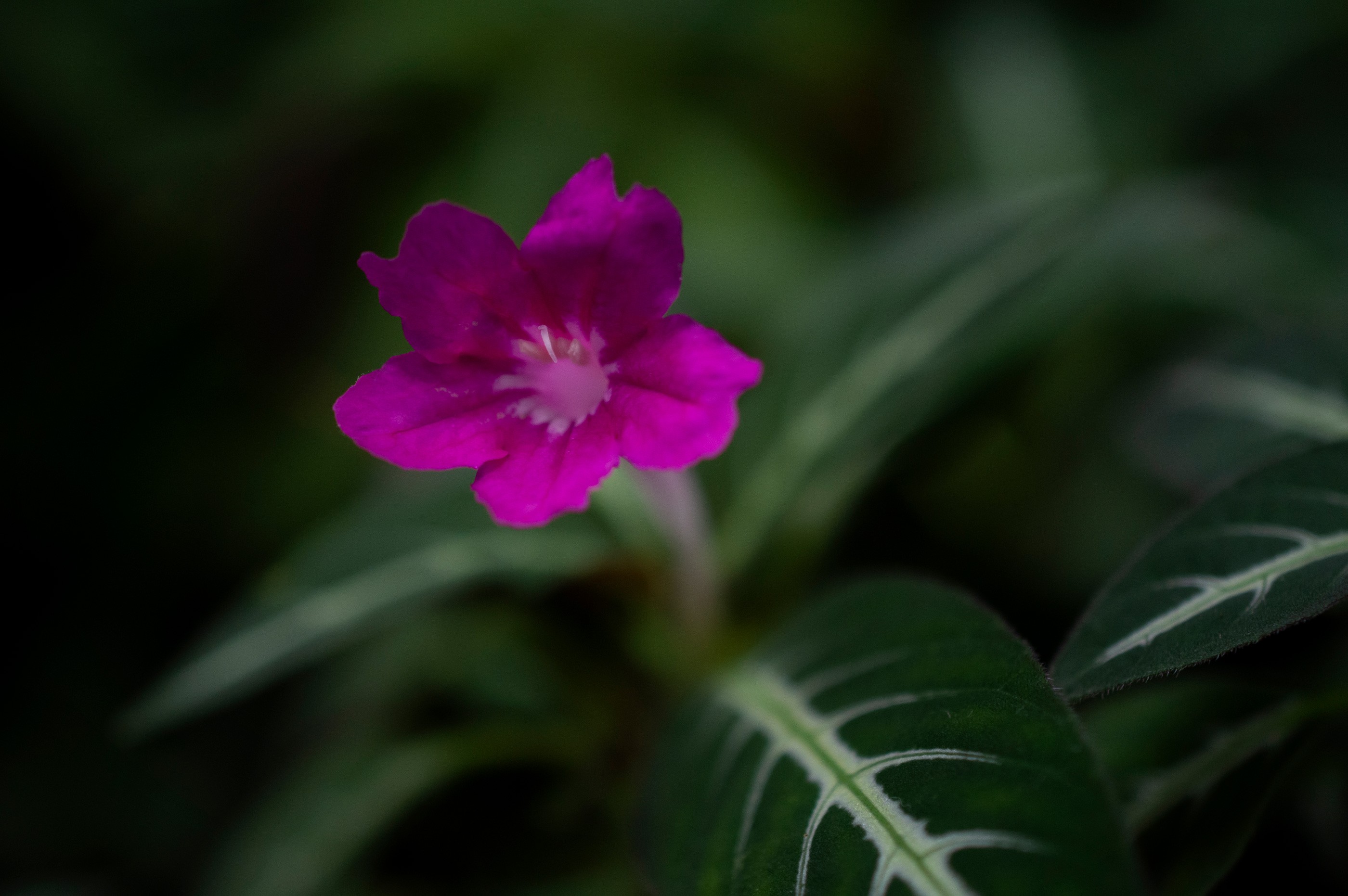
Monkey Plant
Ruellia makoyana (monkey plant ) in the Tropical Pavilion. Photo: Michael Stewart.

Frangipani
The genus Plumeria is known for its alluring and fragrant flowers, each with five petal lobes.
Plumeria ‘Dwarf Pink’ (frangipani) in the Entry House. Photo: Michael Stewart.
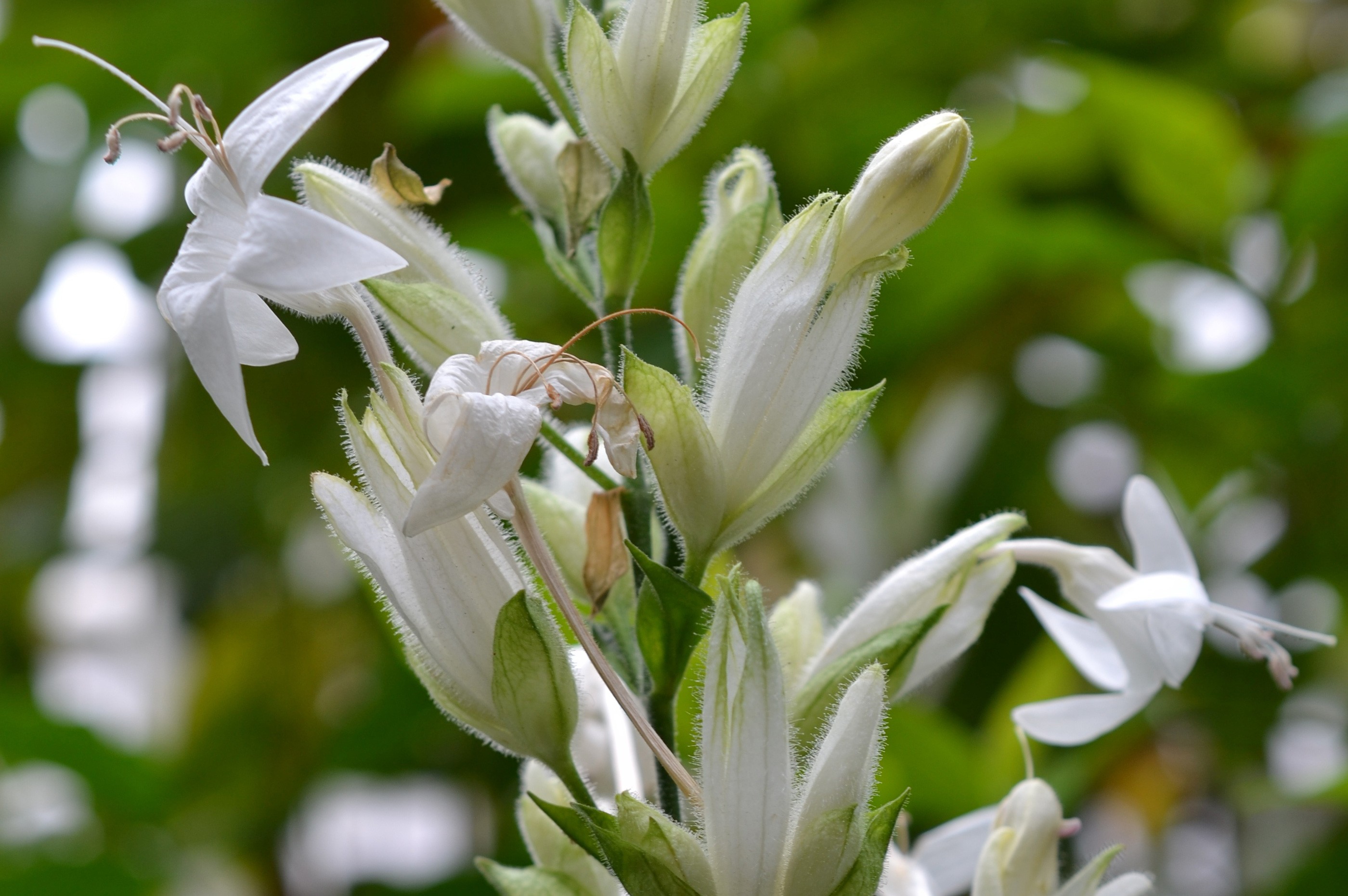
White Candles
Whitfieldia elongata (white candles) in the Tropical Pavilion. Photo: Blanca Begert.
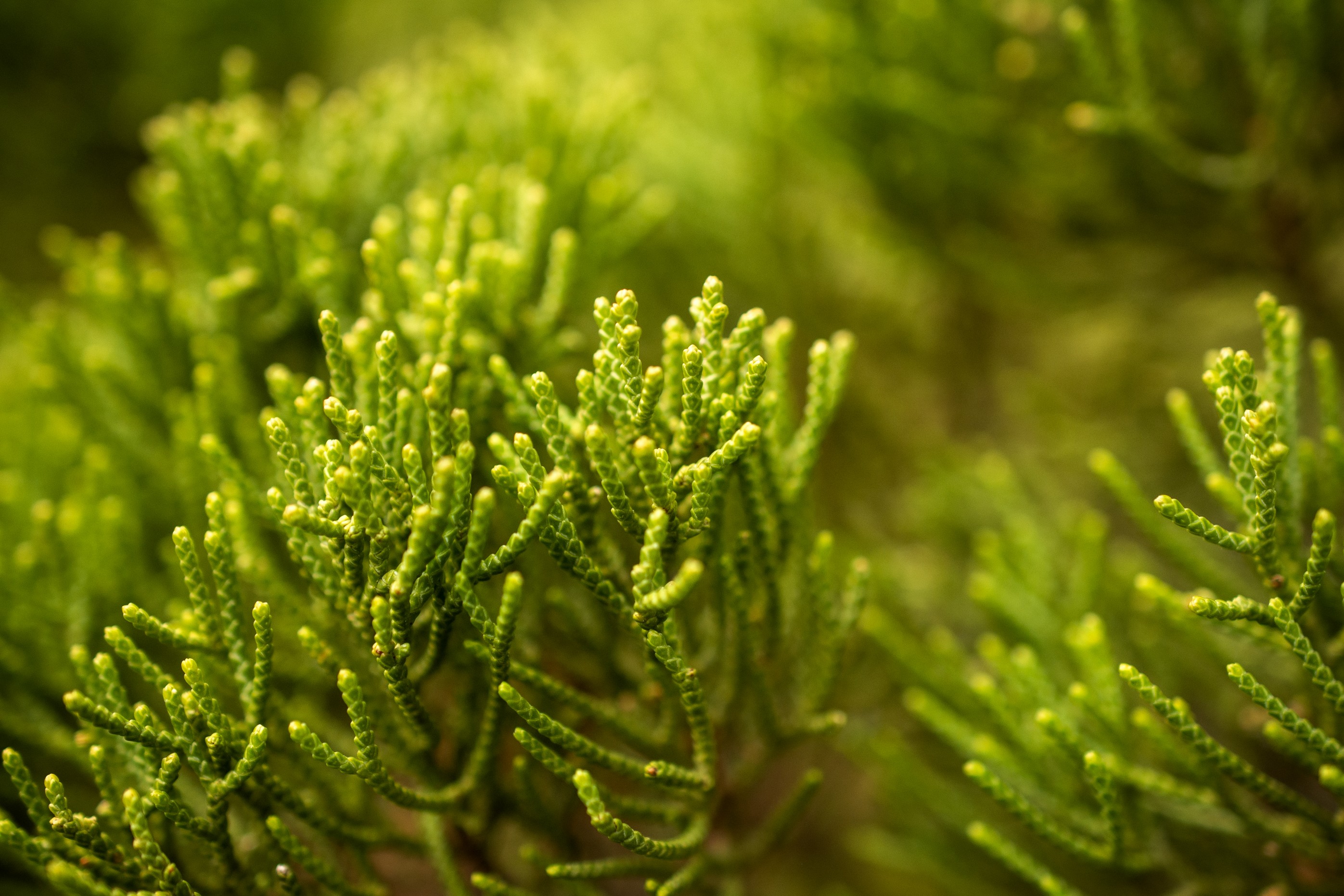
Chinese Juniper
Chinese juniper is an evergreen with scaly scented needles and brown bark that peels off in strips. Relatively salt-tolerant, it can thrive near roads and driveways.
Juniperus chinensis ‘Robust Green’ (Chinese juniper) in the Rock Garden. Photo: Michael Stewart.
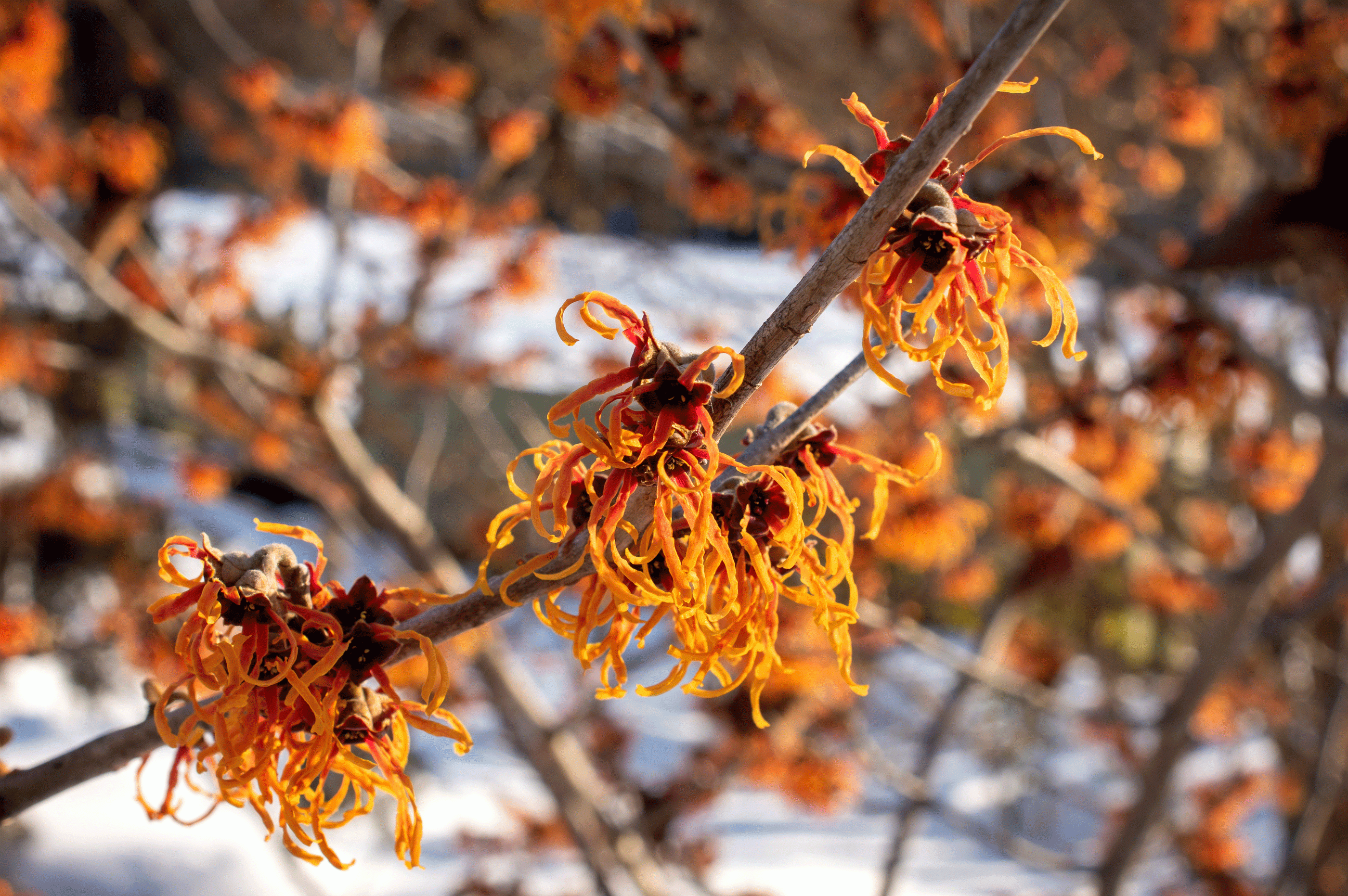
Witch-Hazel ‘Jelena’
This witch-hazel cultivar has fragrant, multicolored flowers ranging from orange to dark copper, and a beautiful natural vase-shaped form. It blooms from January to March.
Hamamelis × intermedia ‘Jelena’ (witch-hazel) in the Rock Garden. Photo: Michael Stewart.
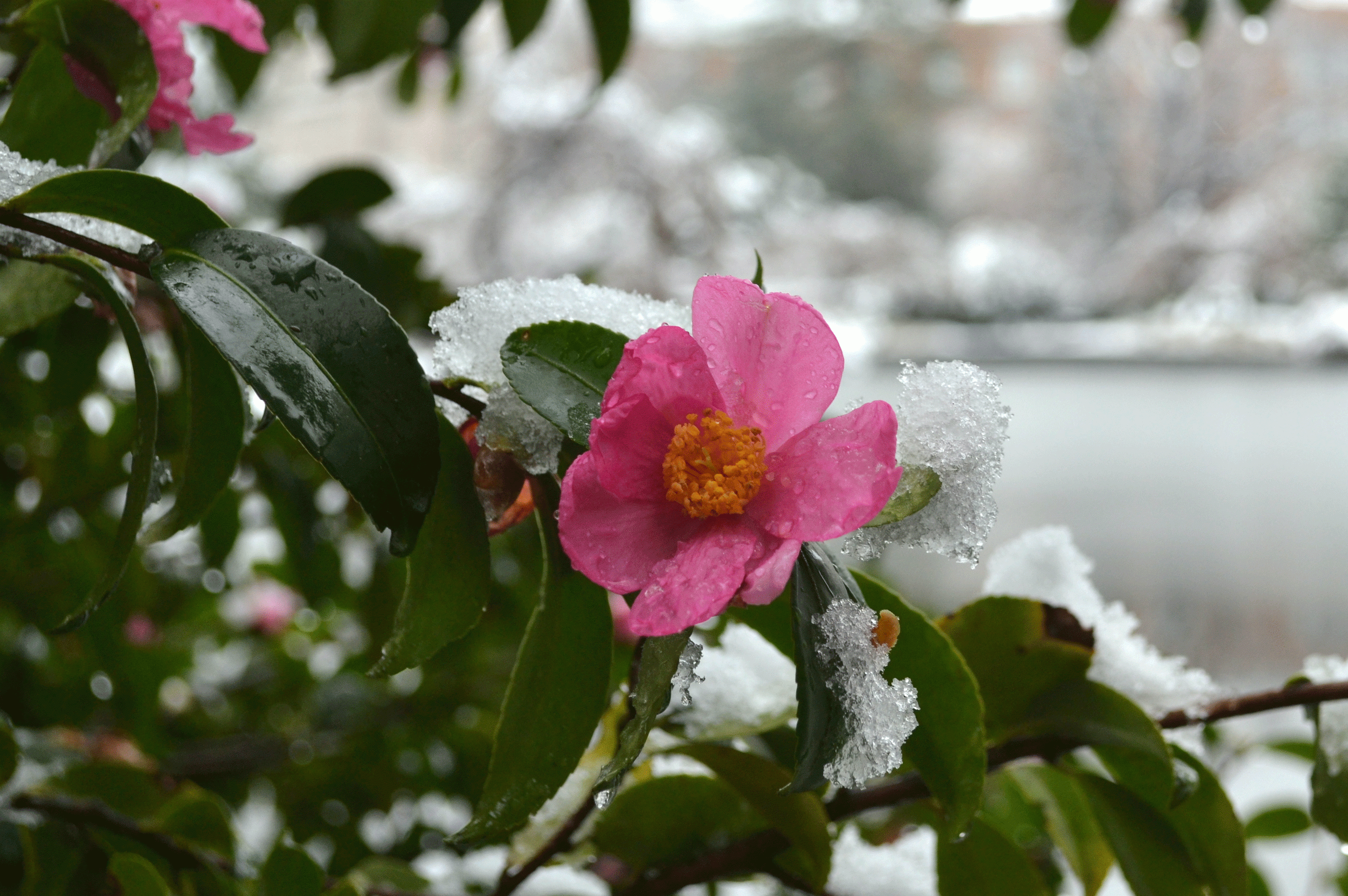
Camellia
Most camellias begin to bloom in late winter and continue through early spring (though there are fall-blooming cultivars, too), often coinciding with Lunar New Year celebrations.
Camellia ‘Winter Star’ (camellia) in the Japanese Hill-and-Pond Garden. Photo: Michael Stewart.

Star Magnolia Bud
Like many early-spring-blooming woody plants, magnolias have fuzzy bud scales to help insulate and protect the developing flower right up until it blooms. Their soft fur varies in color—sometimes dark, sometimes light, sometimes greenish gray.
Magnolia stellata bud (star magnolia bud) on Magnolia Plaza. Photo: Blanca Begert.
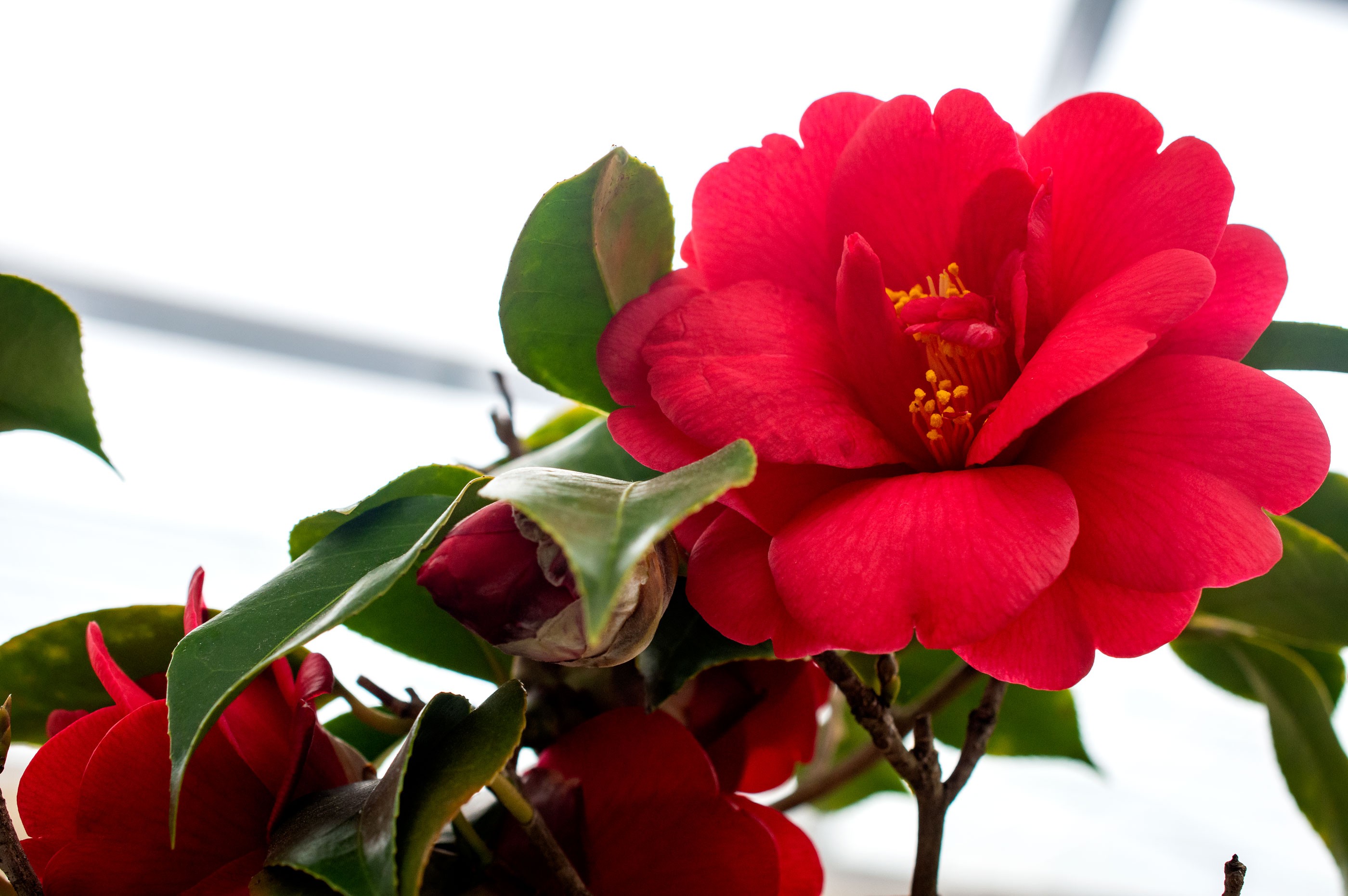
Common Camellia
Camellia japonica ‘Julia Drayton’ (common camellia) in the Bonsai Museum. Photo: Michael Stewart.
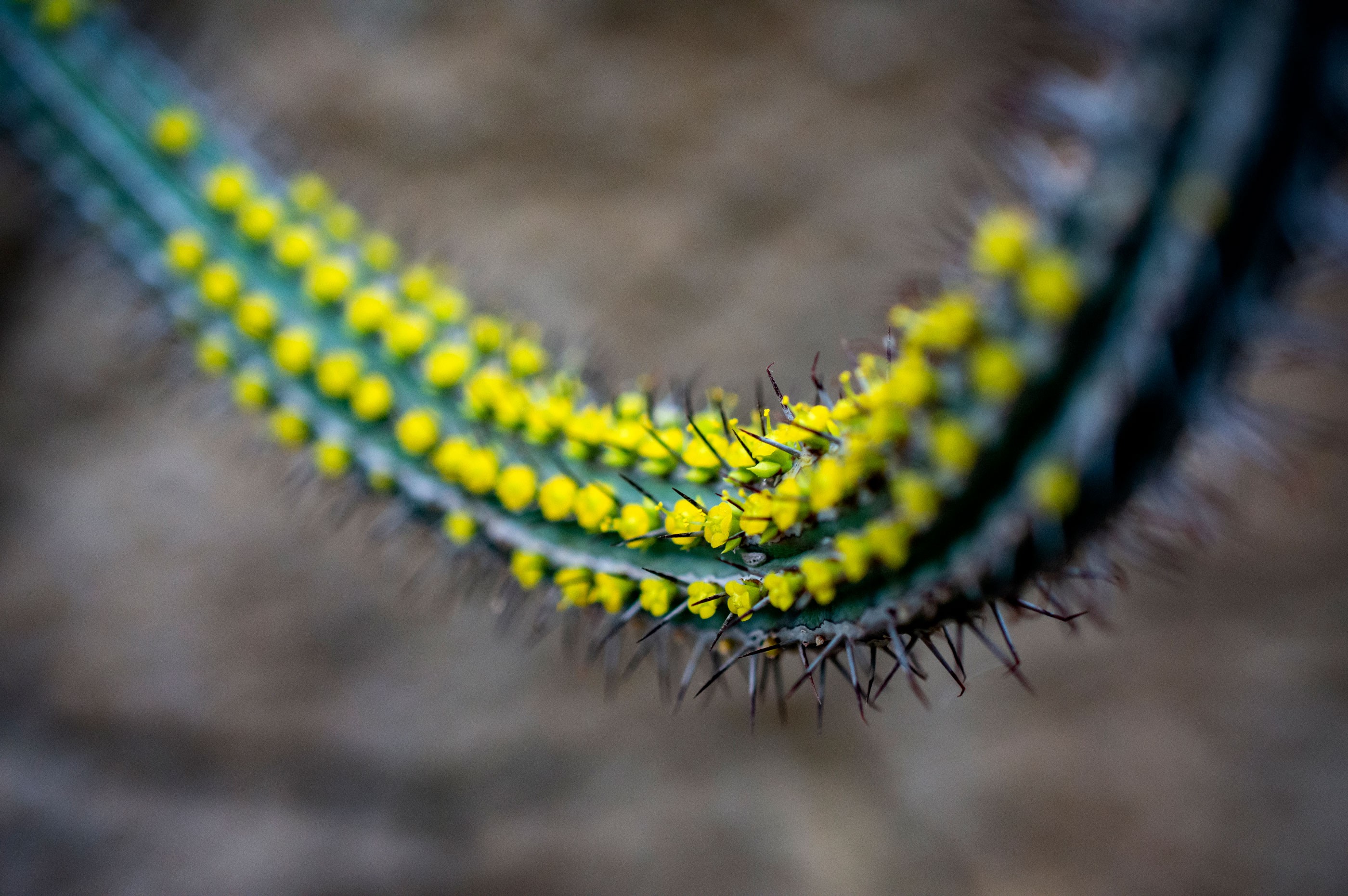
Spurge
Euphorbia baioensis (spurge) in the Desert Pavilion. Photo: Michael Stewart.

Vine-Lilac
This member of the Fabaceae (pea) family, native to Australia, produces long climbing stems, leathery leaves, and pea-like purple flowers.
Hardenbergia violacea (vine-lilac) in the Warm Temperate Pavilion. Photo: Michael Stewart.
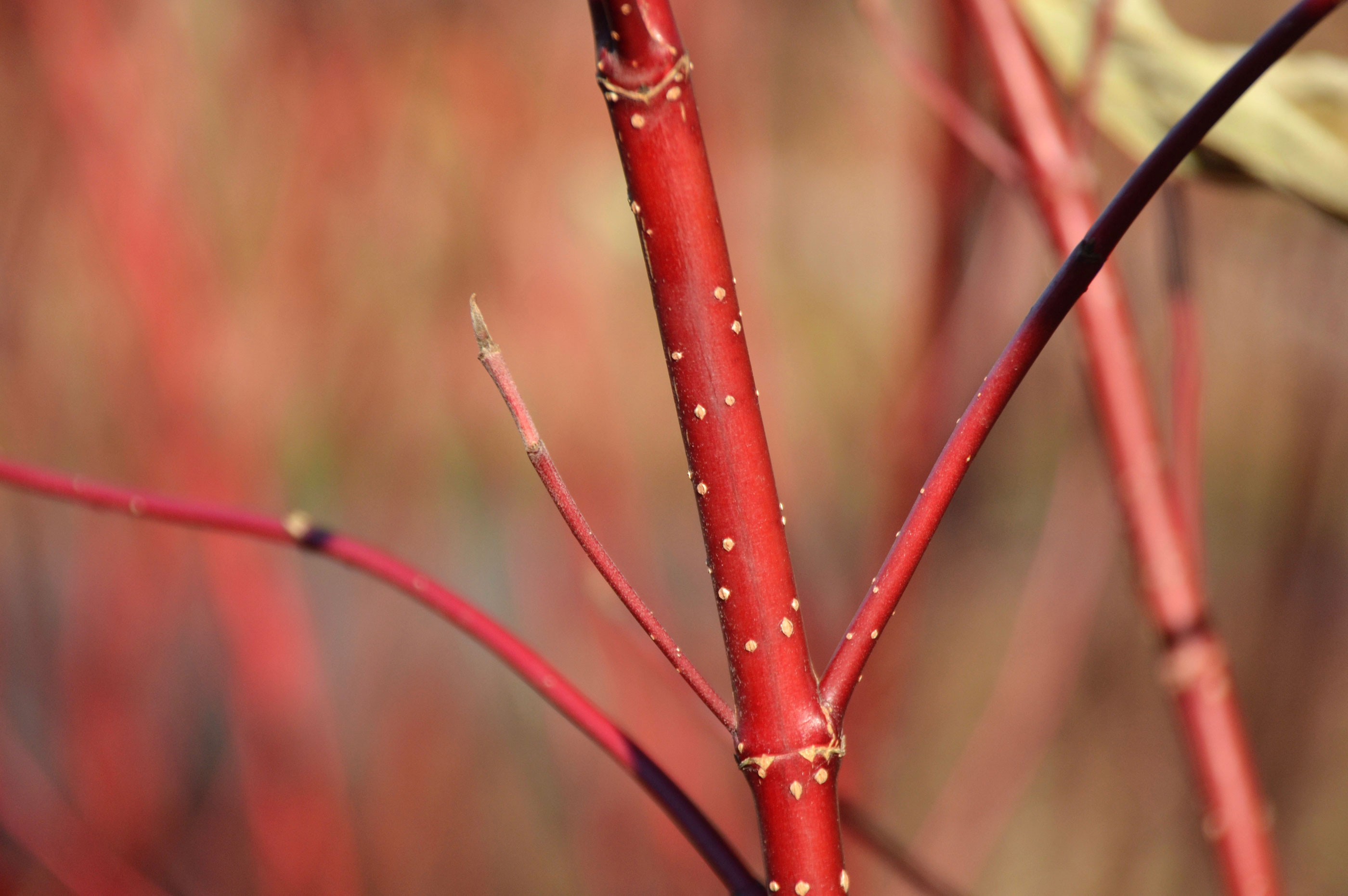
Dogwood Baton Rouge ‘Minbat’
The bare, bright crimson stems of many dogwood cultivars provide vibrant color in fall and winter.
Cornus alba Baton Rouge = ‘Minbat’ (PBR) (Dogwood Baton Rouge (‘Minbat’)) in the Water Garden. Photo: Blanca Begert.
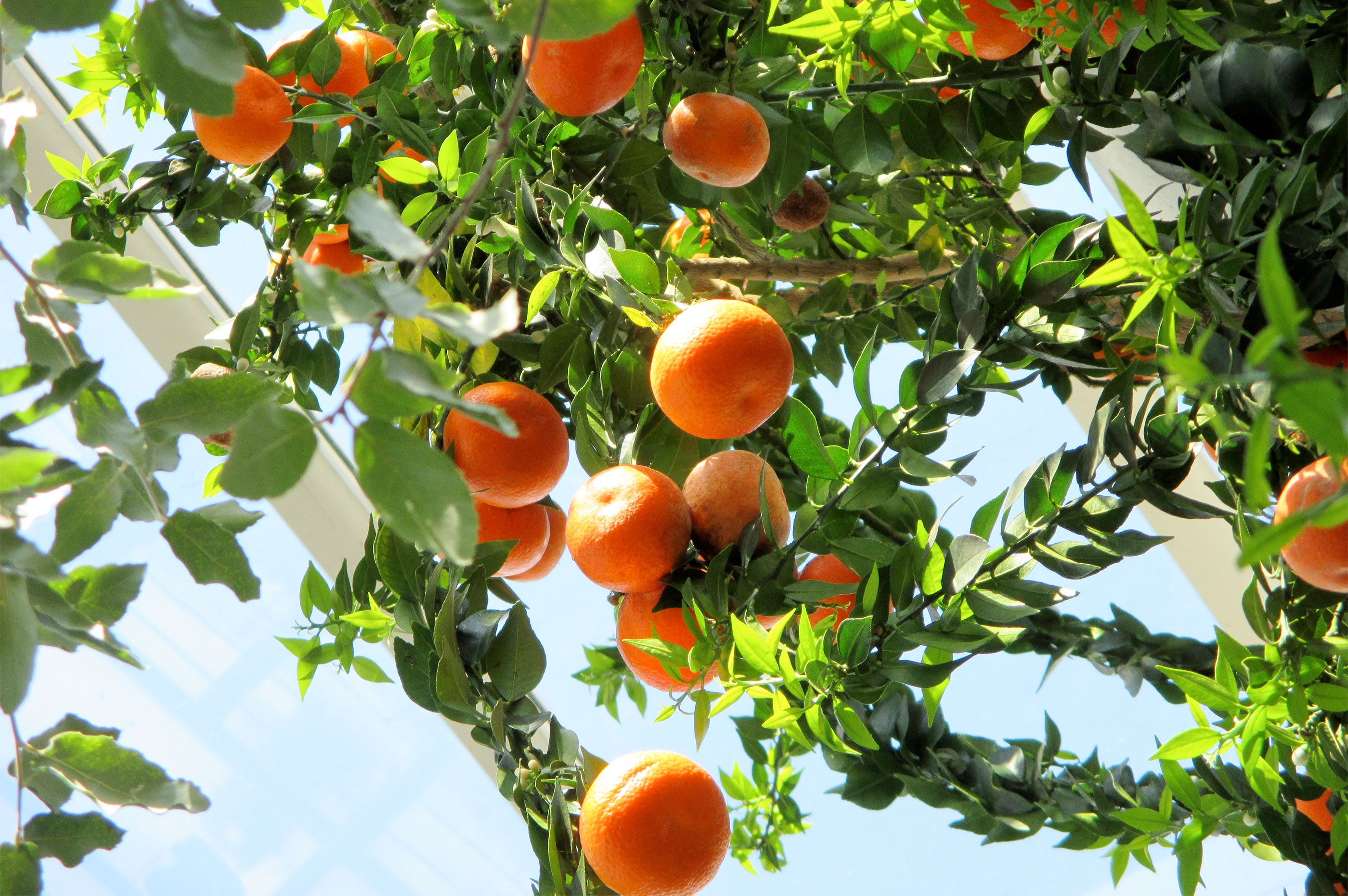
Myrtle-Leaved Sour Orange
Citrus × aurantium ‘Myrtifolia’ (myrtle-leaved sour orange) in the Warm Temperate Pavilion. Photo: Sarah Schmidt.
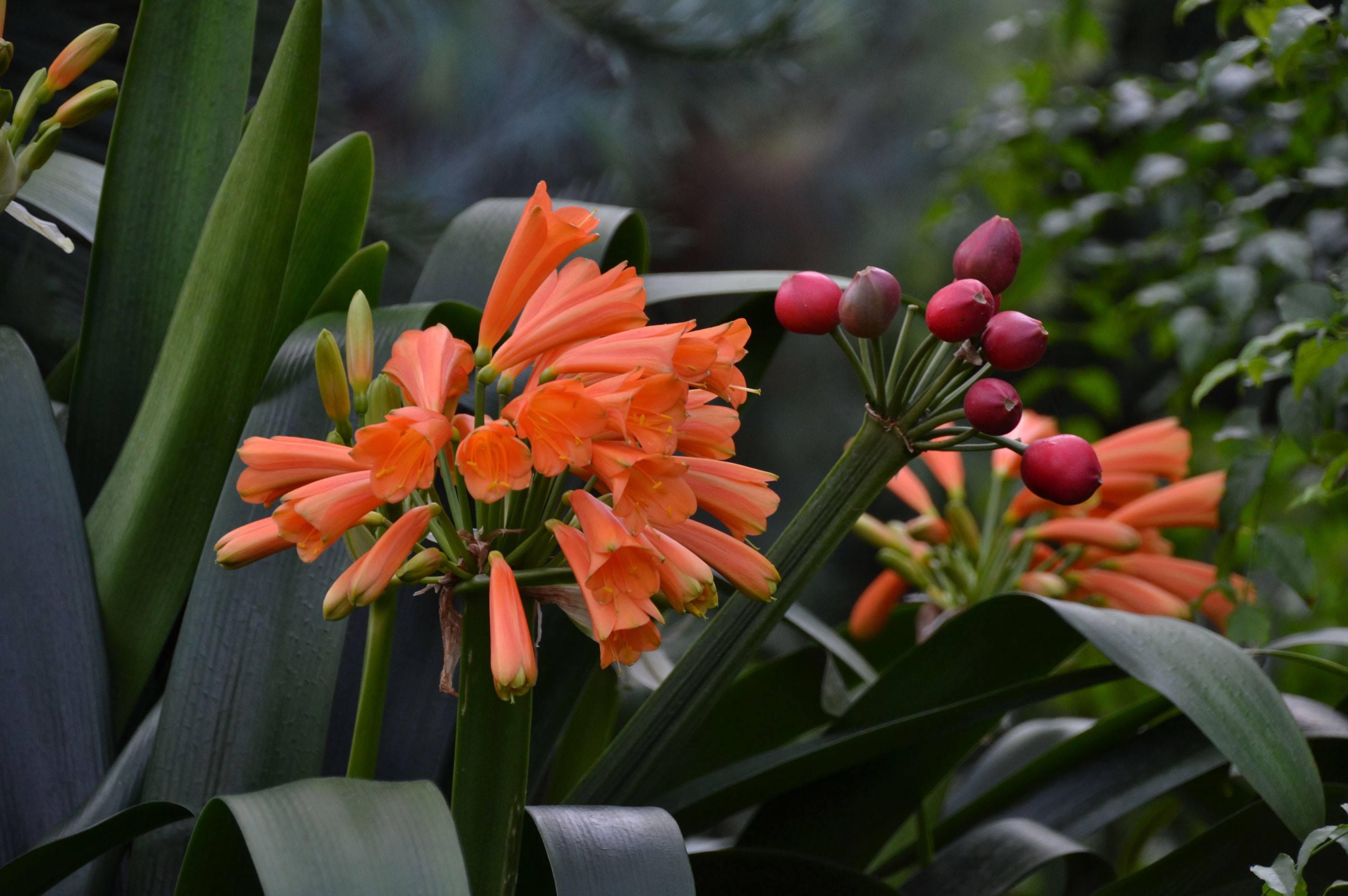
Natal-Lily
This hybrid cultivar belongs to a genus of perennials that grow in low-lying woodlands. Their bloom produces a lovely fireworks show, with colorful trumpet-shaped flowers cascading off upright stems.
Clivia miniata × gardenii (natal-lily) in the Warm Temperate Pavilion. Photo: Lee Patrick.