More than 50,000 bluebells (Hyacinthoides hispanica ‘Excelsior’) are planted under a mature stand of oak, birch, and beech trees just south of Cherry Esplanade. In late April, the bluebells burst into flower and create an enchanting woodland display.
When it comes to rat control, there may not be shortcuts or magic bullets, but the right knowledge and tools can do a lot to address existing problems or prevent them in the first place. BBG is delighted to host an expert from the NYC Department of Health who will tailor the “Rat Academy” curriculum specifically to urban gardening issues. Street tree beds will be a focus. Bring your questions!
This workshop is free, but preregistration is required. Take home a free plant to try!
ASL interpreter available upon request; contact [email protected] at least two weeks prior to the class date.
with Lena Frey, GrowNYC
The virtues and benefits of making and using compost are endless. Yet composting in NYC is in a state of transition, leaving many people wondering about how to make it, how to get it, and how to support the collective future of composting. If you’re inspired to understand the what, how, and why of making compost and making change, join a seasoned community composting veteran for an evening of questions and conversation. Take home a free plant to try!
ASL interpreter available upon request; contact [email protected] at least two weeks prior to the class date.
With gil lopez, Smiling Hogshead Ranch
This ain’t no roach motel! Come learn about insects that are good for your garden and how to prepare a DIY home for them to overwinter. Then get familiar with the plants they’ll need for food and forage when they emerge in spring. This workshop will include lots of information and a hands-on portion, where we will build a bug B&B together. Take home a free plant to try! Please note, this class is for adults.
ASL interpreter available upon request; contact [email protected] at least two weeks prior to the class date.
Come celebrate spring in the Discovery Garden with a garden singalong! Join Sabrina Chap in singing, dancing, and playing with instruments, scarves, and bubbles.
This free drop-in program is part of First Discoveries, our twice-weekly program for toddlers.
I discovered my love for growing food while living in gardenless apartments in busy cities. When I was working as a grower cultivating crops to supply restaurants and other sites around East London, it was container gardening that allowed me to finally grow some plants for myself.
{embed="includes/_inline_image" file="/img/uploads/inline/Carrots_CR_Unknown-4.jpg"}
Small, rounded carrot varieties, like this ‘Paris Market’ carrot, are a great option for containers. Photo via Claire Ratinon / Instagram.
Even if your outdoor space is paved over, rented, limited in size, or not suited to your access needs, it’s often still possible for you to grow delicious crops in containers—as long as you’ve got some sun shining down on your space.
Assessing Your Site
If you’re getting into growing for the first time, it’s worth taking some time to really get acquainted with the space you’ll be growing in (even if you think you already know it well).
Vegetables growing in a rooftop container garden. Photo by Laura Berman.
The following questions will help you imagine what kind of edible garden you could create.
How much space do you have for your pots? If you’re growing in a small area, like on a front stoop or a small balcony, you might choose to focus on modestly sized crops like lettuces or kohlrabi.
How many hours of sunshine does it get? A very sunny sheltered garden provides the ideal conditions for most crops, including fruiting ones such as eggplants and tomatoes. A partially shady plot might be better off filled with leafy greens and herbs.
Is it sheltered from the elements or exposed to a prevailing wind? Excessive exposure to inclement weather is too much for certain crops, like climbing beans and other plants that don’t produce sturdy stems. If your space is windy, you might consider putting up a fence as a windbreak, or growing plants that are robust and not especially tall, like parsley, mint, or beets.
What are your access needs? If kneeling or bending down isn’t possible, or if you use a wheelchair, you can arrange pots on a table or another surface to bring them to an accessible height. You can also use plant caddies to move containers around without lifting.
If your garden is on a rooftop or balcony, is there a limit to how much weight it can hold? A large pot full of recently watered compost and a thriving summer squash can be surprisingly heavy! Also, ensuring your potted plants are light enough for you to move means you can change your mind about their position at different points in the growing season.
Picking Your Plants
Now, for the best part: choosing which edible plants you want to grow! There are a few rules I follow when deciding which crops to grow in limited space.
First, I’m looking for plants that offer abundance. By this I mean that they either grow and provide a harvest swiftly, and so can be sown every few weeks for a continual supply—radishes are a good example of this—or they offer up a prolonged harvest from one plant, like tomatoes or cucumbers do. Conversely, I’d never try to grow cauliflower in a container, as they take months to develop a head to pick, only produce a few harvests, and take up a lot of space.
{embed="includes/_inline_image" file="/img/uploads/lightbox/Kale_CR_Unknown-3.jpg"}
Red Russian kale and arugula are good candidates for container growing. Photo via Claire Ratinon / Instagram.{embed="includes/_inline_image" file="/img/uploads/lightbox/Tomatoes_CR_Unknown-5.jpg"}
Cherry tomatoes do well in containers, especially if you try a compact variety. Photo by Claire Ratinon.
Dwarf varieties of your favorite crops are ideal for small space growing. It’s also worth considering growing something that’s hard to find or expensive to buy—and of course, that you’re excited to eat. If you’re desperate to grow carrots, why not try a fun variety like ‘Cosmic Purple’? Or if you like making summer rolls, perhaps grow your own Thai basil.
Below are a few other container crops and varieties I like to grow:
Cherry tomatoes. Compact cherry tomato varieties are great for growing in hanging baskets, window boxes, and on front stoops. The Tiny Tim tomato is a tasty option.
Dwarf French beans. ‘French Mascotte’ is a sturdy variety that can be planted in large containers.
Red Russian kale. My favorite kale, modest in size and tender when picked early.
Miniature white cucumbers. This popular variety is a short yellowish white cucumber that grows on compact vines. It produces many sweet, crisp fruits.
Cherry belle radishes. Crisp, bright pink spicy radishes that can be grown in small containers or alongside a larger plant.
Finding the Right Container
Once you’ve got a sense of your space and you’ve decided what to grow, the next thing to figure out is what containers you want to use. Each material will suit different situations.
{embed="includes/_inline_image" file="/img/uploads/lightbox/Grow-bag_ES_IMG_3717.jpg"}
Fennel plants in a fabric grow bag. Photo by Ellie Shechet.
I use a lot of recycled plastic pots because they’re lightweight and reusable, but I’d never buy new plastic. I like the look of terra-cotta but would only use it for growing Mediterranean herbs like thyme and rosemary, as terra-cotta pots wick away moisture on warm days and would cause a thirsty plant to become dehydrated faster. Some metal containers look great, but they can heat up quickly in the sun, so avoid growing plants that are vulnerable to heat stress in them (like arugula or lettuce).
My absolute favorite go-to container is a fabric grow bag. They’re lightweight, reusable, easy to store, and promote strong root growth. I’m on my fourth season of using the same felt grow bags and they’re still going strong (despite looking a bit shabby!).
Maintenance & Care
Whether you’ve got a knack for growing your plants from seed or bought plug plants from a nursery, your container-dwelling crops will need you to help meet some of their needs.
Generally, expect to be watering your plants more frequently than if they were growing in the ground, as a pot limits the amount of space a plant can spread its roots in search of water. Multipurpose compost tends to contain four to eight weeks’ worth of the nutrients that plants need to grow, so if you’re growing crops that flower and fruit—like a tomatillo—pouring in some additional liquid seaweed or homemade comfrey tea every few weeks will provide a balanced feed to your hungry crops.
Even your less demanding crops can develop nutrient deficiencies, so keep an eye on them and send a splash of feed their way if you suspect they could use a boost.
These days, despite having a veg patch of my own, I still grow crops in containers every season. It enables me to make the most of the sunny, gravel-covered corners of my garden, and to grow all the extra plants I don’t have space for in the ground. Enjoy the journey—and your produce!
More than 50,000 bluebells (Hyacinthoides hispanica ‘Excelsior’) are planted under a mature stand of oak, birch, and beech trees just south of Cherry Esplanade. In late April, the bluebells burst into flower and create an enchanting woodland display. As these spring ephemerals fade, summer-blooming hardy begonias emerge providing pink flowers in summer and lovely reddish foliage in fall.
Immerse yourself in waves of sweet-smelling blue blossoms as you explore the Garden’s beloved Bluebell Wood in this mesmerizing video by cinematographer Nic Petry of Dancing Camera. Enjoy it at full screen!
Audio Spotlight
English
In Bluebell Wood, thousands of Spanish bluebells are nestled under the dappled shade of beech, elm, and birch trees. Listen along as Fernanda Incera, Interpretation assistant at BBG, shares her favorite stories about this special area of the Garden.
Read transcript
In between an area of shadows and tree canopies grows an explosion of pale blue and violet petals. Welcome! I’m Fernanda Incera, the assistant to the Interpretation department, and this is Bluebell Wood.
This part of Brooklyn Botanic Garden is nestled in what we call the beech, elm and birch collection. As expected, if you look around you will find several oak, birch, elm and beech trees. All these trees have a very specific thing in common: they grow huge branches with big leafy canopies that create a shadow wherever they are planted. That means that not just any plant can grow in their shade. That is where Spanish bluebells come in!
Designed by Robert Hyland, Brooklyn Botanic Garden’s former Vice President of Horticulture and planted in 1994, Bluebell Wood is a collection of over 45,000 Spanish bluebells. Their scientific name is Hyacinthoides hispanica ‘Excelsior’, and since they can grow in partial to full shade, they are perfect for this space.
This species of Hyacinthoides is very different from other kinds of bluebells. They are commonly mistaken for their English counterparts, but Spanish bluebells have important characteristics that distinguish them from the others. The first thing to note is that their stems are sturdier and stand straighter than English bluebells.
The second main characteristic is that their blossoms are arranged on all sides of the stem. Since every Spanish bluebell has 12 or more flowers per stem, this placement makes all the difference: the flowers look even more abundant, creating a more dramatic show along the lawn.
But the main reason why Spanish bluebells are so magnetic is their striking periwinkle color. This pale blue-lavender hue covers their petals up to their open flower tips. If you take a closer look, you might even notice that their pollen is blue, too! When they bloom, the flowers look like a floating ocean of lavender hues or like a light blue-violet sky among the trees.
Following its creation, Bluebell Wood quickly became a favorite feature of the Garden. In fact, the woodland display worked so well that an additional 3,000 Spanish bluebells were planted at the south side of the area in 2019.
Spanish Bluebells bloom for about 2 weeks in late April to mid- May and are perennial flowers, which means they die and come back every year. But what happens while the bluebells are gone? Well, the hill is never alone, so to speak.
Planted among the Spanish bluebells you will find hardy begonias, or Begonia grandis. These start leafing out during the summer just as soon as the foliage of the Spanish bluebells dies down. These two species of plants live in harmony, mixed among one another, and bloom in a cycle. This is what we call interplanting.
If you walk through Bluebell Wood at any given time, you will realize that according to Brooklyn Botanic Garden, or at least to me, good things do grow in the shadows.
Español
En el Bosque de las Campanillas, miles de campanillas españolas está ubicadas entre las sombras de las hayas, olmos y abedules. Escucha mientras Fernanda Incera, la asistente del departamento de Interpretación del Jardín Botánico de Brooklyn, comparte sus historias favoritas sobre esta área especial del jardín.
Leer transcripción
Entre un área de sombras y las copas de los árboles, crece una explosión de pétalos azul pálido y violeta. Bienvenidos, soy Fernanda Incera, la asistente del Departamento de Interpretación y este es el Bosque de las Campanillas.
Esta parte del Jardín Botánico de Brooklyn está ubicada en lo que llamamos la colección de las hayas, olmos y abedules. Tal como lo esperas, si miras a tu alrededor encontrarás varios robles, abedules, olmos y hayas.
Todos estos árboles tienen una cosa muy específica en común: crecen ramas enormes con grandes copas llenas de hojas que crean una sombra en cualquier lugar en donde sean plantados. Eso significa que no cualquier planta puede crecer en su sombra… Ahí es en donde entran las campanillas españolas!
Diseñado por Robert Hyland, el antiguo vicepresidente de horticultura del Jardín Botánico de Brooklyn, y plantado en 1994; el Bosque de las Campanillas es una colección de 45,000 campanillas españolas. Su nombre científico es Hyacinthoides hispanica ‘Excelsior’ y como pueden crecer en sombra parcial a total, son perfectas para este espacio.
Esta especie de Hyacinthoides es muy diferente a otros tipos de campanillas. De hecho, son comúnmente confundidas por sus contrapartes inglesas, pero las campanillas españolas tienen características importantes que las distinguen de las otras.
Lo primero que hay que mencionar es que sus tallos son más fuertes y rectos que los de las campanillas inglesas. La segunda característica principal es que sus flores crecen alrededor del tallo. Dado que cada campanilla española tiene 12 o más flores en cada tallo, esto hace toda la diferencia. Las flores se ven más abundantes, creando un espectáculo más dramático a lo largo del césped.
Pero la razón más importante por la que las campanillas españolas son tan magnéticas es su impresionante color azul lavanda. Este tono cerúleo pálido o violeta se expande por sus pétalos hasta las puntas abiertas de sus flores. Si las miras más de cerca podrás notar que hasta su polen es azul! Cuando florecen, las flores se ven como un océano flotante de matices lavanda o como un cielo azul claro y violeta entre los árboles.
Después de su creación, el Bosque de las Campanillas se convirtió rápidamente en una de las áreas favoritas del jardín. De hecho, el campo funcionó tan bien que unas 3,000 campanillas españolas adicionales fueron plantadas en la parte sur de la zona en el 2019.
Las campanillas españolas florecen alrededor de dos semanas, desde finales de abril hasta mediados de mayo y son flores perennes, lo que significa que mueren y regresan cada año. Pero, ¿qué pasa mientras las campanillas no están? Bueno, la colina nunca está sola.
Sembradas entre las campanillas españolas encontrarás una especie de begonias de nombre científico Begonia grandis. Las hojas de estas begonias empiezan a salir durante el verano tan pronto como las campanillas españolas mueren. Estas dos especies de plantas viven en armonía, mezcladas unas entre otras y florecen en un ciclo. Esto es lo que llamamos intersiembra.
Si caminas a través del Bosque de las Campanillas en cualquier momento, te darás cuenta de que de acuerdo al Jardín Botánico de Brooklyn, o al menos de acuerdo a mí, las cosas buenas sí crecen en las sombras.
Community gardens are essential to a city’s well-being. Yet they seldom get the credit they deserve, and too many suffer from lack of visibility and participation. One potential remedy is for gardens to embrace their role as “curbside educators” and take their talents out to the streetscapes along their gardens’ gates.
St. Marks Avenue Prospect Heights Community Garden in Prospect Heights spills out onto the sidewalk with plantings and containers. Photo by BBG Staff.
The annual Greenest Block in Brooklyn contest, led by Brooklyn Botanic Garden, offers a Best Community Garden Streetscape award. This award inspires community gardens to extend their garden’s borders and engage the surrounding community.
After managing the contest for over ten years and visiting many community gardens, I’ve learned what works well. Whether you want to wow the judges or simply create more beauty for your neighbors, here are my top tips gleaned from Brooklyn's greenest blocks.
Swing for the fences. Greenest Block winners often make use of limited space by going vertical. Tall exterior gates can make impressive trellises for plants like trumpet vine, climbing roses, berries, or hardy kiwi.
But even if your garden doesn’t want to obstruct sight lines or cast shade with tall, dense plantings on your fences, simply paying attention to these often-overlooked edges can make a huge difference to how your garden is viewed from the street.
Hollenback Community Garden in Clinton Hill, a former Best Community Garden Streetscape winner, utilized lush climbing plantings and even installed a bench in front of their garden. Photo by BBG Staff.
Think outside the gate. Be sure to research and follow local regulations for sidewalk planters. Local rules can vary, though most focus on the need to leave plenty of space for egress.
Small containers, under 24 inches in width, placed right along the property line are usually permissible. New Yorkers can call 311 or check out the city’s sidewalk usage guide. Even one or two well-placed planters can do wonders for creating a colorful focal point that draws people in.
Lefferts Place Block Association Garden in Bedford-Stuyvesant welcomes neighbors with sidewalk containers. Photo by Nina Browne.
Don’tforget the street tree beds. Street trees are the lungs of the city. Is your garden paying them the attention they need and deserve? Use best practices in tree bed care, such as gentle watering, carefully placing natural wood chip mulch, and installing an appropriate tree guard if you can. Be sure to do some research first—improper tree bed gardening and guards can do more harm than good.
This modest street tree bed outside of 61 Franklin Street Garden in Greenpoint is doing so many things right: its guard allows water to flow into the bed, it has no added soil, and is planted with a healthy combination of mulch and groundcovers. Photo by Nina Browne.
Use signage to engage and educate. Your neighbors are curious. Does your garden collect rainwater? Grow medicinal herbs? Feature native plants for pollinators? Donate food for mutual aid? A few simple and fun signs can help let passersby know what you’re doing.
{embed="includes/_inline_image" file="/img/uploads/lightbox/NB_1stCoGrdn_NewkirkCG_1.jpg"}
Newkirk Community Garden in Kensington, Best Community Garden Streetscape winner in 2022, used tasty herbs and informative signage to engage their neighbors. Photo by Nina Browne.
Get creative. Brooklyn’s community gardens continue to educate the Greenest Block judges with their innovative thinking. What unique characteristics of your block’s street or sidewalk could you make the most of? We’ve even seen temporary construction fences transformed by acts of guerilla gardening, covered in vines that were planted in several five-gallon buckets.
Take a slow, intentional walk past your community garden with fresh eyes. We think you’ll observe that the sky truly is the limit.
This is a one-time program for kids of all ages and their caregivers. Join educators at activity stations throughout the Children’s Garden. Plant seeds, water vegetables and flowers, create nature crafts, taste fresh produce, dig in soil, and more! Participants are welcome to register for multiple classes, but activities will repeat. Programs take place rain or shine!
One child-adult pair must register to participate together. Up to three children or adults may be added.
{embed="visit/_calendar_embed_new" begin="today" end="today" category_group="18" limit="10" list_class="image-list-square" image-derivative-label="square_thumbnail" show_recurrences="next" status="Open|Ongoing|Featured|Featured_Ongoing|Ongoing No Embed|Calendar No Embed|Calendar No Search|Search No Embed"}
Last entry 30 minutes before closing. Specialty gardens begin to close 30 minutes before closing time.
Seasonal Hours
Through August 1
Open late! Tuesday & Thursday: 10 a.m.–8:30 p.m. (except June 4, 10 a.m.–4 p.m.)
Wednesday: 10 a.m.–6 p.m. (except May 15 & 22, 10 a.m.–8:30 p.m.)
Members’ Summer Evenings: Wednesdays, May 29–September 4
Friday–Sunday: 10 a.m.–6 p.m.
Closed Mondays (except open Memorial Day, May 27, 10 a.m.–6 p.m.)
Admission
All visitors must present ticket for entrance. Members and affiliates with free tickets must also show proof of eligibility.
Advance tickets are recommended. Tickets are available 30 days in advance of visit dates. Same-day tickets may be obtained at Garden admission booths.
Children under 12 are free. Children under 14 must be supervised by an adult 18 or over.
If you are feeling unwell, please reschedule your visit. Tickets are nonrefundable, but may be exchanged in advance for another date (see ticket confirmation for details).
Admissions and membership revenue helps Brooklyn Botanic Garden care for its 52 acres of grounds and conservatories and provide the environmental education programs, breathtaking botanical displays, exciting public events, and community greening efforts that have made the Garden a world-class living museum for all to enjoy. Thank you for supporting this with your visit!
Free Admission Opportunities
Admission is free:
BBG members receive free general admission year-round.
Children under 12 are always free.
Community Tickets: A portion of each day’s tickets are available free of charge to those who need them.
Free admission during public hours is also offered to the individuals and groups listed below. Check full details at the link below before planning your visit.
Academic members and participants in the following programs, with valid ID:
Students, employees of Brooklyn College and Medgar Evers
Students, employees, alum of Pratt
Brooklyn Academy of Science and the Environment students and families, employees
Cool Culture cardholders and their families
Garden Apprentice Program teens and families
Project Green Reach classrooms, students and families (with pass)
Urban Advantage teachers, classrooms, students and families (with voucher)
Visitors with the following affiliations, with valid ID:
Individual members of the following museum and garden associations: AHS, APGA, Museums Council of New York City
Members of gardens that participate in the AHS Reciprocal Admissions Program
Employees of current corporate members
Brooklyn Botanic Garden volunteers
With preregistration:
Public library patrons with a Culture Pass reservation (with pass)
Registered, self-guided school and camp groups
Registered, self-guided groups from nonprofit senior centers, shelters, rehabilitation centers, and other 501(c)(3) organizations serving people with disabilities
Participants in accessibility programs, including monthly Memory Tours
Community Greening & NYC Compost Project workshop participants
Enhance your day in Brooklyn by visiting our neighbor, the Brooklyn Museum! Purchase a Museum & Garden ticket here at Brooklyn Botanic Garden and present your receipt for same-day admission to the Brooklyn Museum.
Museum & Garden visits must be made on the same date. The Museum is closed on Tuesdays.
Offer is not valid for special events.
The Brooklyn Museum’s admission is suggested. Tickets are not refundable.
There is no combination ticket for children under 12 years of age. Children under 12 enter for free.
Official Tourism Partner
English
In Bluebell Wood, thousands of Spanish bluebells are nestled under the dappled shade of beech, elm, and birch trees. Listen along as Fernanda Incera, Interpretation assistant at BBG, shares her favorite stories about this special area of the Garden.
Read transcript
In between an area of shadows and tree canopies grows an explosion of pale blue and violet petals. Welcome! I’m Fernanda Incera, the assistant to the Interpretation department, and this is Bluebell Wood.
This part of Brooklyn Botanic Garden is nestled in what we call the beech, elm, and birch collection. As expected, if you look around you will find several oak, birch, elm and beech trees. All these trees have a very specific thing in common: they grow huge branches with big leafy canopies that create a shadow wherever they are planted. That means that not just any plant can grow in their shade. That is where Spanish bluebells come in!
Designed by Robert Hyland, Brooklyn Botanic Garden’s former vice president of Horticulture and planted in 1994, Bluebell Wood is a collection of over 45,000 Spanish bluebells. Their scientific name is Hyacinthoides hispanica ‘Excelsior’, and since they can grow in partial to full shade, they are perfect for this space.
This species of Hyacinthoides is very different from other kinds of bluebells. They are commonly mistaken for their English counterparts, but Spanish bluebells have important characteristics that distinguish them from the others. The first thing to note is that their stems are sturdier and stand straighter than English bluebells.
The second main characteristic is that their blossoms are arranged on all sides of the stem. Since every Spanish bluebell has 12 or more flowers per stem, this placement makes all the difference: The flowers look even more abundant, creating a more dramatic show along the lawn.
But the main reason why Spanish bluebells are so magnetic is their striking periwinkle color. This pale blue-lavender hue covers their petals up to their open flower tips. If you take a closer look, you might even notice that their pollen is blue, too! When they bloom, the flowers look like a floating ocean of lavender hues or like a light blue-violet sky among the trees.
Following its creation, Bluebell Wood quickly became a favorite feature of the Garden. In fact, the woodland display worked so well that an additional 3,000 Spanish bluebells were planted at the south side of the area in 2019.
Spanish Bluebells bloom for about two weeks in late April to mid- May and are perennial flowers, which means they die and come back every year. But what happens while the bluebells are gone? Well, the hill is never alone, so to speak.
Planted among the Spanish bluebells you will find hardy begonias, or Begonia grandis. These start leafing out during the summer just as soon as the foliage of the Spanish bluebells dies down. These two species of plants live in harmony, mixed among one another, and bloom in a cycle. This is what we call interplanting.
If you walk through Bluebell Wood at any given time, you will realize that according to Brooklyn Botanic Garden, or at least to me, good things do grow in the shadows.
Español
En el Bosque de las Campanillas, miles de campanillas españolas está ubicadas entre las sombras de las hayas, olmos y abedules. Escucha mientras Fernanda Incera, la asistente del departamento de Interpretación del Jardín Botánico de Brooklyn, comparte sus historias favoritas sobre esta área especial del jardín.
Leer transcripción
Entre un área de sombras y las copas de los árboles, crece una explosión de pétalos azul pálido y violeta. Bienvenidos, soy Fernanda Incera, la asistente del Departamento de Interpretación y este es el Bosque de las Campanillas.
Esta parte del Jardín Botánico de Brooklyn está ubicada en lo que llamamos la colección de las hayas, olmos y abedules. Tal como lo esperas, si miras a tu alrededor encontrarás varios robles, abedules, olmos y hayas.
Todos estos árboles tienen una cosa muy específica en común: crecen ramas enormes con grandes copas llenas de hojas que crean una sombra en cualquier lugar en donde sean plantados. Eso significa que no cualquier planta puede crecer en su sombra… Ahí es en donde entran las campanillas españolas!
Diseñado por Robert Hyland, el antiguo vicepresidente de horticultura del Jardín Botánico de Brooklyn, y plantado en 1994; el Bosque de las Campanillas es una colección de 45,000 campanillas españolas. Su nombre científico es Hyacinthoides hispanica ‘Excelsior’ y como pueden crecer en sombra parcial a total, son perfectas para este espacio.
Esta especie de Hyacinthoides es muy diferente a otros tipos de campanillas. De hecho, son comúnmente confundidas por sus contrapartes inglesas, pero las campanillas españolas tienen características importantes que las distinguen de las otras.
Lo primero que hay que mencionar es que sus tallos son más fuertes y rectos que los de las campanillas inglesas. La segunda característica principal es que sus flores crecen alrededor del tallo. Dado que cada campanilla española tiene 12 o más flores en cada tallo, esto hace toda la diferencia. Las flores se ven más abundantes, creando un espectáculo más dramático a lo largo del césped.
Pero la razón más importante por la que las campanillas españolas son tan magnéticas es su impresionante color azul lavanda. Este tono cerúleo pálido o violeta se expande por sus pétalos hasta las puntas abiertas de sus flores. Si las miras más de cerca podrás notar que hasta su polen es azul! Cuando florecen, las flores se ven como un océano flotante de matices lavanda o como un cielo azul claro y violeta entre los árboles.
Después de su creación, el Bosque de las Campanillas se convirtió rápidamente en una de las áreas favoritas del jardín. De hecho, el campo funcionó tan bien que unas 3,000 campanillas españolas adicionales fueron plantadas en la parte sur de la zona en el 2019.
Las campanillas españolas florecen alrededor de dos semanas, desde finales de abril hasta mediados de mayo y son flores perennes, lo que significa que mueren y regresan cada año. Pero, ¿qué pasa mientras las campanillas no están? Bueno, la colina nunca está sola.
Sembradas entre las campanillas españolas encontrarás una especie de begonias de nombre científico Begonia grandis. Las hojas de estas begonias empiezan a salir durante el verano tan pronto como las campanillas españolas mueren. Estas dos especies de plantas viven en armonía, mezcladas unas entre otras y florecen en un ciclo. Esto es lo que llamamos intersiembra.
Si caminas a través del Bosque de las Campanillas en cualquier momento, te darás cuenta de que de acuerdo al Jardín Botánico de Brooklyn, o al menos de acuerdo a mí, las cosas buenas sí crecen en las sombras.
Learn and play together in the Discovery Garden. Hands-on stations throughout the garden’s courtyard, meadow, woodland, and marsh encourage families to explore nature alongside our teen apprentices volunteer Discovery Docents.
This is a drop-in program for families with children of all ages. Free with Garden admission.
All programs are outdoors and canceled in inclement weather. Check this webpage for updates.
Support
Major Supporter, Discovery Programs
Did you know that some cherry trees are actually—kind of—two cherry trees?
Some flowering cherry trees at Brooklyn Botanic Garden were propagated using a technique called “grafting.” If you’re new to horticulture, that means each tree is actually made up of two genetically different plants that have, well, merged.
Plants: They’re not like us. Here’s how Patrick Austin, plant propagator and nursery gardener at BBG, explains this advanced technique:
“Grafting is essentially taking the stem of one plant—called the ‘scion’—and attaching it to the roots of another—the ‘rootstock’—and having them grow as a single plant,” says Austin.
This Prunus ‘Shogetsu’ near the entrance to the Osborne Garden was propagated via grafting. Grafting is often used in order to combine desirable features of two plants, like beautiful blossoms and sturdy roots. Photo by Michael Stewart.
Ornamental cherry trees are often propagated in nurseries using this method, along with apple trees, other fruit trees, wine grapes, hybrid roses, and many tree peony cultivars.
Horticulturists often do this to combine the desirable features of two plants. For example, a scion from a cherry cultivar with beautiful blossoms might be grafted onto the rootstock of another variety known for its hardy, disease-resistant roots.
Grafting, like growing plants from cuttings, also allows growers to produce genetically identical plants. It’s often used to propagate plants that won’t grow “true” from seed. An apple seedling, for example, will be quite different (and potentially less edible) than its parent tree.
{embed="includes/_inline_image" file="/img/uploads/lightbox/Sargent-graft_JP_IMG_7697.jpg"}
Does the trunk of this sargent cherry (Prunus sargentii ‘Columnaris’) look a little funny to you? That’s the spot where a scion and a rootstock were grafted together. Photo by Joann Pan.
Part of what makes grafting so tricky, says Austin, is that you have to perfectly line up the cambium—that layer of cells underneath the bark where growth occurs—of both plant parts.
This usually requires a very sharp knife, among other tools. But grafting happens in nature sometimes, too, when branches, stems, or roots of two individuals or species make sustained contact in just the right way.
Natural grafting, or “inosculation,” is poorly understood, but researchers believe it may happen when pressure from growth or external forces pushes these plant parts together and the bark wears away, exposing the cambia and allowing the vascular tissues to fuse.
The fused plants can transfer resources like water, hormones, and nutrients. Interestingly, natural grafting has been cited to help explain why some tree stumps in forest ecosystems can survive without leaves.
If you’re visiting Brooklyn Botanic Garden this cherry season, take a closer look at the sargent cherry (Prunus sargentii ‘Columnaris’) near Lily Pool Terrace and the fruit trees in the Herb Garden. (As always, please don’t touch.)
Can you guess the spot where two plants became one?
Enjoy BBG’s Cranford Rose Garden at peak bloom with a diverse collection of modern, historic, and species roses. Take a tour and learn more about the history of these beloved plants.
Free with Garden admission. No registration necessary.
Please note tours can be canceled due to inclement weather. Check this page for updates.
English
Are you here to see the flowering cherry trees bloom? They’re some of our favorite trees, too. Listen along as Fernanda Incera, Interpretation assistant at BBG, shares some fascinating facts about cherries at the Garden.
Read transcript
Are you here to see the cherries bloom? It’s one of our favorite trees, too. Welcome to Brooklyn Botanic Garden. I’m Fernanda Incera, the assistant to the Interpretation department, and like many of you, the beautiful flowering cherry trees are what first brought me here.
So, what makes our cherry trees so special? Well, let’s dive in!
Flowering cherries actually belong to the rose family, and they originated in Asia. So, all of the cherry trees you see today have traveled a long way to be here, just like most Brooklynites.
Brooklyn Botanic Garden has around 26 different cultivars and species of flowering cherries in its collection. They are all quite different and bloom at various times. Their flowers range in color from white to pink to even a pale green.
The double rows of cherry trees that you see lining Cherry Esplanade are called Prunus ‘Kanzan’. And there’s a very important reason why they are so spectacular. This cultivar was actually bred to have beautiful blossoms.
If you’re lucky enough to see them in peak bloom, during the spring, you will notice that the pink double blossoms have up to 28 petals each. This makes ‘Kanzan’ cherry trees particularly special since most cherry blossoms only have five petals. During peak bloom, a wonderful cascade of pink petals will dance through the Garden and cover the grass with a carpet of soft pink hues.
Among this collection there are two cherry trees that stand out due to their legacy at Brooklyn Botanic Garden. Right at the north end of Cherry Esplanade you will find the two oldest Prunus ‘Kanzan’ trees in our collection.
Believe it or not, those two trees were planted in 1921, which makes them over 100 years old! Given that most flowering cherry cultivars have a lifespan of 30 to 40 years, this is quite an extraordinary accomplishment. If you look closely, you might notice some rods and extra support that help these flowering cherry trees stay alive.
Even though flowering cherry trees were not originally intended to be planted in traditional Japanese gardens, Brooklyn Botanic Garden has other weeping higan cherries, just south and across the bridge from the Cherry Esplanade, in the Japanese Hill-and-Pond Garden.
If you see them bloom, usually around early April, you will notice how the drooping tips of the branches almost touch the water and create a reflection of pink and white petals across the pond.
What’s our least favorite part of cherry season? Well, unfortunately, each tree’s blossoms only last about a week. But, since cherry trees traditionally symbolize the transient and ephemeral, that's part of their beauty. So, take a deep breath, take all the magic of the flowering cherries in, and prepare to let them go. I’ll leave you to it.
Español
¿Estás aquí para ver a los cerezos florecer? También son uno de nuestros árboles favoritos. Escucha a Fernanda Incera, la asistente del departamento de interpretación, compartir algunos datos fascinantes sobre los cerezos en el jardín.
Leer transcripción
¿Estás aquí para ver a los cerezos florecer? También es uno de nuestros árboles favoritos. Bienvenidos al Jardín Botánico de Brooklyn. Soy Fernanda Incera, la asistente del Departamento de Interpretación, y como a muchos de ustedes, ver las hermosas flores de los cerezos fue lo que me trajo aquí por primera vez.
Pero, ¿por qué son tan especiales nuestros cerezos? Bueno, vamos a empezar.
Los cerezos son parte de la familia de las rosáceas y se originaron en Asia. Así que, todos los cerezos que ves aquí el día de hoy, han viajado un largo camino para llegar acá; así como muchos de los habitantes de Brooklyn.
El Jardín Botánico de Brooklyn tiene alrededor de 26 especies de cerezos diferentes en su colección. Todos son distintos y no todos florecen al mismo tiempo. Sus flores varían bastante en color. Pueden ser blancas, rosas, o ¡hasta verde pálido!
Las doble filas de cerezos que ves en el perímetro de la explanada se llaman Prunus 'Kanzan' y hay una razón muy importante por la que son tan espectaculares. Este cultivo fue creado específicamente para tener flores hermosas. Si tienes la suerte de verlos cuando están floreciendo, durante la primavera, notarás que las flores dobles rosadas tienen ¡hasta 28 pétalos!
Esto hace a los cerezos 'Kanzan' particularmente especiales dado que las flores de casi todos los demás cerezos tienen solamente cinco pétalos. Cuando los cerezos están floreciendo, una increíble cascada de pétalos rosas bailan a través del Jardín y cubren el pasto con una alfombra de delicados tonos rosados.
Entre esta colección, hay dos árboles que sobresalen por su legado en el Jardín Botánico de Brooklyn. Al norte de la explanada de los cerezos, encontrarás a los dos árboles prunus 'Kanzan' más viejos de nuestra colección.
Puede ser que no lo creas, pero esos dos árboles fueron plantados en 1921, lo cual los hace de más de 100 años de edad. Dado que la mayoría de los árboles de cerezos tienen un tiempo estimado de vida de 30 a 40 años, este es un logro extraordinario. Si los miras de cerca podrás ver algunos tornillos y placas de metal que ayudan a mantener a estos cerezos vivos.
Aunque originalmente los árboles de cerezos no se encuentran en los jardines japoneses tradicionales, el Jardín Botánico de Brooklyn tiene otros cerezos llorones o 'Higan' en su colección. Los puedes ver dentro de nuestro propio Jardín Japonés que está al otro lado del puente, al sur de la explanada. Si los ves florecer, usualmente a principios de abril, notarás que las puntas de las ramas decaídas casi tocan el agua creando un reflejo de pétalos rosas y blancos a través del estanque.
¿Qué es lo que menos nos gusta de los cerezos? Bueno, desafortunadamente, las flores de cada árbol solo duran aproximadamente una semana. Pero, dado que los árboles de cerezos tradicionalmente simbolizan lo efímero y pasajero, eso es parte de su belleza. Así que, respira hondo, absorbe toda la magia de los cerezos y déjalos ir... te dejo para que lo hagas.
Located at the Steinberg Visitor Center entrance (990 Washington Avenue), Terrain offers a variety of unique plants, artisan gifts, and decor with the urban dweller and passionate plant person in mind. Garden members receive a 10% discount in the store.
Terrain Hours:
Monday 10 a.m.–5 p.m.
Tuesday–Thursday 8 a.m.–8 p.m.
Friday–Sunday 8 a.m.–6 p.m.
Note: Terrain is open to the public seven days a week. A ticket is not necessary to visit the store but is required for Garden entry. There is no Garden access from Terrain, please show your ticket at the entrance next to the shop.
{embed="includes/_inline_image" file="/img/uploads/lightbox/_lightbox_regular/terrain_DSF1182-rt.jpg"} Terrain at Brooklyn Botanic Garden.
Our Partnership
Terrain at Brooklyn Botanic Garden brings the Terrain brand’s immersive retail experience to visitors and locals alike. The partnership is rooted in our shared passion for horticulture. It is the first of its kind for Terrain and a new shopping concept for the Garden.
Visitors can look forward to on-site Design by Terrain Services for gifting and floral design needs, as well as event programming and collaborative workshops, and items from local Brooklyn-based makers.
About Terrain
Terrain is a garden, home, and outdoor lifestyle brand created to serve as a local source of inspiration and curated products for the garden and home. In 2008, Terrain’s flagship location opened in Glen Mills, Pennsylvania on the site of the historic J. Franklin Styer Nursery. Terrain is well-known for its elevated product offerings including diverse native plants, hand-picked planters, seasonal decor, outdoor lighting, and artisan made gifts. Its product assortment is designed to find the beauty in natural imperfection and to enhance a life lived outdoors and in.
Don’t miss the welcome return of cherry blossoms, crabapples, bluebells, and more! Extended hours and new programs let visitors make the most of this special season. Advance tickets recommended. Free admission for members.
Cherry trees usually begin to flower in early April. An individual tree may only bloom for a week or two, depending on the weather. Of course, if they were in bloom all the time, they wouldn’t be so special.
Celebrate spring in the Garden with a dance party under the stars. Beginning just as the Spring Gala winds down, the After Party will usher in the night with music by Beewack.
Tickets include special access to the Garden and two hours of open bar with signature cocktails, beer, wine, desserts, and more. Proceeds from the After Party provide essential support for the Garden’s programs and collections.
Strictly 21+ | Advance ticket purchase required.
All tickets will be held at the door.
Festive botanical attire encouraged!
After Party Tickets
Partners
Gala Sponsors
Event Contributors
When Daffodil Hill turns into a sea of yellow, the saucer magnolias shed their fuzzy bud scales, and the robins begin to pull worms from the lawns, I know it’s time to de-winterize my own little backyard garden and get ready for spring.
Even plants that have spent the winter dormant underground sense the warming temperatures and longer days, both clear signals that it’s time to start growing again. Another sign of spring we sometimes don’t fully tune into is the smell of spring soil. Fun fact: As we turn soil over to prepare a bed for planting, we’re releasing geosmin, a compound produced by certain soil bacteria that’s responsible for the “earthy” aroma of soil.
Wherever you garden, there are plenty of tasks to tackle in preparation for the growing season, so dust off your gloves and dig in.
Preparing Beds & Pots
Remember how you mulched your perennials with care and intention last fall? Now it’s time to gently remove that thick layer of organic materials that have blanketed your plants all winter long to give tender new shoots space to sprout.
{embed="includes/_inline_image" file="/img/uploads/lightbox/SE_perennial-bulbs.jpg"}
Perennial bulbs emerging in spring. Photo by Sara Epstein.
Picking leaf mulch from around emerging bulbs is a delicate task, and you may find the revealed leaves to be a pale green-yellow color. Don’t worry—they’ll start to produce more chlorophyll and green up quickly. No need to toss those that leaf mulch; just spread it around (not on top of) other emerging perennials. It will slowly break down and add organic matter to the soil.
Many gardeners also start cutting back their perennials around this time of year. If you decided to wait until spring to remove old stems to leave habitat for overwintering garden insects, bravo! To make sure you’re not disrupting anyone’s hibernation spot, wait until soil temperatures are above 50 degrees before getting out the clippers.
(Feel free to wait even longer, if you can. According to the Xerxes Society for Invertebrate Conservation, some bees don’t emerge until May in the Northeast.)
Even if it’s still too chilly to set out tender annuals, you can prep containers and beds for planting.
A rooftop container garden in NYC. After a few years, potting media used in containers needs to be replaced. Photo by Laura Berman.
I’ve found it’s okay to use the same potting soil in containers for 2–3 years, amending each year by mixing in a couple inches of compost. Over time, however, the potting media will start to lose its structure and should be replaced. Likewise, gently incorporating 2–3 inches of compost into garden beds will add nutrients for plant health and organic matter for soil structure and water retention.
Replacing media (and thoroughly washing the container) is essential if you noticed signs of disease or fungus last season. Be sure to check that drainage holes at the bottom of your pots are clear before you fill again with new potting mix.
Adding additional mulch works now too, just make sure you don’t add too thick of a layer on top of a still-dormant plant. Mulch can help protect plants from drastic swings in springtime temperature; try to leave some patches of bare soil for ground-nesting bees.
Planning & Sowing
If you’re growing vegetables this year, either in containers or in the ground, planning for succession crops will make the best use of your space. Cornell Cooperative Extension Agency and Grow NYC both have excellent vegetable planting calendars specific to NYC.
Radishes nearly ready to harvest in a raised bed. Photo by Sarah Schmidt.
For example, sowing early crops like lettuce and radish around the border of a bed leaves space in the center for transplanting tomatoes or seeding summer squash once the warmer weather arrives; by the time your tomato or zucchini plants get larger, you’ll have harvested out those early-spring crops.
In addition to early crops, you can sow native wildflower seeds in spring (if you didn’t already do so last fall). Most seeds will germinate as soon as the soil reaches 55 degrees.
Be vigilant if you want to use a native Northeastern wildflower seed mix. Unfortunately, not all seed companies pack 100 percent native seeds. Only purchase mixes that list out every species, and follow instructions for sowing. It’s tempting to scatter a ton of seeds, but this may leave you with an overcrowded plot.
Planning for a succession of blooms or foliage can be tough. Before your herbaceous perennials have fully emerged, you can still see the bones of your garden space and take some time to think about the season to come.
At this time of year, I notice areas that could use more spring bulbs, both in ground and in containers, something I tend to forget about once other plants grow in and fill the garden space. It can help to mark spots with plastic or metal tags, or make a note in your garden journal.
Aquilegia canadensis (Canadian columbine), a native woodland wildflower, performs well in part-shade and blooms in late spring. Photo by Blanca Begert.
This year, I’m also considering a succession of plants that support native pollinators. Spring-flowering plants in my partly sunny yard and in containers on my stoop include easy-to-grow foamflower (Tiarella cordifolia), native geranium (Geranium maculatum), and fothergilla, followed by mid- to late-season bloomers like mistflower (Conoclinium coelestinum), rudbeckia, and native alumroot (Heuchera americana).
I also plan to replace some existing ornamental columbine with the striking native Aquilegia canadensis and add some butterfly weed (Asclepias tuberosa) to the mix this year!
Assessing Winter Damage & Spring Pruning
Winter damage will depend on the past winter’s weather and the specific microclimate your plant is growing in.
Mediterranean herbs like sage and rosemary can overwinter outdoors in the ground or in containers in protected spots. During more severe winters you may see some dieback, and occasionally the plant won’t make it.
{embed="includes/_inline_image" file="/img/uploads/lightbox/SE_pruning-sage.jpg"}
Sage can be pruned back heavily in early spring. Photo by Sara Epstein.
The upside is that both of these woody herbs can handle heavy pruning. Cut away all dead parts, but keep an eye out for green wood or budding further down the stems. Always cut just above new growth.
Late winter/early spring is also a great time to prune most summer-flowering shrubs (such as roses) as well as most coniferous evergreens. However, many species of hydrangea (a summer bloomer) create flower buds in late summer, so should only be pruned immediately after flowering. Similarly, spring-flowering plants (like forsythia) set their flower buds in the previous growing season, so don't prune those until after they bloom. When in doubt, do a quick internet search.
Forsythia is a cheerful harbinger of spring in Brooklyn. Don't prune this shrub until after it's done blooming. Photo by Blanca Begert.
Many of us gardening in Brooklyn have to consider space. Is the plant growing into a pathway? Is it shading out another plant? Growing over the neighbor’s fence? Winter or early spring is a good time to prune your plants down to the size you want them.
If a shrub didn’t flower prolifically the year before, pruning can rejuvenate it—by thinning out thickets of branches, you’ll open up the remainder of the plant to increased airflow and sunlight, which can encourage flowering and fruiting as well as prevent fungal growth.
Another good candidate for severe rejuvenation pruning is red-twig and yellow-twig dogwood. They show the best stem color on new growth, so if the whole bush is full of dull-colored older stems, it’s time to cut the whole thing back to about four inches above the ground.
I take advantage of early spring, just after the leaf buds have sprouted, to prune and reshape my climbing rose. I’m trying to get it to spread almost two-dimensionally along a brick wall that I’ve rigged with lengths of wire. But by the end of each vigorous growing season, it’s way bigger than I want to start with.
{embed="includes/_inline_image" file="/img/uploads/lightbox/SE_roses-before-pruning.jpg"}
Sara’s climbing rose before pruning. Photo by Sara Epstein.{embed="includes/_inline_image" file="/img/uploads/lightbox/SE_roses-after-pruning.jpg"}
Sara’s climbing rose after pruning. Photo by Sara Epstein.
I’ll select a few of the best lateral stems, prune out anything that is growing in the “wrong” direction, and, to get maximum blooms, I’ll leave just a few short shoots intact.
Be aware that pruning back old wood doesn’t always result in better blooms. For example, some hydrangea set flower buds on older wood.
Dividing Herbaceous Perennials
There’s no hard and fast rule about when to divide herbaceous perennials (meaning non-woody plants that die back in winter and lay dormant underground until spring), but early spring is my favorite time.
Once new growth starts poking up, you can see the whole crown of the plant, and because it’s only just starting to leaf out, it’s easy to dig up. It’s less stressful on the plant to divide on a cool, overcast day when the soil is nice and moist. For a primer on perennial division, check out this video tutorial featuring BBG gardener Laura Powell.
{embed="includes/_inline_image" file="/img/uploads/lightbox/SE_yarrow-division.jpg"}
Yarrow (Achillea millefolium), seen here, can be divided every 2–3 years in spring. Photo by Sara Epstein.
Even though it can feel like a destructive act, dividing or splitting a single perennial into multiple plants can help the plant perform better. If a plant is blooming less than it used to, if the blossoms are smaller, if it isn’t growing in the middle, or if it’s very leggy (tall, flopping over, needing to be staked), that could be a sign that it will benefit from being divided. Dividing makes more space for roots to grow and absorb nutrients and water, and re-establishes space between plants, which leads to increased airflow and a lesser likelihood of fungal disease.
Sometimes plants (like mint, pachysandra, or ajuga) spread so much they start to take over your container or designated garden spot. As long as they’re not obnoxiously invasive, this is great! You can divide them to manage their size and give away the extras to your friends and neighbors.
Gearing Up for Spring
It’s also about that time for gardeners to shed the layers of clothing that have kept us cozy all winter long. Remember—much like tender shoots, our bodies are new again to the elements. Sunscreen, a hat, and a nice thick hand salve are always a good idea during these first days of a new season.
Enjoy!
Descubra las plantas y los jardines del Jardín Botánico de Brooklyn que están en pico de floración, así como otros puntos sobresalientes de la estación, en esta caminata gratuita dirigida por guías capacitados del jardín.
Los recorridos no tienen costo con su boleto de entrada al jardín.
Los recorridos podrían cancelarse, de haber mal tiempo. Revise esta página para conocer las actualizaciones.
Ask a Gardener is a seasonal advice column written by BBG gardener Laura Powell.
Spring at Brooklyn Botanic Garden. Photo by Rebecca Bullene.
I bought a pollinator seed mix with a wide variety of flowers, and planted them in a bed on my roof that previously had been overrun with weeds. As the seeds are starting to sprout, is there a way to tell which are the intended flowers versus unwanted plants?
Libby
Brooklyn
Dear Libby,
I’m excited for your pollinator garden! I love that it's in sync with Brooklyn Botanic Garden’s 2024 theme.
As your seeds start to sprout, it can be a bit of a mystery to figure out which little green things are germinating from the seeds you planted and which ones are party crashers. I’m happy to share some tips.
A Mexican prickly poppy (Argemone mexicana) seedling, native to Mexico and the southeastern U.S., displaying its characteristic prickly leaves. Photo by Blanca Begert.
First, look at the seed package or the supplier’s website for pictures or descriptions of the seedlings. If pictures are available on the website, try to match the photos to the seedlings in your garden. Whatever doesn’t match, pull it out.
If all you have are descriptions and not photos, observe the shape, size, texture, and color of those tiny seedling leaves. Each plant has its own unique leaf style—see if they match the descriptions of the seedlings in your garden. Note that newly germinated seeds sprout one or two “seed leaves” before growing their true leaves; often the seed leaves do not resemble the true leaves, so it’s best to wait for the third leaf to emerge before identifying the plant.
In addition to leaf shapes, plants also have their own growth habits. Some grow very upright and others are more spreading. Compare their growth styles to the expected habits of the flowers from your seed mix.
Since you planted a mix, one indication that a plant might be a weed is that there are just too many of them, so be on the lookout for any one plant that seems to be overrepresented in your bed. Even if you’re not sure if it’s a weed, you don’t necessarily want one species dominating or overcrowding the biodiverse plant community you’re trying to establish—so it’s a safe bet to pull some of those seedlings and keep a close eye on the rest.
If you are unable to identify the plants from their leaves and growth habit, you can wait until they flower. Although it’s more manageable to pull the weeds while they are still tiny seedlings, it is far easier to identify plants by their flowers than by their foliage.
Also, don’t worry if the plants from your pollinator mix don’t bloom the first year, especially if you sowed the seeds in the spring. This doesn’t mean that you chose wrong when you were weeding. It’s just that many perennials need to experience a cold period before blooming.
I hope these tips help. If you end up pulling a few desired plants and letting a few weeds grow to maturity by mistake, don’t be discouraged. The single greatest factor that will help you identify weeds is experience. So be patient and enjoy the journey.
Why can’t I plant tomatoes in March if the weather feels warm?
Miriam
Newton, MA
Dear Miriam,
I know exactly how you feel! Whenever the weather starts warming up in the spring, I want to plant all the warm-season vegetables, but I restrain myself because I know that it is likely to make things harder for those plants in the long run.
Why is March considered too early to plant tomatoes in our region, even if the weather feels warm? First of all, soil temperature rises more slowly than the air temperature, so the soil likely hasn’t warmed up yet. Tomatoes and other warm-season transplants generally need soil temperatures above 55°F. If you are planning to sow directly in the soil, the soil temperature needs to be even higher than that (65–70°F).
Additionally, even if daytime temperatures are rising, nighttime temperatures likely still dip, sometimes even into freezing temperatures. Planting tomatoes too early can expose them to frost damage, possibly damaging or killing the young plants.
So when is the right time to plant warm-season plants? The standard recommendation is to wait until the last frost date in your area has passed before planting tomatoes. If you’re eager to get a head start, consider starting tomato seeds indoors 4–6 weeks before the last frost date and then transplanting them outside when the weather is more stable.
There is nothing like the taste of a fresh summer tomato, picked straight from the garden, but impatience will not bring a faster or more delicious crop. It’s always better to err on the side of caution and wait for the right conditions.
If you just can’t wait to get an early start on the season, and you have time and means to invest, one option is row covers. Row covers are lightweight fabrics that help protect your plants from cold weather to extend your season in the spring and fall.
Use supports like wire frames or hoops to ensure the fabric doesn’t rest on any leaves, and don’t forget to roll it back on hot sunny days so your tender plants don’t get too hot. Remove the fabric completely once your last frost date has passed. You can reuse these year after year!
What is the best strategy for moving seedlings from indoors to outdoors?
Sylvia
Port Washington, NY
Dear Sylvia,
The best way to transition seedlings started indoors to outdoor planting is by using a process gardeners call “hardening off.” The process is exactly what the name sounds like: a gradual toughening of the plants so they aren’t shocked by the transition from the cozy, protected indoors to the exposed and rugged outdoors.
Participants in the Garden Apprentice Program water their spring seedlings. Photo by Saara Nafici.
There are several possible steps you could take to toughen up your plants before planting them outside. You do not need to do all of them; you can choose the ones that make sense for your schedule and availability.
Start by using a fan on your seedlings while they are still indoors. You don’t want the air to blow too hard—a gentle, indirect breeze will do. The air movement will not only help prepare your plants for the exposure they will encounter outside, but it is also helpful for preventing fungal disease.
About 7–10 days before planting your seedlings in your garden, begin transitioning them gradually to life outside. Put them in a protected spot at first, away from direct sunlight and wind, starting at a few hours per day and increasing gradually. Bring the plants inside at night.
As you get closer to planting time, move the plants to an area with sun and wind conditions closer to what they will experience in the garden.
Always keep an eye on the forecast. If the temperature will dip below what is safe for your seedlings, keep them inside until it warms again.
Your seedlings are ready to plant! Plant as you would normally and water them to help them get established in their new home.
The steps listed above offer an ideal transition, but the hardening off process is time-consuming, and I don’t want you to be discouraged if you can’t complete all the steps.
The only truly mandatory step is to check the forecast before moving your plants outdoors. If you have chosen the right place in your garden for your plants and the right time of year to plant them, you can just transplant directly from indoors to your garden. They may go through more of a transition period before adapting, but they will probably not suffer any lasting harm.
Got a question for Laura? Submit questions for our summer installment of Ask a Gardener using the form below.
Come celebrate spring in the Discovery Garden with a garden movement class! Join Sarah Pope in dancing, stories, and play.
This free drop-in program is part of First Discoveries, our twice-weekly program for toddlers.
{embed="includes/_inline_image" file="/img/uploads/lightbox/_tile_thumbnail_regular/discover-movement_SP_Sarah-Pope-image.jpg" }
Courtesy of Sarah Pope.
Support
Major Supporter, Discovery Programs
Members of the Garden Circle are invited to join us for a guided tour of BBG that explores plants and pollinators awakening from winter dormancy and the special relationship between native plants and pollinators.
This invitation is for two and is nontransferable. Space is limited; be sure to reserve a ticket to save your spot. Contact [email protected] with any questions.
Please note: This event is for members at the Contributor level and above; Individual, Dual, and Friends & Family members are not eligible to attend.
Interested in joining the Garden Circle? Become a member at the Contributor level or higher to attend this and other exclusive events throughout the year!
Enjoy garden-inspired stories alongside BBG volunteers at the Discovery Garden’s Woodland boardwalk. Drop in anytime to join—we welcome readers (and pre-readers) of all ages!
This drop-in story time is part of our Family Discovery Days program series, which is free with admission.
Lightscape takes place in all weather. You may request a date exchange up to the time of your visit ($10 exchange fee). On Sundays, Showclix customer care is available by chat & email until 6 p.m., or you may leave a voice message by calling 866-220-4001 and listening for the prompt.
Email Signup
About Lightscape
NYC’S Most Dazzling Light Show
Experience the magic of Lightscape! The after-dark, illuminated trail returns to Brooklyn with brand new works of art and promises an even more immersive and magical experience for visitors of all ages.
Explore the beauty of the Garden under moonlight while enjoying seasonal treats and festive music. There is no better way to celebrate winter and the holiday season with friends and family!
Visitors to Lightscape make their way along a winding trail through BBG’s landscape, awash in artistic lighting design. Along the way, they’ll encounter monumental lighted sculptures, colorful effects on BBG’s trees, architecture, and water features, and site-specific music and sound.
The trail begins at the Visitor Center and ends at 150 Eastern Parkway. Ticket times are staggered so groups can comfortably stroll the trail with family and friends.
Only the trail itself is open to evening visitors. There are points along the trail where visitors can spread out, grab a treat or hot drink, or stop for great photo ops.
Is it accessible to individuals with disabilities?
The trail paths are wheelchair accessible. There are some lighting sequences that have flashing lights contained within them; however, there is no strobe lighting. Individuals who will be accompanied by personal care assistants may contact customer service for accommodation.
If I visit during the day, can I stay into the evening?
No, the Garden will close each day at 3:30 p.m. during the run of this event. Only individuals with Lightscape tickets will be admitted in the evenings.
How late does it run?
The last entry time for Lightscape most nights is 8:15 p.m. and the show closes nightly at 9 p.m.
Ticket Information
How do I get tickets?
Showclix is the Garden’s official ticket provider.
Can I purchase a ticket by phone?
Visitors who are unable to use the online ticketing module can reserve tickets by calling ShowClix between 10 a.m. and 6 p.m. at 866-220-4001.
How do I get my member discount?
Sign in to the ticketing site as a member, just as you do for admission tickets. Members may also purchase full-price tickets for guests beyond the number included in their membership level.
If my plans change, can I transfer my ticket to another date?
You may exchange live tickets by contacting Showclix in advance of your visit at 866-220-4001 or by chat at support.showclix.com ($10 exchange fee per order). Customer support is available 10 a.m.–6 p.m. (Sundays by chat only); after hours you may leave a message or submit a contact form. There are no refunds; tickets for past dates may not be exchanged.
What happens if the weather turns bad after we buy tickets?
Lightscape takes place in all weather, but, of course, if a weather event presents a risk to safety, the Garden may need to cancel an evening. If so, you will be notified about the cancellation and the rebooking process via email and/or SMS before 2 p.m. the day of your visit.
Dining: Trail Fare & Lightscape Lodge
Are there places to eat?
Concessions selling hot drinks and light fare are available along the route, and more substantial meals can be found at the Lightscape Canteen. Please have your credit card ready, as most are cashless concessions. Feel free to browse the menus and locations in advance of your visit. Outside food and drink are not permitted.
On select evenings in December, join us for a winter-inspired, three-course prix fixe dinner at Lightscape Lodge inside the Garden’s Lillian and Amy Goldman Atrium. Reservations are encouraged and separate Lightscape tickets are required to hold your spot. Walk-ins will be welcomed if space permits.
Tips for Your Visit
How should I dress?
This is an outdoor event, so please come prepared for the elements by wearing appropriate footwear and dressing warmly. Umbrellas are allowed on the trail, we just ask that you are courteous of others when using.
When should I arrive?
Our goal is to speed admission by staggering ticket sales, although there may still be a short wait at the entrance. Your entry window is printed on your tickets. Please do not arrive more than 15 minutes early.
How much time should we allow?
That depends on your pace and how often you stop. However, as a general rule, you should allow approximately 90 minutes.
Is there parking?
Yes, attended parking (for a fee) is available at 900 Washington Avenue. Parking is limited, so we encourage visitors to take public transportation if they are able. Learn more about directions and parking.
Are there places to shop?
The Garden Shop is open in the Visitor Center.
Can I take pictures?
Absolutely. However, tripods, drones, and commercial photography are not allowed. Please tag @BrooklynBotanic and #LightscapeBrooklyn.
Are strollers allowed?
Yes, strollers are allowed. Please leave scooters and bikes at home.
Can I bring my pet?
No pets or emotional support animals are allowed. Service animals as defined by the ADA are always permitted.
In partnership with Sony Music
Illuminated trail created by Culture Creative
Join us in celebration of spring’s bounty as we highlight collections in bloom against a backdrop of lively tunes by Brooklyn Bluegrass Collective. Wine and other light refreshments will be served.
Event RSVP
This invitation is for two and is nontransferable. Enter the email address for your President's Circle membership to register.
President’s Circle members provide essential financial support to the Garden and enjoy a deepened connection through special behind-the-scenes tours, private previews, and exclusive receptions. Learn more ›
New York City is not exactly known for its plants. In order to truly be surrounded by nature, to take in its wonders, people often insist on driving upstate.
But I’d argue that “nature” isn’t just a lake or an oak forest. It’s pigeons and starlings, dogs and roaches, it’s you and me, it’s the cherry or linden tree outside your window. And it’s in the most unexpected places, like between cracks in the sidewalk under your feet.
We call them weeds. But even the most tiny and unassuming plants can have intriguing histories, conflicts, and uses. For example, this little weed you’ve certainly seen hundreds of times:
{embed="includes/_inline_image" file="/img/uploads/lightbox/First-Years_14738664588.jpg"}
Garlic mustard plants form short clusters of rosette-shaped leaves by mid-summer of their first year. The young leaves smell garlicky when crushed. Photo by A. Delray - Forest Vixen / Flickr.
Garlic mustard (Alliariapetiolata). And if it sounds pretty delicious, that’s because it can be.
Garlic mustard is a biennial, which means it takes two years to mature and produce seeds. First-year garlic mustard sticks close to the ground, developing scalloped, heart-shaped leaves. It kind of looks like wild ginger or creeping Charlie. In its second year, it shoots up tall and its leaves become triangular, with tiny, white, four-petaled flowers.
You know how we refer to broccoli, cauliflower, and cabbage as “cruciferous” vegetables? That’s because of these four-petaled flowers, which resemble a crucifix. Lots of things we eat are cruciferous, including all mustards. Just in case you needed an excuse to think about Jesus every time you eat a hot dog.
{embed="includes/_inline_image" file="/img/uploads/lightbox/Garlic-Mustard-Flowers_34215547570.jpg"}
In the early spring of their second year, garlic mustard plants produce small white flowers with four petals. Photo by Plant Image Library / Flickr.
Garlic mustard’s taproot does taste horseradish-y (also a member of the Brassicaceae, or mustard family). And its leaves are technically edible, too. It contains very small amounts of cyanide, which can be alleviated by chopping and cooking it. When you crush it between your fingers, it smells deliciously garlicky.
There are a lot of recipes on the internet for garlic mustard. You can make pesto, wasabi, salad dressing, deviled eggs. I got optimistic when I saw these rave reviews in foraging guides, though I’ve tried to eat it several times in myriad ways—fried, boiled, blanched—and I’ve gotta say, it’s extremely bitter. In my opinion, only the freshest new leaves in the spring are sweet enough to eat.
{embed="includes/_inline_image" file="/img/uploads/lightbox/Garlic-Mustard-Understory_4522829856.jpg"}
Garlic mustard (Alliaria petiolata) is considered an invasive species in the U.S., where it has spread aggressively in forests and wooded areas. Photo by Bryan Siders / Flickr.
Garlic mustard grows... well, everywhere, but you might begin to spot it when it sprouts in early spring. It especially thrives in dappled shade, and can be found in areas where there’s a lot of foot traffic.
Each plant can produce hundreds, sometimes thousands, of seeds that travel by wind or hitch a ride on our shoes. Which is kind of cool—a marvel of nature’s resilience—when you stumble upon it in a street tree bed, or in an abandoned lot. (You should probably not eat plants that you find in city tree beds and abandoned lots.)
But it’s less cool when it makes its way into the city’s forested areas. See, garlic mustard was brought to the Americas by European settlers who used it in dishes like salt fish and roast lamb. Apparently, it was also occasionally used to treat mouth ulcers and sore throats. But in Europe, there are dozens of insects that eat the pungent weed. Here, few insects and animals are attracted to it, and it has proliferated across much of the U.S.
{embed="includes/_inline_image" file="/img/uploads/lightbox/Garlic_Mustard_(Alliaria_petiolata)_-_Guelph,_Ontario_2020-04-08_(02).jpg"}
First-year garlic mustard in the understory of a forested area in Canada. Photo by Ryan Hodnett / Wikimedia Commons.
And therein lies the conflict. Garlic mustard is a colonizer, of sorts—it has been associated with declines in native plants. It releases chemicals into the soil that can impede the growth of nearby plants, potentially killing the mycorrhizal fungi that partner with them, and it’s able to create a thick groundcover that can outcompete native plants. It’s also been shown to disrupt the life cycle of the West Virginia white butterfly.
No wonder it’s a bane of conservationist gardeners everywhere. They can make a dent in small populations by pulling it in the early spring, before it develops its seeds. But once it takes over a large area, it’s nearly impossible to eliminate. There is some evidence that over the course of many years, it can die off on its own. Still, it can set back other plants during that time.
So the next time you’re out on a walk this spring, keep an eye (and a nose) out for the delicious, villainous, imported garlic mustard. It may look unassuming, but to foragers and gardeners, it can be a blessing or a curse.
Note: Forage safely! Only harvest if you have permission; most parks and gardens in New York City don’t allow visitors to remove plants. Make sure you accurately identify any plant you eat, and avoid collecting from a site you can’t confirm is free of lead or other toxins.
I moved into an apartment last spring with a large raised bed that was full of mugwort and chickweed, with a little patch of irises and daffodils. The soil was very compacted and sandy, but the area gets great light, and I was excited to have a growing space for the first time.
{embed="includes/_inline_image" file="/img/uploads/lightbox/HG_garden-when-i-moved-in.jpg"}
Hester’s raised bed before planting. Photo courtesy of Hester Griffin.{embed="includes/_inline_image" file="/img/uploads/lightbox/HG_my-backyard.jpg"}
Hester's raised bed after planting. Photo courtesy of Hester Griffin.
Gardening can be surprisingly expensive, especially when you’re starting from scratch. Between soil, plants, containers, tools, and more, it’s possible—though not necessary—to spend a lot of money on even a modest plot.
In my case, I spent about $200 on 15 small native perennial plants to get the flower bed started. I plan on staying in this apartment for a long time, so I bought the smallest (i.e., least expensive) plants available and let them grow, planting the rest of the area with seeds. I look forward to watching them fill in the space over the years, and adding more plants as I can afford to.
Rest assured, however: You can garden for far less. I was able to source most of my other materials cheaply or for free, from seeds and tools to local compost.
Whether you have a backyard garden, community garden plot, pots on a stoop, or a street tree bed you’d like to take care of, here are some tips to help you get started without draining your bank account.
Soil
The first thing you need to start gardening is soil. (Unless you’re working in a street tree bed! Adding soil can damage the tree.) Soil can be expensive to purchase in large quantities, not to mention a logistical challenge for city growers.
{embed="includes/_inline_image" file="/img/uploads/lightbox/Clean-Soil-Bank-Stockpile-2.jpg"}
The Clean Soil Bank stockpile in East New York, Brooklyn. Photo by Sara Perl Egendorf.
The NYC Clean Soil Bank offers free soil for certain recipients, including construction projects and community and school gardens. If you’re part of a community garden or school garden, they will deliver up to six cubic yards of soil to your site. Community gardens can also register with GreenThumb, the NYC Parks’ Department urban gardening program, to request many free resources from the city, including bulk soil, compost, and mulch.
If you decide to buy soil, I recommend buying in larger amounts, which is always cheaper. Check with your local nursery to see if they will give you a discount for buying in bulk. If you don’t need or have space for that much soil, you could coordinate with neighbors or friends to split an order.
If you don’t have a car, getting a lot of soil will be tricky—but it’s another great reason to connect with other gardeners, some of whom may also need soil (and have access to a car). You will only need to get a lot of soil once. After that, you can just add small amounts of amendments every year.
If you are starting a garden and using existing soil, it’s important to test it for lead and other heavy metals, as well as pH and nutrient levels. One of the most affordable ways to get your soil tested is to send samples to the Urban Soils Lab at Brookyn College, which costs $20 for a lead screening and pH test.
Compost
Compost is an incredible soil amendment that makes use of all of your food scraps and saves a valuable resource from the landfill.
{embed="includes/_inline_image" file="/img/uploads/lightbox/HG_compost.jpg"}
Bags of compost from a compost giveback event. Photo by Hester Griffin.
If you have the time and space, you can start your own compost pile. There are many ways to compost at home that can work for different spaces. Some are more DIY, like making a chicken wire compost bin or building a box with old pallets. If you don’t have space for outdoor compost, you can start a vermicompost bin inside.
One way to get free compost in New York City is to look for a compost giveback event through the Department of Sanitation. If you go this route, make sure to reserve early, because spots fill up very fast. Nonprofits and community gardens can request deliveries. Local organizations like Red Hook Farms also sometimes offer compost givebacks for community members and greening programs; check their Instagram page for events this spring.
An important caveat: New York City recently eliminated funding for community composting, affecting New Yorkers’ ability to access free compost, food scrap drop-off sites, and other invaluable services. Sign the GrowNYC petition to help restore funding for community composting!
Mulch
There are many sources of free mulch in New York City. You can pick up wood chips at Green-Wood Cemetery (go to the entrance at 500 25th Street and ask the guard for directions) anytime during open hours. Bring your own shovel and bags.
Some local tree pruning companies will also deliver large quantities of free mulch upon request. And at Mulchfest, an annual December–January event, you can exchange an old Christmas tree for a free bag of mulch.
{embed="includes/_inline_image" file="/img/uploads/lightbox/HG_Cut-up-my-christmas-tree-to-use-as-mulch-around-blueberry-plants-.jpg"}
You can also chop up your own (or a neighbor's) Christmas tree to use as mulch. Photo by Hester Griffin.
Another source of mulch is chaff from coffee or chocolate roasters. If you live near a roaster, ask them if you can take their leftover chaff. They may be happy to see it getting used. The chaff is great as mulch, or it can be added to your compost, providing lots of nitrogen.
Finally, leave the leaves! Leaves are a great free source of mulch, and they might already be where you need them to be. This is a good option if you don’t have access to a car.
Collect fallen leaves from your block in the fall and spread them on your containers or garden beds. (It’s best to chop or shred them before spreading, if you can, so they don’t mat when they get rained on.) You can also leave annuals to decompose in place for instant, effortless mulch.
Seeds
Starting plants from seed is always cheaper than buying seedlings or larger plants.
{embed="includes/_inline_image" file="/img/uploads/lightbox/Seed-Exchange_Screen-Shot-2024-03-20-at-11.34.22-AM_.jpg"}
A recent seed swap hosted by the author. Photo by Hester Griffin.
For free seeds, look around for seed swaps, which are sometimes hosted by libraries, nonprofits, block associations, and individuals. If you can’t find one, start your own with friends and neighbors. Community gardens also offer plenty of opportunities for seed-sharing.
Swaps are great not only for exchanging seeds, but for making connections with other gardeners, which can lead to sharing other resources, help with heavy projects like spreading wood chips, and general camaraderie.
You can also save seeds! When your plants go to seed, collect the seeds and store them in a paper envelope in a cool, dry, dark location to start indoors or plant outside the following year. This can be done with annuals or perennials.
Note that saved seeds may be different from the parent plant, unless you grow the plant especially for seed saving and ensure that no cross pollination happens.
Plants
Many plants can be started by taking cuttings of another plant. This technique works well for shrubs, trees, many types of herbs and perennials, and houseplants.
{embed="includes/_inline_image" file="/img/uploads/lightbox/HG_fig-cutting.jpg"}
A fig tree cutting. Photo by Hester Griffin.
If you decide to start plants from cuttings, look up what time of year is best to take cuttings from that plant and check which type (stem, shoot tip, leaf, or root) works best. Another way to create more plants from what you already have is to divide them. Many herbaceous perennial flowers and herbs can be divided every year.
If you decide to buy plants, the smallest plants are always the most affordable. Smaller plant starts, especially perennials, will also grow to be healthier plants. Larger, more mature plants can become root-bound and have a harder time acclimating to being replanted. In general, perennials are usually a better investment than annuals, which need to be replaced every year.
It’s also worth noting that the very cheapest source of garden plants (like big box store sale racks) may not have the healthiest stock. Check out farmer’s markets, local nurseries with knowledgeable staff, or not-for-profit nurseries like Lowlands Nursery.
Community gardens and block associations also often host annual spring plant sales with GrowNYC, and Brooklyn Botanic Garden hosts a plant sale in the fall.
Above all, go for plants that are suited to your site conditions, and look up their growing requirements. Experimentation is great—but if you’re buying plants on a budget, a bit of research can help ensure longevity.
Containers, Accessories, & Tools
There are lots of fancy containers out there, but pretty much any container can be used to grow a plant as long as air and water can freely move through it. Milk jugs, crates, burlap sacks, buckets, pallets... even old boots! All of these can be acquired for free, and easily fitted with drainage holes.
{embed="includes/_inline_image" file="/img/uploads/lightbox/HG_old-boots-as-planters.jpg"}
A pair of old boots can be upcycled into a micro-planter. Try small plants like alyssum, pansies, or thyme (and remember to drill holes in the bottom). Photo by Hester Griffin.
It’s also easy to spend money on things like stakes, trellises, and tomato towers, but you can often fashion these yourself. Try using sticks or old broom handles and twine, or borrow used ones from fellow gardeners.
If you are just starting out, you will need a few tools. There are many things you can do with your hands, but these tools will make the work easier and faster. Here are my recommendations:
Gloves
Watering can and/or hose
Pruners
Soil knife
Shovel
Rake
Bucket or trug
The only things I would buy new are gloves and pruners. Otherwise, many of these tools can be bought used on Craigslist or Facebook Marketplace, or found for free on your local Buy Nothing group. (Be sure to clean them.)
Happy gardening!
As part of the North American Japanese Garden Association’s annual Gardens for Peace project, which brings communities together in Japanese gardens to promote peace, BBG will feature free public programming in and around the Japanese Hill-and-Pond Garden.
Check back this summer for more information.
Bring a picnic, purchase a cocktail, and enjoy a summer evening celebrating Brooklyn’s West Indian community.
Enjoy outdoor story time with Drag Story Hour, a musical performance by Hopalong Andrew, and family-friendly activities in the Plant Family Collection.
Celebrate Pride at BBG! Members, guests, and friends are invited for an evening of queer community, cohosted by Queer Soup Night.
Join Plant Kween on a tour of the Aquatic House and Tropical Pavilion, enjoy Drag Story Hour for children and families, plus a family-friendly community activity presented by our Discovery Garden team, on the Plant Family Collection lawn, and stop by Cherry Esplanade for a meetup hosted by Queer Soup Night all evening. Be sure to BYO picnic and blanket!
Stroll through the glorious Cranford Rose Garden and chat with the Garden’s director of Horticulture, Shauna Moore, then swing by Cherry Esplanade for a live performance by the Glenn Crytzer Quartet.
Weekends from April 27 to May 12, celebrate cherry blossom season and all the spring blooms at Brooklyn Botanic Garden with casual, pop-up music and dance performances, morning programming for kids and families in the Discovery Garden, and Garden tours.
Learn and play together in the Discovery Garden. Hands-on stations throughout the garden’s courtyard, meadow, woodland, and marsh encourage families to explore nature alongside our volunteer Discovery Docents and teen garden apprentices.
12:30, 2 & 3 p.m. 12:30 p.m. Starting from Robert W. Wilson Overlook 2 p.m. Starting from Lily Pool Terrace 3 p.m. Starting from Osborne Garden
Brass Queens
Dance and stroll alongside this nine-piece, all-female brass band whose sound is inspired by the music of New Orleans mixed with the flair of modern pop.
Shinrin-yoku, or forest bathing, is the process of deeply experiencing nature by taking it in slowly and thoughtfully through all the senses. Join this nature walk to relax, calm your mind, and deepen your self-reflection.
Discover BBG’s plants and gardens in peak bloom and other highlights of the season on this tour led by a Garden Guide. Meet on Magnolia Plaza by building steps.
Support
Art in the Garden is made possible by the New York State Council on the Arts with the support of the Office of the Governor and the New York State Legislature.
Major Supporter, Discovery Programs
Weekends from April 27 to May 12, celebrate cherry blossom season and all the spring blooms at Brooklyn Botanic Garden with casual, pop-up music and dance performances, morning programming for kids and families in the Discovery Garden, and Garden tours.
Learn and play together in the Discovery Garden. Hands-on stations throughout the garden’s courtyard, meadow, woodland, and marsh encourage families to explore nature alongside our volunteer Discovery Docents and teen garden apprentices.
12:30–1 p.m. Roaming performance starting at Oak Circle
Batalá New York
Batalá New York is an all-woman, Black-led percussion ensemble promoting Afro-Brazilian culture, female empowerment, community building, and cultural awareness through high-energy performances of Afro-Brazilian music and dance in New York City and beyond.
Discover BBG’s plants and gardens in peak bloom and other highlights of the season in this free walk led by trained Garden Guides. Meet on Magnolia Plaza by building steps.
Baba Israel shares songs, stories, and interactive improvisations while teaching the audience to beatbox in this dynamic live hip-hop, jazz, and spoken word performance.
Tiga Jean-Baptiste and his band TCHAKA perform a mix of Haitian and Shona music from Zimbabwe, blended to create a rich musical landscape as delicious and satisfying as the traditional Haitian dish the band is named for.
Art in the Garden is made possible by the New York State Council on the Arts with the support of the Office of the Governor and the New York State Legislature.
Major Supporter, Discovery Programs
Weekends from April 27 to May 12, celebrate cherry blossom season and all the spring blooms at Brooklyn Botanic Garden with casual, pop-up music and dance performances, morning programming for kids and families in the Discovery Garden, and Garden tours.
Learn and play together in the Discovery Garden. Hands-on stations throughout the garden’s courtyard, meadow, woodland, and marsh encourage families to explore nature alongside our volunteer Discovery Docents and teen garden apprentices.
This exquisitely graceful Japanese classical dance performance celebrates the beauty of cherry blossoms. The program includes a kabuki dance from the 19th century and choreographed works by Sachiyo Ito.
The Japanese Folk Dance Institute of N.Y. celebrates the seasons with lively traditional folk dances from throughout Japan.
Support
Art in the Garden is made possible by the New York State Council on the Arts with the support of the Office of the Governor and the New York State Legislature.
Major Supporter, Discovery Programs
Weekends from April 27 to May 12, celebrate cherry blossom season and all the spring blooms at Brooklyn Botanic Garden with casual, pop-up music and dance performances, morning programming for kids and families in the Discovery Garden, and Garden tours.
Learn and play together in the Discovery Garden. Hands-on stations throughout the garden’s courtyard, meadow, woodland, and marsh encourage families to explore nature alongside our volunteer Discovery Docents and teen garden apprentices.
Celebrate the beauty of cherry blossoms with this graceful Japanese classical dance performance. The program includes a kabuki dance from the 19th century and choreographed works by Sachiyo Ito.
Support
Art in the Garden is made possible by the New York State Council on the Arts with the support of the Office of the Governor and the New York State Legislature.
Major Supporter, Discovery Programs
Cherry Esplanade is a broad green lawn bordered by allées of flowering cherry and red oak trees. The double-flowering ‘Kanzan’ cherries typically bloom at the end of April, one of the highlights of spring.
Along the eastern and western edges of Cherry Esplanade are allées of scarlet oak trees, the Liberty Oaks, planted in remembrance of the events of September 11, 2001, and those who lost their lives that day.
Cherry Walk is a meandering path east of Cherry Esplanade and behind the Japanese Hill-and-Pond Garden. The trees here include double rows of ‘Kanzan’ cherries at the northern end and a wide variety of other cultivars along the southern end. Some of these cultivars are among the earliest to bloom during cherry blossom season.
Cherry Blossom Season
Hanami is a centuries-old Japanese tradition of flower viewing. Spring cherry blossoms are cherished for their ephemeral nature and are thought to represent the impermanence of life. An individual tree may only bloom for a week or two, depending on the weather; different kinds of trees bloom over the course of five to six weeks. Cherry trees usually begin to flower in late March. The Garden tracks blooms on CherryWatch.
Left on its own, all organic matter will eventually break down through the action of hungry bacteria and fungi as well as larger creatures such as worms, sow bugs, and centipedes. These decomposers consume decaying plant material and convert it into humus.
Composting speeds up this natural process. In just a few months, you can potentially create a topsoil-like amendment that would have taken decades to form naturally. It can then be added to your soil to improve its structure—allowing air and water to enter easily and be retained.
Learn About Composting
The average household throws away 2 pounds of organic waste each day—vegetable cuttings, fruit peels, eggshells, coffee grounds, and yard trimmings that could instead be composted. When we discard organic waste, we not only lose precious landfill space but also miss out on a valuable resource that can help beautify parks, gardens, and lawns.
Celebrate the bright days of summer with a vibrant arrangement featuring cheerful, colorful and fragrant flowers. Using a variety of summertime blooms and textured greenery, you'll create a garden-inspired tabletop arrangement reminiscent of the season. The instructor will offer step-by-step instruction—from palette selection and flower care to professional techniques for crafting a lush and unique floral arrangement.
Learn some next steps in floral design mechanics from natural techniques to bending chicken wire.
Bring that beautiful but odd vase that you got as a gift and work with the instructor to figure out how to make a beautiful floral arrangement that complements your container. You bring the vase, the instructor brings the flowers...together you’ll make a fine duet. Please bring your own shears.
Dawn Petter teaches classes about the art of plant-based healing with the aim of making herbs and herbal medicine applicable to people's daily lives. She incorporates her training from Arbor Vitae School of Traditional Herbalism with her natural creative flare. In addition to teaching, Dawn works as a herbalist and flower-essence practitioner, leads herb walks, and runs an online apothecary shop called Petalune Herbals.
Medicinal plants have been used for aperitifs and digestifs for centuries. Learning how to infuse the different botanical flavors, including aromatics and bitters, into our nonalcoholic drinks can add new tastes, complexity, and health benefits that may be as unfamiliar as some of the plants themselves. This class will introduce you to the wonders of using leaves, flowers, barks, seeds, and berries in a range of alcohol-free beverages. Recipes, tastings, and two mocktail elixirs will be made in class for you to use at home.
In this class we will work with basic design principles to extend our abilities in compostable floral arrangements. We will borrow techniques from the Japanese floral design practice of ikebana and use materials such as agrawool to keep our arrangements more precise and stable.
Herbal oxymels are an herbal vinegar-and-honey-infused tonic. Oxymels make for a delicious addition to soups and dressings. Learn more about herbal oxymels and make your own to take home.
If you’re new to tree identification or need a refresher, this class is for you. You’ll learn the fundamental concepts used in dendrology while being introduced to the Garden’s most common trees. The class will share some relevant botanical terminology, but will largely apply a jargon-free approach to learning one’s trees. Participants will also receive recommendations for resources and strategies to improve their own independent self-study. Awareness of trees is one of the best portals into creating a closer relationship with land and nature!
Heather Wolf is a Brooklyn-based birder and author of Birding at the Bridge: In Search of Every Bird on the Brooklyn Waterfront. She works for Cornell Lab of Ornithology as a web developer for such sites as eBird and Birds of North America. Heather has taught birding classes at Brooklyn Brainery, given lectures for various organizations, including NYC Audubon and Brooklyn Public Library, and has led bird walks for Brooklyn Bridge Park, Washington Square Park Eco Projects, Florida Trail Association, and more.
Learn how to find and identify birds at the height of spring migration! Each class will consist of 30 minutes of classroom instruction followed by 90 minutes of instruction and field birding on the Garden grounds.
Roses are one of the most beautiful and praised flowers. They’ve been valued for centuries in many cultures and have been cultivated and hybridized worldwide. Learn about the beauty, history, and legacy of the adored and exalted rose. Each variety has a unique scent; we’ll discuss the different notes found in them and learn to pick out the subtle differences. A walk in the Cranford Rose Garden will provide a myriad of examples as we compare them side by side. After our walk, you will have an opportunity to create a rose perfume at our very own Perfume Bar. Each attendee will leave with a quarter-ounce vial of perfume and a fragrant bouquet of paper roses.
Julianne Zaleta is a professional herbalist, aromatherapist, and natural perfumer. As the proprietor of the Brooklyn-based Alchemologie Natural Perfume, she crafts artisanal and bespoke perfumes as well as aromatic and therapeutic remedies and elixirs for a wide variety of ailments. She is a certified aromatherapist as well as a licensed massage therapist and meditation teacher.
Take in the beauty of the life that surrounds us in the Garden—awakening our senses and spirit to support equanimity and peace. We will walk in various open spaces and paths residing in our moment to moment experience.
No experience with meditation necessary. Bring a little notepad and pencil.
Knowing that you love the earth changes you, activates you to defend and protect and celebrate. But when you feel that the earth loves you in return, that feeling transforms the relationship into a sacred bond.
Robin Wall Kimmerer
Tai chi and qigong exercises improve balance, increase blood circulation, relax your mind and body, and increase your internal energy. The instructor will demonstrate movements. Please come prepared in clothing that allows for movement.
Examine the art of natural perfumery. Gain a basic understanding of the sense of smell, the history of perfume, the advent of synthetic ingredients, and the return to naturals. Explore perfume ingredients and formulation, and leave with two bottles of your own bespoke perfume.
Tai chi and qigong exercises improve balance, increase blood circulation, relax your mind and body, and increase your internal energy. The instructor will demonstrate movements. Please come prepared in clothing that allows for movement.
Get a crash course in vegetable gardening! In this class you will learn the basics of how to grow vegetables including how to do a site assessment, amend your soil, plan what to grow, choose seeds, grow seedlings, plant, transplant, water, weed, use organic pest control, and harvest. You can also take home seedlings to get started or to add to your garden.
Get your hands dirty learning how to properly replant a houseplant and a succulent using potting mixes you've created here. You'll learn the purpose of each soil ingredient, how plant needs vary, and how to create your own fertilizers. You'll leave with 2 repotted plants, an informative handout, a small container of your own handmade potting soil and one of ready-to-use fertilizer, and a carry bag.
Immerse yourself in a full day of native gardening instruction in this indoor/outdoor class at BBG. Learn the principles and best practices to create a robust native garden filled with life. We will also explore native plants at BBG that you might use in your own garden, and discuss the conditions that they thrive in.
Learn the essentials of pollination ecology and pollinator landscape design from the author of The Pollinator Victory Garden: Win the War on Pollinator Decline with Ecological Landscaping. We will cover plant reproduction and pollination strategies, key pollinators that can be supported in managed landscapes, pollination syndromes, plant preferences and coevolutionary plant-pollinator associations, ecological design principles that maximize pollinator support, and best practices for selecting pollinator-supportive plants.
Learn how to transplant, root-prune, and repot root-bound plants.
An archival skill developed by ancient Egyptians is still used today to preserve the earth’s botanical world. Creating herbariums is a traditional practice of preserving the world’s pressed plants. New York Botanical Garden educator and herbalist Arvolyn Hill shows how to press flowers for museum quality specimens or art. During this two-part workshop, Arvolyn will show proper ways to press plants and the art of plant preservation.
Learn to make the right plant choices to suit the conditions of your home or office space.
Seda Anac is a ceramist and educator based in Brooklyn. She worked in the movie industry for many years before unexpectedly finding a new path in clay. She is an advocate for the use of clay as a medium for artistic expression and she is dedicated to helping others explore the many possibilities of the art form. She works with students of all ages to help them discover the joy of working with clay and to build their own creative projects. She also partners with local businesses to collaborate on unique, custom projects and host workshops. She is passionate about making clay accessible to everyone, and she hopes to inspire others to express their creativity through the medium of clay.
Learn hand-building pottery techniques while creating your own planter. During this class, participants will learn the basics of hand-building pottery, including how to add textures, patterns, and decorations with underglaze paints. The workshop does not require any previous experience.
Courtney Streett (Nanticoke Indian Tribe) is the cofounder of Native Roots Farm Foundation (NRFF), a nonprofit that aims to restore Native relationships to the land while recognizing and sharing Indigenous ecological knowledge with the wider public.
{embed="includes/_inline_image" file="/img/uploads/lightbox/Streett_1_49_.jpg"}
Native Roots Farm Foundation co-founder Courtney Streett. Photo courtesy of Courtney Streett.
Streett, who delivers the keynote address at this year’s Making Brooklyn Bloom, is a former news producer whose career shift was sparked by a desire to save the family farm in Delaware. We spoke with Streett about her journey into nonprofit work, NRFF’s vision for a public Hakihakàn (the Lenape word for farm or garden), and the plant stories, and names, that should be common knowledge.
How did you come into the work you’re doing today with Native Roots Farm Foundation?
I’m a member of the Nanticoke Tribe, which is based in lower Delaware. My family has been from that area since time immemorial.
We, historically, as Indigenous people, have been tied to the land. And humans and agriculture, humans and nature are intertwined. We have relationships with plants, what Robin Wall Kimmerer calls a “reciprocal” relationship. We nurture plants, and plants nurture us; they provide us with food and medicine and lodging, and textiles and paints.
In 1608, the first European made contact with the Nanticoke people, and that was a guy named John Smith, who many people are familiar with. Colonization and forced assimilation damaged the relationships that many Indigenous people have with the natural world, and much of that knowledge and many of those relationships have been disconnected.
And so, fast forward to the ’90s into the 2000s. My family has had a farm in lower Delaware for over a century, and I grew up going there during the summer weekends, making mud pies and harvesting strawberries and blackberries and potatoes. That was one of the places where I learned to appreciate the environment and food systems and family, and to see that they’re really all intertwined.
When my partner John and I were leaving the Nanticoke Indian Powwow in 2018, we drove by the farm, and there was a “For Sale” sign on the land. And my heart sank, because there’s familial history here. There’s agricultural history, but there’s also cultural history, and that it was for sale reflects a bigger issue, that Nanticoke country is now one of the fastest developing regions of the country.
Open spaces and green spaces and farmland are disappearing. And Indigenous people in Delaware are at risk of being disconnected from the places that uphold our cultures and our identities.
I was living in Brooklyn, working as a television news producer. But this seed was planted when I saw the farm up for sale, and it just started to grow.
I totally did not mean to make a plant analogy, I swear!
It’s hard not to!
I was like, we can’t lose this farm. You know, there’s so much tied to this space. And I saw the price tag, and it’s like, Oh, no, I can’t afford that. So I started making a lot of calls, having a lot of conversations, and ultimately, Native Roots Farm Foundation was formed.
In 2021, I left my job and moved to Delaware to bring the organization to life. And today, our goal is to create a public Hakihakàn. That’s the Lenape word for garden or farm. On this site, we’ll grow native plants and identify them in Indigenous languages, particularly in the Lenape and the Nanticoke languages, because those are the Tribal communities who have lived in Delaware.
We’ll lead community programs that share the relationships that Indigenous people have with those plants—as food, as medicine, as textiles. And we’ll also demonstrate Indigenous land stewardship practices.
Right now, we’re putting our mission into action through programming. Our programs use art and food and horticulture to share native plants and Indigenous languages, ethnobotany, cultural expression, art, and connections to the natural world. We work with three sister Tribal communities in our region—the Nanticoke Indian Tribe in Delaware, the Lenape Indian Tribe of Delaware, and the Nanticoke Lenni-Lenape Tribe in southern New Jersey—as well as organizations throughout the Mid-Atlantic.
So while my journey has definitely not gone as planned, there is a lot of overlap between what I’m doing right now and my life as a journalist, and it’s storytelling. Before I was helping other people tell their stories for television, and now I am helping tell plants’ stories and my ancestors’ stories.
What does the work look like day-to-day right now?
Right now it is “quiet season!” So there’s a lot of grant writing and preparations for spring, summer, and fall, when we lead a lot of public programming.
I was walking around in my garden yesterday, and was just so excited to see anise hyssop and mountain mint and monarda coming through the soil in the springtime. The serviceberry or shadbush trees, Amelanchier spp., are about to bloom.
A shadbush or downy serviceberry (Amelanchier arborea) tree in bloom. Photo by Blanca Begert.
There’s a really rich history between the Lenape community and serviceberry. When the shadbush blooms, it has indicated to Lenape communities that the shad are running upstream to spawn. Lenape people have developed this knowledge over centuries, and it's indicated the change of seasons as well as what's happening with wildlife, which is pretty incredible.
Later in the summer, it’s pokeweed season. Pokeweed is called Chàkinkwèm in the Lenape language, and it’s called poke-weed by most people, but it really is an incredible plant.
It’s incredibly poisonous, please do not eat this! But we actually led a class last summer called Painting with Pokeweed where we foraged for Chàkinkwèm berries and we made an ink and painted with it.
Mahchikpi or pawpaw (Asimina triloba) fruit. Photo by Michael Stewart.
And then as we get later into the year, there’s pawpaws. The Lenape word for pawpaw is Mahchikpi. I actually saw my first Mahchikpi fruit at BBG! Mahchikpi are the largest fruit native to North America, and they grow right here, which is surprising to most people who try it because they taste incredibly tropical.
Indigenous people have made ropes and strings from the bark of Mahchikpi trees. And we’ve also ground the seeds into a powder to prevent head lice.
I’ve loved reading the plant stories on your website. How are you piecing them together?
I did not grow up with this knowledge. It’s knowledge that is being shared with me by relatives, members of our Tribal communities, and good old-fashioned Google. They’re based on relationships that I’ve built. This should be common knowledge, but because of colonization, because of capitalism, it isn’t, and we’re working to change that.
I took a landscape architecture class in college, and we started in Italy, and then we moved to France, and then we moved to England, and then we moved to gardens in the U.S. And that was it, there was nothing else. So it’s a white European perspective that has controlled the narrative of what a garden should look like.
The word Hakihakàn translates to garden or farm because there is no clear English translation. The dominant view is that a garden and a farm are two different things, but 600 years ago there were edible ecosystems everywhere on this continent.
So it’s critical that we show everyone, and particularly BIPOC communities, that there’s so much more to the environment, and to landscape history, than Italy, France, England, colonial U.S. And there are a lot of other people doing this work besides NRFF. Chenae Bullock, who has worked with BBG; Soul Fire Farm, Abra Lee, Rowen White, Linda Black Elk, Sean Sherman, and so many more people.
This past spring, we collaborated with our local Tribal communities for a chestnut tree blessing. The only known mature American chestnut tree in the state of Delaware was recently identified.
Indigenous people cultivated the landscape around chestnut trees to make sure that they flourished. There’s a saying that a squirrel could go from Georgia to Maine without touching the ground, and that’s because these trees were so cared for, not only for food but because the chestnuts were used to attract deer and other game.
We gathered after the blessing to eat some food and reflect on the experience. And somebody asked about what the flowers looked like. And I was talking about how it was described as looking like a cloud of white—they have white flowers, and they were so prevalent, and it just stretched as far as the eye can see.
The word for chestnut in the Lenape language is Ohpemenshee. And one of the people who’s working on revitalizing the Nanticoke language, who’s on our board, said, Well, it’s interesting that you say that, because the root of the word Ohpemenshee actually means “white.”
So in bringing people together and being in community, it’s amazing the conversations that can happen, and the learning that can happen.
We often hear the story of chestnut blight, that massive loss in the landscape, in a purely ecological context, without talking about the people who shaped these ecosystems and relied on these plants. Speaking of Robin Wall Kimmerer—that’s something she really addresses in her writing on ash trees, for example.
Yes! It was a reunion with this tree. And it is unwell, it has the chestnut blight. But it is surviving. So it was powerful for us to be in community with it, but also to recognize it, to recognize the fight that it’s going through. Our local Indigenous communities survived by hiding in plain sight. And this tree did the exact same thing. It’s still here, and we’re still here, and we are still in relationship with each other.
There are a lot of people who are surprised to learn that there are still Native American people in Delaware. In New York City as well, and across the East Coast, our history has intentionally been erased. But we are very much still here.
The Nanticoke language hasn’t been spoken in over 150 years, since 1856. So while the work that’s been done within language revitalization is its own project, our work is also interrelated. And being able to identify these plants in their first languages is both grounding and exciting. It’s a realignment.
Using watercolor pencils is a beautiful method to add color and detail to botanical drawing. Learn the steps of botanical drawing and several ways to use this versatile medium.
Landon Newton is an artist and horticulturalist whose research-driven practice explores the participatory relationship between plants and people. Her work has been included in Frieze NY, WIENWOCHE, Vienna, Austria, CICA Museum, South Korea, EcoFutures: Deep Trash, London, UK, and Open Engagement, Queens Museum. She has received fellowships and residencies from Denniston Hill, Virginia Center for the Creative Arts, the Studios at MASS MoCA, and the Lower Manhattan Cultural Council. Landon holds a BA from Smith College and an MFA from the Massachusetts College of Art and Design. She works and gardens in Brooklyn.
In this workshop, students will create handmade botanical cyanotype prints using the grounds of BBG as our studio. Students will learn the basics of cyanotype printing. We will cover chemistry mixing, canvas preparation, and plein air printing. We will also include printing techniques such as double exposures and high contrast. Students will leave with one-of-a-kind prints.
In this class we will work from multiple still life fruits and veggies on smaller sheets of paper. The goal ultimately is to learn to strategize quickly with the watercolor medium and embrace a more loose impressionistic style. Your instructor will do demonstrations throughout the class that address how to approach different textures, values, and color vibrancy without working in slow layers, as many times, that’s how we feel most comfortable. She will teach technique and answer relevant questions. She will provide still life objects to be shared by the group, and students are also encouraged to bring in their own still life inspiration as well. All levels are welcome!
{embed="includes/cherry-js-sql"}
The cherry trees have finished blossoming for the year.
This video of Cherry Esplanade at peak bloom was filmed in April 2020. Enjoy at full screen!
Learn to paint in the Chinese style using a bamboo brush, ink, and rice paper. Get step-by-step instruction in this ancient art form, and develop your own style. Look to the lovely environment of the Garden for creative inspiration. Students purchase their own materials.
We all have a cotton grocery tote bag that is just plain boring. In this class we will spice up these daily use bags with an environmentally friendly slogan, such as “recycle,” alongside a couple of flowers. Students will learn how to draw out lettering, create their lettering, and add floral additions that combine multiple stitches. Students purchase their own materials.
This cross-stitch houseplant pattern will help bring more green into your apartment. (Perfect for those of us who lack adequate sunlight for real plants!) Students will learn the basics of cross-stitch, including plotting out and reading a chart as well as the cross and backstitches. Students purchase their own materials.
Fabrice Rochelemagne is an arborist who previously worked at Central Park Conservancy and the New York Botanical Garden. He completed his Certificate in Horticulture with BBG as an intern in 2011, and afterward attained his arborist certification from the International Society of Arboriculture in 2013. He holds a BA in English from Hunter College, and a graduate certificate in urban forestry from Oregon State University, where he is currently working towards a master’s in Natural Resource Management. Colin Kirk graduated from the College of Agricultural and Environmental Sciences at The University of Georgia with a concentration in Horticulture. He has spent close to 10 years working in various areas of the horticultural industry in New York City, including green roofing, green infrastructure, and urban landscaping. He is currently a gardener at Queens Botanical Garden in Flushing.
Woody plants—including shade trees, ornamental trees, and evergreen and deciduous shrubs—form the backbone of a well-planned landscape design. This course will help you master the identification and uses of many woody plants found in urban landscapes.
Section C (Tuesdays) meets on Zoom; the other sections meet onsite at the Garden.
Sam Anderson is an Urban Agriculture Specialist with Cornell Cooperative Extension. He works with urban farmers throughout New York City, providing technical assistance and resources with an emphasis on soil management and integrated pest management. Sam’s 14 years of agricultural work also include running a half-acre market garden on Long Island and managing farmer training programs at the Stone Barns Center for Food and Agriculture and at New Entry Sustainable Farming Project. Sam holds an M.A. in Urban and Environmental Policy and Planning from Tufts University.
Learn how to maintain a healthy landscape while preserving its ecology as much as possible. This class offers an in-depth examination of strategies and resources for sustainably growing plants and managing major disease and insect problems, weeds, and animal issues, including use of Integrated Pest Management and organic techniques.
George Lozefski is the laboratory manager and field & education/outreach coordinator at the NYC Urban Soils Institute. As a dedicated and passionate scientist and educator, he conducts environmental research at Columbia University’s Lamont Doherty Earth Observatory and teaches geoscience courses at Brooklyn College. Lozefski conducts soil science and soil testing workshops and provides training in soil quality test evaluations for academic and community settings. The institute’s mission is to analyze urban soils for contaminants and provide general soil quality analysis and resources for optimizing soil health for urban agriculture. He also conducts research in green infrastructure including stormwater capture, soil structure, infiltration, water and soil quality, and biogeochemistry. He received his B.S. in geology from Queens College and an M.A. in environmental science from Brooklyn College. Monique has built over 40 edible school and community gardens and farms, including a two-acre urban farm in Bridgeport Connecticut. These days she works as a soil health lead for CT NOFA, and runs a worm composting business with her son Justin. She studied the soil food web under Dr. Elaine Ingham, and teaches soil health, microscopy and “grow your own food” courses throughout the Northeast. Through microscopy and test trials, Monique explores the relationship between living soil and healthy, nutritious food.
Healthy soil is the foundation for a healthy garden ecosystem and abundant crops. In this course, learn about soil’s contents and physical and chemical properties, soil fertility management, and soil cultivation techniques. Gain an understanding of soil improvement practices—including composting, cover cropping, soil testing, and mulching. The instructor will share videos and activities for hands-on learning and facilitate group discussion to share experiences and grow our knowledge and understanding of soil.
A strong foundation in botany is essential to understanding how to maintain a healthy landscape. This course includes discussions on plant anatomy, plant life cycles and reproduction, taxonomy, and plant physiology. This course requires no previous knowledge of botany and is recommended as a first course in the Certificate in Horticulture program.
This course acquaints students with the field of landscape design. Beginning with an introduction to the history of garden design, the class will progress to include key design principles, terminology, and a general overview of plants and materials. Students will produce a base plan, site analysis, and concept design for an urban garden through hands-on exercises and independent site visits.
With a degree in plant science from Cornell University and 15 years of experience working for a landscape contractor in New York City, Sliwa is extremely passionate about green spaces in NYC. Since 2006 Sliwa has lived and worked in New York. Originally from upstate, Andrew spent most of his childhood on the golf course or gardening. At Cornell, he completed an honors thesis on turfgrass research. After 15 years of collaborating with NYC property managers, managing crews, budgets, and navigating a pandemic, Sliwa has shifted focus to design and maintenance consultation. Get Tickets Become a Member Complete Hours & Admission › Entrances: 150 Eastern Parkway 455 Flatbush Avenue 990 Washington Avenue Brooklyn, NY 11225 Directions & Parking › Visitor FAQ Answers to Top Questions › Accessibility ›…
When it comes to rat control, there may not be shortcuts or magic bullets, but the right knowledge and tools can do a lot to address existing problems or prevent them in the first place. BBG is delighted to host an expert from the NYC Department of Health who will tailor the “Rat Academy” curriculum specifically to urban gardening issues. Street tree beds will be a focus. Bring your questions!
This workshop is free, but preregistration is required. Take home a free plant to try!
ASL interpreter available upon request; contact [email protected] at least two weeks prior to the class date.
with Lena Frey, GrowNYC
The virtues and benefits of making and using compost are endless. Yet composting in NYC is in a state of transition, leaving many people wondering about how to make it, how to get it, and how to support the collective future of composting. If you’re inspired to understand the what, how, and why of making compost and making change, join a seasoned community composting veteran for an evening of questions and conversation. Take home a free plant to try!
ASL interpreter available upon request; contact [email protected] at least two weeks prior to the class date.
With gil lopez, Smiling Hogshead Ranch
This ain’t no roach motel! Come learn about insects that are good for your garden and how to prepare a DIY home for them to overwinter. Then get familiar with the plants they’ll need for food and forage when they emerge in spring. This workshop will include lots of information and a hands-on portion, where we will build a bug B&B together. Take home a free plant to try! Please note, this class is for adults.
ASL interpreter available upon request; contact [email protected] at least two weeks prior to the class date.
Come celebrate spring in the Discovery Garden with a garden singalong! Join Sabrina Chap in singing, dancing, and playing with instruments, scarves, and bubbles.
This free drop-in program is part of First Discoveries, our twice-weekly program for toddlers.
I discovered my love for growing food while living in gardenless apartments in busy cities. When I was working as a grower cultivating crops to supply restaurants and other sites around East London, it was container gardening that allowed me to finally grow some plants for myself.
{embed="includes/_inline_image" file="/img/uploads/inline/Carrots_CR_Unknown-4.jpg"}
Small, rounded carrot varieties, like this ‘Paris Market’ carrot, are a great option for containers. Photo via Claire Ratinon / Instagram.
Even if your outdoor space is paved over, rented, limited in size, or not suited to your access needs, it’s often still possible for you to grow delicious crops in containers—as long as you’ve got some sun shining down on your space.
Assessing Your Site
If you’re getting into growing for the first time, it’s worth taking some time to really get acquainted with the space you’ll be growing in (even if you think you already know it well).
Vegetables growing in a rooftop container garden. Photo by Laura Berman.
The following questions will help you imagine what kind of edible garden you could create.
How much space do you have for your pots? If you’re growing in a small area, like on a front stoop or a small balcony, you might choose to focus on modestly sized crops like lettuces or kohlrabi.
How many hours of sunshine does it get? A very sunny sheltered garden provides the ideal conditions for most crops, including fruiting ones such as eggplants and tomatoes. A partially shady plot might be better off filled with leafy greens and herbs.
Is it sheltered from the elements or exposed to a prevailing wind? Excessive exposure to inclement weather is too much for certain crops, like climbing beans and other plants that don’t produce sturdy stems. If your space is windy, you might consider putting up a fence as a windbreak, or growing plants that are robust and not especially tall, like parsley, mint, or beets.
What are your access needs? If kneeling or bending down isn’t possible, or if you use a wheelchair, you can arrange pots on a table or another surface to bring them to an accessible height. You can also use plant caddies to move containers around without lifting.
If your garden is on a rooftop or balcony, is there a limit to how much weight it can hold? A large pot full of recently watered compost and a thriving summer squash can be surprisingly heavy! Also, ensuring your potted plants are light enough for you to move means you can change your mind about their position at different points in the growing season.
Picking Your Plants
Now, for the best part: choosing which edible plants you want to grow! There are a few rules I follow when deciding which crops to grow in limited space.
First, I’m looking for plants that offer abundance. By this I mean that they either grow and provide a harvest swiftly, and so can be sown every few weeks for a continual supply—radishes are a good example of this—or they offer up a prolonged harvest from one plant, like tomatoes or cucumbers do. Conversely, I’d never try to grow cauliflower in a container, as they take months to develop a head to pick, only produce a few harvests, and take up a lot of space.
{embed="includes/_inline_image" file="/img/uploads/lightbox/Kale_CR_Unknown-3.jpg"}
Red Russian kale and arugula are good candidates for container growing. Photo via Claire Ratinon / Instagram.{embed="includes/_inline_image" file="/img/uploads/lightbox/Tomatoes_CR_Unknown-5.jpg"}
Cherry tomatoes do well in containers, especially if you try a compact variety. Photo by Claire Ratinon.
Dwarf varieties of your favorite crops are ideal for small space growing. It’s also worth considering growing something that’s hard to find or expensive to buy—and of course, that you’re excited to eat. If you’re desperate to grow carrots, why not try a fun variety like ‘Cosmic Purple’? Or if you like making summer rolls, perhaps grow your own Thai basil.
Below are a few other container crops and varieties I like to grow:
Cherry tomatoes. Compact cherry tomato varieties are great for growing in hanging baskets, window boxes, and on front stoops. The Tiny Tim tomato is a tasty option.
Dwarf French beans. ‘French Mascotte’ is a sturdy variety that can be planted in large containers.
Red Russian kale. My favorite kale, modest in size and tender when picked early.
Miniature white cucumbers. This popular variety is a short yellowish white cucumber that grows on compact vines. It produces many sweet, crisp fruits.
Cherry belle radishes. Crisp, bright pink spicy radishes that can be grown in small containers or alongside a larger plant.
Finding the Right Container
Once you’ve got a sense of your space and you’ve decided what to grow, the next thing to figure out is what containers you want to use. Each material will suit different situations.
{embed="includes/_inline_image" file="/img/uploads/lightbox/Grow-bag_ES_IMG_3717.jpg"}
Fennel plants in a fabric grow bag. Photo by Ellie Shechet.
I use a lot of recycled plastic pots because they’re lightweight and reusable, but I’d never buy new plastic. I like the look of terra-cotta but would only use it for growing Mediterranean herbs like thyme and rosemary, as terra-cotta pots wick away moisture on warm days and would cause a thirsty plant to become dehydrated faster. Some metal containers look great, but they can heat up quickly in the sun, so avoid growing plants that are vulnerable to heat stress in them (like arugula or lettuce).
My absolute favorite go-to container is a fabric grow bag. They’re lightweight, reusable, easy to store, and promote strong root growth. I’m on my fourth season of using the same felt grow bags and they’re still going strong (despite looking a bit shabby!).
Maintenance & Care
Whether you’ve got a knack for growing your plants from seed or bought plug plants from a nursery, your container-dwelling crops will need you to help meet some of their needs.
Generally, expect to be watering your plants more frequently than if they were growing in the ground, as a pot limits the amount of space a plant can spread its roots in search of water. Multipurpose compost tends to contain four to eight weeks’ worth of the nutrients that plants need to grow, so if you’re growing crops that flower and fruit—like a tomatillo—pouring in some additional liquid seaweed or homemade comfrey tea every few weeks will provide a balanced feed to your hungry crops.
Even your less demanding crops can develop nutrient deficiencies, so keep an eye on them and send a splash of feed their way if you suspect they could use a boost.
These days, despite having a veg patch of my own, I still grow crops in containers every season. It enables me to make the most of the sunny, gravel-covered corners of my garden, and to grow all the extra plants I don’t have space for in the ground. Enjoy the journey—and your produce!
More than 50,000 bluebells (Hyacinthoides hispanica ‘Excelsior’) are planted under a mature stand of oak, birch, and beech trees just south of Cherry Esplanade. In late April, the bluebells burst into flower and create an enchanting woodland display. As these spring ephemerals fade, summer-blooming hardy begonias emerge providing pink flowers in summer and lovely reddish foliage in fall.
Immerse yourself in waves of sweet-smelling blue blossoms as you explore the Garden’s beloved Bluebell Wood in this mesmerizing video by cinematographer Nic Petry of Dancing Camera. Enjoy it at full screen!
Audio Spotlight
English
In Bluebell Wood, thousands of Spanish bluebells are nestled under the dappled shade of beech, elm, and birch trees. Listen along as Fernanda Incera, Interpretation assistant at BBG, shares her favorite stories about this special area of the Garden.
Read transcript
In between an area of shadows and tree canopies grows an explosion of pale blue and violet petals. Welcome! I’m Fernanda Incera, the assistant to the Interpretation department, and this is Bluebell Wood.
This part of Brooklyn Botanic Garden is nestled in what we call the beech, elm and birch collection. As expected, if you look around you will find several oak, birch, elm and beech trees. All these trees have a very specific thing in common: they grow huge branches with big leafy canopies that create a shadow wherever they are planted. That means that not just any plant can grow in their shade. That is where Spanish bluebells come in!
Designed by Robert Hyland, Brooklyn Botanic Garden’s former Vice President of Horticulture and planted in 1994, Bluebell Wood is a collection of over 45,000 Spanish bluebells. Their scientific name is Hyacinthoides hispanica ‘Excelsior’, and since they can grow in partial to full shade, they are perfect for this space.
This species of Hyacinthoides is very different from other kinds of bluebells. They are commonly mistaken for their English counterparts, but Spanish bluebells have important characteristics that distinguish them from the others. The first thing to note is that their stems are sturdier and stand straighter than English bluebells.
The second main characteristic is that their blossoms are arranged on all sides of the stem. Since every Spanish bluebell has 12 or more flowers per stem, this placement makes all the difference: the flowers look even more abundant, creating a more dramatic show along the lawn.
But the main reason why Spanish bluebells are so magnetic is their striking periwinkle color. This pale blue-lavender hue covers their petals up to their open flower tips. If you take a closer look, you might even notice that their pollen is blue, too! When they bloom, the flowers look like a floating ocean of lavender hues or like a light blue-violet sky among the trees.
Following its creation, Bluebell Wood quickly became a favorite feature of the Garden. In fact, the woodland display worked so well that an additional 3,000 Spanish bluebells were planted at the south side of the area in 2019.
Spanish Bluebells bloom for about 2 weeks in late April to mid- May and are perennial flowers, which means they die and come back every year. But what happens while the bluebells are gone? Well, the hill is never alone, so to speak.
Planted among the Spanish bluebells you will find hardy begonias, or Begonia grandis. These start leafing out during the summer just as soon as the foliage of the Spanish bluebells dies down. These two species of plants live in harmony, mixed among one another, and bloom in a cycle. This is what we call interplanting.
If you walk through Bluebell Wood at any given time, you will realize that according to Brooklyn Botanic Garden, or at least to me, good things do grow in the shadows.
Español
En el Bosque de las Campanillas, miles de campanillas españolas está ubicadas entre las sombras de las hayas, olmos y abedules. Escucha mientras Fernanda Incera, la asistente del departamento de Interpretación del Jardín Botánico de Brooklyn, comparte sus historias favoritas sobre esta área especial del jardín.
Leer transcripción
Entre un área de sombras y las copas de los árboles, crece una explosión de pétalos azul pálido y violeta. Bienvenidos, soy Fernanda Incera, la asistente del Departamento de Interpretación y este es el Bosque de las Campanillas.
Esta parte del Jardín Botánico de Brooklyn está ubicada en lo que llamamos la colección de las hayas, olmos y abedules. Tal como lo esperas, si miras a tu alrededor encontrarás varios robles, abedules, olmos y hayas.
Todos estos árboles tienen una cosa muy específica en común: crecen ramas enormes con grandes copas llenas de hojas que crean una sombra en cualquier lugar en donde sean plantados. Eso significa que no cualquier planta puede crecer en su sombra… Ahí es en donde entran las campanillas españolas!
Diseñado por Robert Hyland, el antiguo vicepresidente de horticultura del Jardín Botánico de Brooklyn, y plantado en 1994; el Bosque de las Campanillas es una colección de 45,000 campanillas españolas. Su nombre científico es Hyacinthoides hispanica ‘Excelsior’ y como pueden crecer en sombra parcial a total, son perfectas para este espacio.
Esta especie de Hyacinthoides es muy diferente a otros tipos de campanillas. De hecho, son comúnmente confundidas por sus contrapartes inglesas, pero las campanillas españolas tienen características importantes que las distinguen de las otras.
Lo primero que hay que mencionar es que sus tallos son más fuertes y rectos que los de las campanillas inglesas. La segunda característica principal es que sus flores crecen alrededor del tallo. Dado que cada campanilla española tiene 12 o más flores en cada tallo, esto hace toda la diferencia. Las flores se ven más abundantes, creando un espectáculo más dramático a lo largo del césped.
Pero la razón más importante por la que las campanillas españolas son tan magnéticas es su impresionante color azul lavanda. Este tono cerúleo pálido o violeta se expande por sus pétalos hasta las puntas abiertas de sus flores. Si las miras más de cerca podrás notar que hasta su polen es azul! Cuando florecen, las flores se ven como un océano flotante de matices lavanda o como un cielo azul claro y violeta entre los árboles.
Después de su creación, el Bosque de las Campanillas se convirtió rápidamente en una de las áreas favoritas del jardín. De hecho, el campo funcionó tan bien que unas 3,000 campanillas españolas adicionales fueron plantadas en la parte sur de la zona en el 2019.
Las campanillas españolas florecen alrededor de dos semanas, desde finales de abril hasta mediados de mayo y son flores perennes, lo que significa que mueren y regresan cada año. Pero, ¿qué pasa mientras las campanillas no están? Bueno, la colina nunca está sola.
Sembradas entre las campanillas españolas encontrarás una especie de begonias de nombre científico Begonia grandis. Las hojas de estas begonias empiezan a salir durante el verano tan pronto como las campanillas españolas mueren. Estas dos especies de plantas viven en armonía, mezcladas unas entre otras y florecen en un ciclo. Esto es lo que llamamos intersiembra.
Si caminas a través del Bosque de las Campanillas en cualquier momento, te darás cuenta de que de acuerdo al Jardín Botánico de Brooklyn, o al menos de acuerdo a mí, las cosas buenas sí crecen en las sombras.
Community gardens are essential to a city’s well-being. Yet they seldom get the credit they deserve, and too many suffer from lack of visibility and participation. One potential remedy is for gardens to embrace their role as “curbside educators” and take their talents out to the streetscapes along their gardens’ gates.
St. Marks Avenue Prospect Heights Community Garden in Prospect Heights spills out onto the sidewalk with plantings and containers. Photo by BBG Staff.
The annual Greenest Block in Brooklyn contest, led by Brooklyn Botanic Garden, offers a Best Community Garden Streetscape award. This award inspires community gardens to extend their garden’s borders and engage the surrounding community.
After managing the contest for over ten years and visiting many community gardens, I’ve learned what works well. Whether you want to wow the judges or simply create more beauty for your neighbors, here are my top tips gleaned from Brooklyn's greenest blocks.
Swing for the fences. Greenest Block winners often make use of limited space by going vertical. Tall exterior gates can make impressive trellises for plants like trumpet vine, climbing roses, berries, or hardy kiwi.
But even if your garden doesn’t want to obstruct sight lines or cast shade with tall, dense plantings on your fences, simply paying attention to these often-overlooked edges can make a huge difference to how your garden is viewed from the street.
Hollenback Community Garden in Clinton Hill, a former Best Community Garden Streetscape winner, utilized lush climbing plantings and even installed a bench in front of their garden. Photo by BBG Staff.
Think outside the gate. Be sure to research and follow local regulations for sidewalk planters. Local rules can vary, though most focus on the need to leave plenty of space for egress.
Small containers, under 24 inches in width, placed right along the property line are usually permissible. New Yorkers can call 311 or check out the city’s sidewalk usage guide. Even one or two well-placed planters can do wonders for creating a colorful focal point that draws people in.
Lefferts Place Block Association Garden in Bedford-Stuyvesant welcomes neighbors with sidewalk containers. Photo by Nina Browne.
Don’tforget the street tree beds. Street trees are the lungs of the city. Is your garden paying them the attention they need and deserve? Use best practices in tree bed care, such as gentle watering, carefully placing natural wood chip mulch, and installing an appropriate tree guard if you can. Be sure to do some research first—improper tree bed gardening and guards can do more harm than good.
This modest street tree bed outside of 61 Franklin Street Garden in Greenpoint is doing so many things right: its guard allows water to flow into the bed, it has no added soil, and is planted with a healthy combination of mulch and groundcovers. Photo by Nina Browne.
Use signage to engage and educate. Your neighbors are curious. Does your garden collect rainwater? Grow medicinal herbs? Feature native plants for pollinators? Donate food for mutual aid? A few simple and fun signs can help let passersby know what you’re doing.
{embed="includes/_inline_image" file="/img/uploads/lightbox/NB_1stCoGrdn_NewkirkCG_1.jpg"}
Newkirk Community Garden in Kensington, Best Community Garden Streetscape winner in 2022, used tasty herbs and informative signage to engage their neighbors. Photo by Nina Browne.
Get creative. Brooklyn’s community gardens continue to educate the Greenest Block judges with their innovative thinking. What unique characteristics of your block’s street or sidewalk could you make the most of? We’ve even seen temporary construction fences transformed by acts of guerilla gardening, covered in vines that were planted in several five-gallon buckets.
Take a slow, intentional walk past your community garden with fresh eyes. We think you’ll observe that the sky truly is the limit.
This is a one-time program for kids of all ages and their caregivers. Join educators at activity stations throughout the Children’s Garden. Plant seeds, water vegetables and flowers, create nature crafts, taste fresh produce, dig in soil, and more! Participants are welcome to register for multiple classes, but activities will repeat. Programs take place rain or shine!
One child-adult pair must register to participate together. Up to three children or adults may be added.
{embed="visit/_calendar_embed_new" begin="today" end="today" category_group="18" limit="10" list_class="image-list-square" image-derivative-label="square_thumbnail" show_recurrences="next" status="Open|Ongoing|Featured|Featured_Ongoing|Ongoing No Embed|Calendar No Embed|Calendar No Search|Search No Embed"}
Last entry 30 minutes before closing. Specialty gardens begin to close 30 minutes before closing time.
Seasonal Hours
Through August 1
Open late! Tuesday & Thursday: 10 a.m.–8:30 p.m. (except June 4, 10 a.m.–4 p.m.)
Wednesday: 10 a.m.–6 p.m. (except May 15 & 22, 10 a.m.–8:30 p.m.)
Members’ Summer Evenings: Wednesdays, May 29–September 4
Friday–Sunday: 10 a.m.–6 p.m.
Closed Mondays (except open Memorial Day, May 27, 10 a.m.–6 p.m.)
Admission
All visitors must present ticket for entrance. Members and affiliates with free tickets must also show proof of eligibility.
Advance tickets are recommended. Tickets are available 30 days in advance of visit dates. Same-day tickets may be obtained at Garden admission booths.
Children under 12 are free. Children under 14 must be supervised by an adult 18 or over.
If you are feeling unwell, please reschedule your visit. Tickets are nonrefundable, but may be exchanged in advance for another date (see ticket confirmation for details).
Admissions and membership revenue helps Brooklyn Botanic Garden care for its 52 acres of grounds and conservatories and provide the environmental education programs, breathtaking botanical displays, exciting public events, and community greening efforts that have made the Garden a world-class living museum for all to enjoy. Thank you for supporting this with your visit!
Free Admission Opportunities
Admission is free:
BBG members receive free general admission year-round.
Children under 12 are always free.
Community Tickets: A portion of each day’s tickets are available free of charge to those who need them.
Free admission during public hours is also offered to the individuals and groups listed below. Check full details at the link below before planning your visit.
Academic members and participants in the following programs, with valid ID:
Students, employees of Brooklyn College and Medgar Evers
Students, employees, alum of Pratt
Brooklyn Academy of Science and the Environment students and families, employees
Cool Culture cardholders and their families
Garden Apprentice Program teens and families
Project Green Reach classrooms, students and families (with pass)
Urban Advantage teachers, classrooms, students and families (with voucher)
Visitors with the following affiliations, with valid ID:
Individual members of the following museum and garden associations: AHS, APGA, Museums Council of New York City
Members of gardens that participate in the AHS Reciprocal Admissions Program
Employees of current corporate members
Brooklyn Botanic Garden volunteers
With preregistration:
Public library patrons with a Culture Pass reservation (with pass)
Registered, self-guided school and camp groups
Registered, self-guided groups from nonprofit senior centers, shelters, rehabilitation centers, and other 501(c)(3) organizations serving people with disabilities
Participants in accessibility programs, including monthly Memory Tours
Community Greening & NYC Compost Project workshop participants
Enhance your day in Brooklyn by visiting our neighbor, the Brooklyn Museum! Purchase a Museum & Garden ticket here at Brooklyn Botanic Garden and present your receipt for same-day admission to the Brooklyn Museum.
Museum & Garden visits must be made on the same date. The Museum is closed on Tuesdays.
Offer is not valid for special events.
The Brooklyn Museum’s admission is suggested. Tickets are not refundable.
There is no combination ticket for children under 12 years of age. Children under 12 enter for free.
Official Tourism Partner
English
In Bluebell Wood, thousands of Spanish bluebells are nestled under the dappled shade of beech, elm, and birch trees. Listen along as Fernanda Incera, Interpretation assistant at BBG, shares her favorite stories about this special area of the Garden.
Read transcript
In between an area of shadows and tree canopies grows an explosion of pale blue and violet petals. Welcome! I’m Fernanda Incera, the assistant to the Interpretation department, and this is Bluebell Wood.
This part of Brooklyn Botanic Garden is nestled in what we call the beech, elm, and birch collection. As expected, if you look around you will find several oak, birch, elm and beech trees. All these trees have a very specific thing in common: they grow huge branches with big leafy canopies that create a shadow wherever they are planted. That means that not just any plant can grow in their shade. That is where Spanish bluebells come in!
Designed by Robert Hyland, Brooklyn Botanic Garden’s former vice president of Horticulture and planted in 1994, Bluebell Wood is a collection of over 45,000 Spanish bluebells. Their scientific name is Hyacinthoides hispanica ‘Excelsior’, and since they can grow in partial to full shade, they are perfect for this space.
This species of Hyacinthoides is very different from other kinds of bluebells. They are commonly mistaken for their English counterparts, but Spanish bluebells have important characteristics that distinguish them from the others. The first thing to note is that their stems are sturdier and stand straighter than English bluebells.
The second main characteristic is that their blossoms are arranged on all sides of the stem. Since every Spanish bluebell has 12 or more flowers per stem, this placement makes all the difference: The flowers look even more abundant, creating a more dramatic show along the lawn.
But the main reason why Spanish bluebells are so magnetic is their striking periwinkle color. This pale blue-lavender hue covers their petals up to their open flower tips. If you take a closer look, you might even notice that their pollen is blue, too! When they bloom, the flowers look like a floating ocean of lavender hues or like a light blue-violet sky among the trees.
Following its creation, Bluebell Wood quickly became a favorite feature of the Garden. In fact, the woodland display worked so well that an additional 3,000 Spanish bluebells were planted at the south side of the area in 2019.
Spanish Bluebells bloom for about two weeks in late April to mid- May and are perennial flowers, which means they die and come back every year. But what happens while the bluebells are gone? Well, the hill is never alone, so to speak.
Planted among the Spanish bluebells you will find hardy begonias, or Begonia grandis. These start leafing out during the summer just as soon as the foliage of the Spanish bluebells dies down. These two species of plants live in harmony, mixed among one another, and bloom in a cycle. This is what we call interplanting.
If you walk through Bluebell Wood at any given time, you will realize that according to Brooklyn Botanic Garden, or at least to me, good things do grow in the shadows.
Español
En el Bosque de las Campanillas, miles de campanillas españolas está ubicadas entre las sombras de las hayas, olmos y abedules. Escucha mientras Fernanda Incera, la asistente del departamento de Interpretación del Jardín Botánico de Brooklyn, comparte sus historias favoritas sobre esta área especial del jardín.
Leer transcripción
Entre un área de sombras y las copas de los árboles, crece una explosión de pétalos azul pálido y violeta. Bienvenidos, soy Fernanda Incera, la asistente del Departamento de Interpretación y este es el Bosque de las Campanillas.
Esta parte del Jardín Botánico de Brooklyn está ubicada en lo que llamamos la colección de las hayas, olmos y abedules. Tal como lo esperas, si miras a tu alrededor encontrarás varios robles, abedules, olmos y hayas.
Todos estos árboles tienen una cosa muy específica en común: crecen ramas enormes con grandes copas llenas de hojas que crean una sombra en cualquier lugar en donde sean plantados. Eso significa que no cualquier planta puede crecer en su sombra… Ahí es en donde entran las campanillas españolas!
Diseñado por Robert Hyland, el antiguo vicepresidente de horticultura del Jardín Botánico de Brooklyn, y plantado en 1994; el Bosque de las Campanillas es una colección de 45,000 campanillas españolas. Su nombre científico es Hyacinthoides hispanica ‘Excelsior’ y como pueden crecer en sombra parcial a total, son perfectas para este espacio.
Esta especie de Hyacinthoides es muy diferente a otros tipos de campanillas. De hecho, son comúnmente confundidas por sus contrapartes inglesas, pero las campanillas españolas tienen características importantes que las distinguen de las otras.
Lo primero que hay que mencionar es que sus tallos son más fuertes y rectos que los de las campanillas inglesas. La segunda característica principal es que sus flores crecen alrededor del tallo. Dado que cada campanilla española tiene 12 o más flores en cada tallo, esto hace toda la diferencia. Las flores se ven más abundantes, creando un espectáculo más dramático a lo largo del césped.
Pero la razón más importante por la que las campanillas españolas son tan magnéticas es su impresionante color azul lavanda. Este tono cerúleo pálido o violeta se expande por sus pétalos hasta las puntas abiertas de sus flores. Si las miras más de cerca podrás notar que hasta su polen es azul! Cuando florecen, las flores se ven como un océano flotante de matices lavanda o como un cielo azul claro y violeta entre los árboles.
Después de su creación, el Bosque de las Campanillas se convirtió rápidamente en una de las áreas favoritas del jardín. De hecho, el campo funcionó tan bien que unas 3,000 campanillas españolas adicionales fueron plantadas en la parte sur de la zona en el 2019.
Las campanillas españolas florecen alrededor de dos semanas, desde finales de abril hasta mediados de mayo y son flores perennes, lo que significa que mueren y regresan cada año. Pero, ¿qué pasa mientras las campanillas no están? Bueno, la colina nunca está sola.
Sembradas entre las campanillas españolas encontrarás una especie de begonias de nombre científico Begonia grandis. Las hojas de estas begonias empiezan a salir durante el verano tan pronto como las campanillas españolas mueren. Estas dos especies de plantas viven en armonía, mezcladas unas entre otras y florecen en un ciclo. Esto es lo que llamamos intersiembra.
Si caminas a través del Bosque de las Campanillas en cualquier momento, te darás cuenta de que de acuerdo al Jardín Botánico de Brooklyn, o al menos de acuerdo a mí, las cosas buenas sí crecen en las sombras.
Learn and play together in the Discovery Garden. Hands-on stations throughout the garden’s courtyard, meadow, woodland, and marsh encourage families to explore nature alongside our teen apprentices volunteer Discovery Docents.
This is a drop-in program for families with children of all ages. Free with Garden admission.
All programs are outdoors and canceled in inclement weather. Check this webpage for updates.
Support
Major Supporter, Discovery Programs
Did you know that some cherry trees are actually—kind of—two cherry trees?
Some flowering cherry trees at Brooklyn Botanic Garden were propagated using a technique called “grafting.” If you’re new to horticulture, that means each tree is actually made up of two genetically different plants that have, well, merged.
Plants: They’re not like us. Here’s how Patrick Austin, plant propagator and nursery gardener at BBG, explains this advanced technique:
“Grafting is essentially taking the stem of one plant—called the ‘scion’—and attaching it to the roots of another—the ‘rootstock’—and having them grow as a single plant,” says Austin.
This Prunus ‘Shogetsu’ near the entrance to the Osborne Garden was propagated via grafting. Grafting is often used in order to combine desirable features of two plants, like beautiful blossoms and sturdy roots. Photo by Michael Stewart.
Ornamental cherry trees are often propagated in nurseries using this method, along with apple trees, other fruit trees, wine grapes, hybrid roses, and many tree peony cultivars.
Horticulturists often do this to combine the desirable features of two plants. For example, a scion from a cherry cultivar with beautiful blossoms might be grafted onto the rootstock of another variety known for its hardy, disease-resistant roots.
Grafting, like growing plants from cuttings, also allows growers to produce genetically identical plants. It’s often used to propagate plants that won’t grow “true” from seed. An apple seedling, for example, will be quite different (and potentially less edible) than its parent tree.
{embed="includes/_inline_image" file="/img/uploads/lightbox/Sargent-graft_JP_IMG_7697.jpg"}
Does the trunk of this sargent cherry (Prunus sargentii ‘Columnaris’) look a little funny to you? That’s the spot where a scion and a rootstock were grafted together. Photo by Joann Pan.
Part of what makes grafting so tricky, says Austin, is that you have to perfectly line up the cambium—that layer of cells underneath the bark where growth occurs—of both plant parts.
This usually requires a very sharp knife, among other tools. But grafting happens in nature sometimes, too, when branches, stems, or roots of two individuals or species make sustained contact in just the right way.
Natural grafting, or “inosculation,” is poorly understood, but researchers believe it may happen when pressure from growth or external forces pushes these plant parts together and the bark wears away, exposing the cambia and allowing the vascular tissues to fuse.
The fused plants can transfer resources like water, hormones, and nutrients. Interestingly, natural grafting has been cited to help explain why some tree stumps in forest ecosystems can survive without leaves.
If you’re visiting Brooklyn Botanic Garden this cherry season, take a closer look at the sargent cherry (Prunus sargentii ‘Columnaris’) near Lily Pool Terrace and the fruit trees in the Herb Garden. (As always, please don’t touch.)
Can you guess the spot where two plants became one?
Enjoy BBG’s Cranford Rose Garden at peak bloom with a diverse collection of modern, historic, and species roses. Take a tour and learn more about the history of these beloved plants.
Free with Garden admission. No registration necessary.
Please note tours can be canceled due to inclement weather. Check this page for updates.
English
Are you here to see the flowering cherry trees bloom? They’re some of our favorite trees, too. Listen along as Fernanda Incera, Interpretation assistant at BBG, shares some fascinating facts about cherries at the Garden.
Read transcript
Are you here to see the cherries bloom? It’s one of our favorite trees, too. Welcome to Brooklyn Botanic Garden. I’m Fernanda Incera, the assistant to the Interpretation department, and like many of you, the beautiful flowering cherry trees are what first brought me here.
So, what makes our cherry trees so special? Well, let’s dive in!
Flowering cherries actually belong to the rose family, and they originated in Asia. So, all of the cherry trees you see today have traveled a long way to be here, just like most Brooklynites.
Brooklyn Botanic Garden has around 26 different cultivars and species of flowering cherries in its collection. They are all quite different and bloom at various times. Their flowers range in color from white to pink to even a pale green.
The double rows of cherry trees that you see lining Cherry Esplanade are called Prunus ‘Kanzan’. And there’s a very important reason why they are so spectacular. This cultivar was actually bred to have beautiful blossoms.
If you’re lucky enough to see them in peak bloom, during the spring, you will notice that the pink double blossoms have up to 28 petals each. This makes ‘Kanzan’ cherry trees particularly special since most cherry blossoms only have five petals. During peak bloom, a wonderful cascade of pink petals will dance through the Garden and cover the grass with a carpet of soft pink hues.
Among this collection there are two cherry trees that stand out due to their legacy at Brooklyn Botanic Garden. Right at the north end of Cherry Esplanade you will find the two oldest Prunus ‘Kanzan’ trees in our collection.
Believe it or not, those two trees were planted in 1921, which makes them over 100 years old! Given that most flowering cherry cultivars have a lifespan of 30 to 40 years, this is quite an extraordinary accomplishment. If you look closely, you might notice some rods and extra support that help these flowering cherry trees stay alive.
Even though flowering cherry trees were not originally intended to be planted in traditional Japanese gardens, Brooklyn Botanic Garden has other weeping higan cherries, just south and across the bridge from the Cherry Esplanade, in the Japanese Hill-and-Pond Garden.
If you see them bloom, usually around early April, you will notice how the drooping tips of the branches almost touch the water and create a reflection of pink and white petals across the pond.
What’s our least favorite part of cherry season? Well, unfortunately, each tree’s blossoms only last about a week. But, since cherry trees traditionally symbolize the transient and ephemeral, that's part of their beauty. So, take a deep breath, take all the magic of the flowering cherries in, and prepare to let them go. I’ll leave you to it.
Español
¿Estás aquí para ver a los cerezos florecer? También son uno de nuestros árboles favoritos. Escucha a Fernanda Incera, la asistente del departamento de interpretación, compartir algunos datos fascinantes sobre los cerezos en el jardín.
Leer transcripción
¿Estás aquí para ver a los cerezos florecer? También es uno de nuestros árboles favoritos. Bienvenidos al Jardín Botánico de Brooklyn. Soy Fernanda Incera, la asistente del Departamento de Interpretación, y como a muchos de ustedes, ver las hermosas flores de los cerezos fue lo que me trajo aquí por primera vez.
Pero, ¿por qué son tan especiales nuestros cerezos? Bueno, vamos a empezar.
Los cerezos son parte de la familia de las rosáceas y se originaron en Asia. Así que, todos los cerezos que ves aquí el día de hoy, han viajado un largo camino para llegar acá; así como muchos de los habitantes de Brooklyn.
El Jardín Botánico de Brooklyn tiene alrededor de 26 especies de cerezos diferentes en su colección. Todos son distintos y no todos florecen al mismo tiempo. Sus flores varían bastante en color. Pueden ser blancas, rosas, o ¡hasta verde pálido!
Las doble filas de cerezos que ves en el perímetro de la explanada se llaman Prunus 'Kanzan' y hay una razón muy importante por la que son tan espectaculares. Este cultivo fue creado específicamente para tener flores hermosas. Si tienes la suerte de verlos cuando están floreciendo, durante la primavera, notarás que las flores dobles rosadas tienen ¡hasta 28 pétalos!
Esto hace a los cerezos 'Kanzan' particularmente especiales dado que las flores de casi todos los demás cerezos tienen solamente cinco pétalos. Cuando los cerezos están floreciendo, una increíble cascada de pétalos rosas bailan a través del Jardín y cubren el pasto con una alfombra de delicados tonos rosados.
Entre esta colección, hay dos árboles que sobresalen por su legado en el Jardín Botánico de Brooklyn. Al norte de la explanada de los cerezos, encontrarás a los dos árboles prunus 'Kanzan' más viejos de nuestra colección.
Puede ser que no lo creas, pero esos dos árboles fueron plantados en 1921, lo cual los hace de más de 100 años de edad. Dado que la mayoría de los árboles de cerezos tienen un tiempo estimado de vida de 30 a 40 años, este es un logro extraordinario. Si los miras de cerca podrás ver algunos tornillos y placas de metal que ayudan a mantener a estos cerezos vivos.
Aunque originalmente los árboles de cerezos no se encuentran en los jardines japoneses tradicionales, el Jardín Botánico de Brooklyn tiene otros cerezos llorones o 'Higan' en su colección. Los puedes ver dentro de nuestro propio Jardín Japonés que está al otro lado del puente, al sur de la explanada. Si los ves florecer, usualmente a principios de abril, notarás que las puntas de las ramas decaídas casi tocan el agua creando un reflejo de pétalos rosas y blancos a través del estanque.
¿Qué es lo que menos nos gusta de los cerezos? Bueno, desafortunadamente, las flores de cada árbol solo duran aproximadamente una semana. Pero, dado que los árboles de cerezos tradicionalmente simbolizan lo efímero y pasajero, eso es parte de su belleza. Así que, respira hondo, absorbe toda la magia de los cerezos y déjalos ir... te dejo para que lo hagas.
Located at the Steinberg Visitor Center entrance (990 Washington Avenue), Terrain offers a variety of unique plants, artisan gifts, and decor with the urban dweller and passionate plant person in mind. Garden members receive a 10% discount in the store.
Terrain Hours:
Monday 10 a.m.–5 p.m.
Tuesday–Thursday 8 a.m.–8 p.m.
Friday–Sunday 8 a.m.–6 p.m.
Note: Terrain is open to the public seven days a week. A ticket is not necessary to visit the store but is required for Garden entry. There is no Garden access from Terrain, please show your ticket at the entrance next to the shop.
{embed="includes/_inline_image" file="/img/uploads/lightbox/_lightbox_regular/terrain_DSF1182-rt.jpg"} Terrain at Brooklyn Botanic Garden.
Our Partnership
Terrain at Brooklyn Botanic Garden brings the Terrain brand’s immersive retail experience to visitors and locals alike. The partnership is rooted in our shared passion for horticulture. It is the first of its kind for Terrain and a new shopping concept for the Garden.
Visitors can look forward to on-site Design by Terrain Services for gifting and floral design needs, as well as event programming and collaborative workshops, and items from local Brooklyn-based makers.
About Terrain
Terrain is a garden, home, and outdoor lifestyle brand created to serve as a local source of inspiration and curated products for the garden and home. In 2008, Terrain’s flagship location opened in Glen Mills, Pennsylvania on the site of the historic J. Franklin Styer Nursery. Terrain is well-known for its elevated product offerings including diverse native plants, hand-picked planters, seasonal decor, outdoor lighting, and artisan made gifts. Its product assortment is designed to find the beauty in natural imperfection and to enhance a life lived outdoors and in.
Don’t miss the welcome return of cherry blossoms, crabapples, bluebells, and more! Extended hours and new programs let visitors make the most of this special season. Advance tickets recommended. Free admission for members.
Cherry trees usually begin to flower in early April. An individual tree may only bloom for a week or two, depending on the weather. Of course, if they were in bloom all the time, they wouldn’t be so special.
Celebrate spring in the Garden with a dance party under the stars. Beginning just as the Spring Gala winds down, the After Party will usher in the night with music by Beewack.
Tickets include special access to the Garden and two hours of open bar with signature cocktails, beer, wine, desserts, and more. Proceeds from the After Party provide essential support for the Garden’s programs and collections.
Strictly 21+ | Advance ticket purchase required.
All tickets will be held at the door.
Festive botanical attire encouraged!
After Party Tickets
Partners
Gala Sponsors
Event Contributors
When Daffodil Hill turns into a sea of yellow, the saucer magnolias shed their fuzzy bud scales, and the robins begin to pull worms from the lawns, I know it’s time to de-winterize my own little backyard garden and get ready for spring.
Even plants that have spent the winter dormant underground sense the warming temperatures and longer days, both clear signals that it’s time to start growing again. Another sign of spring we sometimes don’t fully tune into is the smell of spring soil. Fun fact: As we turn soil over to prepare a bed for planting, we’re releasing geosmin, a compound produced by certain soil bacteria that’s responsible for the “earthy” aroma of soil.
Wherever you garden, there are plenty of tasks to tackle in preparation for the growing season, so dust off your gloves and dig in.
Preparing Beds & Pots
Remember how you mulched your perennials with care and intention last fall? Now it’s time to gently remove that thick layer of organic materials that have blanketed your plants all winter long to give tender new shoots space to sprout.
{embed="includes/_inline_image" file="/img/uploads/lightbox/SE_perennial-bulbs.jpg"}
Perennial bulbs emerging in spring. Photo by Sara Epstein.
Picking leaf mulch from around emerging bulbs is a delicate task, and you may find the revealed leaves to be a pale green-yellow color. Don’t worry—they’ll start to produce more chlorophyll and green up quickly. No need to toss those that leaf mulch; just spread it around (not on top of) other emerging perennials. It will slowly break down and add organic matter to the soil.
Many gardeners also start cutting back their perennials around this time of year. If you decided to wait until spring to remove old stems to leave habitat for overwintering garden insects, bravo! To make sure you’re not disrupting anyone’s hibernation spot, wait until soil temperatures are above 50 degrees before getting out the clippers.
(Feel free to wait even longer, if you can. According to the Xerxes Society for Invertebrate Conservation, some bees don’t emerge until May in the Northeast.)
Even if it’s still too chilly to set out tender annuals, you can prep containers and beds for planting.
A rooftop container garden in NYC. After a few years, potting media used in containers needs to be replaced. Photo by Laura Berman.
I’ve found it’s okay to use the same potting soil in containers for 2–3 years, amending each year by mixing in a couple inches of compost. Over time, however, the potting media will start to lose its structure and should be replaced. Likewise, gently incorporating 2–3 inches of compost into garden beds will add nutrients for plant health and organic matter for soil structure and water retention.
Replacing media (and thoroughly washing the container) is essential if you noticed signs of disease or fungus last season. Be sure to check that drainage holes at the bottom of your pots are clear before you fill again with new potting mix.
Adding additional mulch works now too, just make sure you don’t add too thick of a layer on top of a still-dormant plant. Mulch can help protect plants from drastic swings in springtime temperature; try to leave some patches of bare soil for ground-nesting bees.
Planning & Sowing
If you’re growing vegetables this year, either in containers or in the ground, planning for succession crops will make the best use of your space. Cornell Cooperative Extension Agency and Grow NYC both have excellent vegetable planting calendars specific to NYC.
Radishes nearly ready to harvest in a raised bed. Photo by Sarah Schmidt.
For example, sowing early crops like lettuce and radish around the border of a bed leaves space in the center for transplanting tomatoes or seeding summer squash once the warmer weather arrives; by the time your tomato or zucchini plants get larger, you’ll have harvested out those early-spring crops.
In addition to early crops, you can sow native wildflower seeds in spring (if you didn’t already do so last fall). Most seeds will germinate as soon as the soil reaches 55 degrees.
Be vigilant if you want to use a native Northeastern wildflower seed mix. Unfortunately, not all seed companies pack 100 percent native seeds. Only purchase mixes that list out every species, and follow instructions for sowing. It’s tempting to scatter a ton of seeds, but this may leave you with an overcrowded plot.
Planning for a succession of blooms or foliage can be tough. Before your herbaceous perennials have fully emerged, you can still see the bones of your garden space and take some time to think about the season to come.
At this time of year, I notice areas that could use more spring bulbs, both in ground and in containers, something I tend to forget about once other plants grow in and fill the garden space. It can help to mark spots with plastic or metal tags, or make a note in your garden journal.
Aquilegia canadensis (Canadian columbine), a native woodland wildflower, performs well in part-shade and blooms in late spring. Photo by Blanca Begert.
This year, I’m also considering a succession of plants that support native pollinators. Spring-flowering plants in my partly sunny yard and in containers on my stoop include easy-to-grow foamflower (Tiarella cordifolia), native geranium (Geranium maculatum), and fothergilla, followed by mid- to late-season bloomers like mistflower (Conoclinium coelestinum), rudbeckia, and native alumroot (Heuchera americana).
I also plan to replace some existing ornamental columbine with the striking native Aquilegia canadensis and add some butterfly weed (Asclepias tuberosa) to the mix this year!
Assessing Winter Damage & Spring Pruning
Winter damage will depend on the past winter’s weather and the specific microclimate your plant is growing in.
Mediterranean herbs like sage and rosemary can overwinter outdoors in the ground or in containers in protected spots. During more severe winters you may see some dieback, and occasionally the plant won’t make it.
{embed="includes/_inline_image" file="/img/uploads/lightbox/SE_pruning-sage.jpg"}
Sage can be pruned back heavily in early spring. Photo by Sara Epstein.
The upside is that both of these woody herbs can handle heavy pruning. Cut away all dead parts, but keep an eye out for green wood or budding further down the stems. Always cut just above new growth.
Late winter/early spring is also a great time to prune most summer-flowering shrubs (such as roses) as well as most coniferous evergreens. However, many species of hydrangea (a summer bloomer) create flower buds in late summer, so should only be pruned immediately after flowering. Similarly, spring-flowering plants (like forsythia) set their flower buds in the previous growing season, so don't prune those until after they bloom. When in doubt, do a quick internet search.
Forsythia is a cheerful harbinger of spring in Brooklyn. Don't prune this shrub until after it's done blooming. Photo by Blanca Begert.
Many of us gardening in Brooklyn have to consider space. Is the plant growing into a pathway? Is it shading out another plant? Growing over the neighbor’s fence? Winter or early spring is a good time to prune your plants down to the size you want them.
If a shrub didn’t flower prolifically the year before, pruning can rejuvenate it—by thinning out thickets of branches, you’ll open up the remainder of the plant to increased airflow and sunlight, which can encourage flowering and fruiting as well as prevent fungal growth.
Another good candidate for severe rejuvenation pruning is red-twig and yellow-twig dogwood. They show the best stem color on new growth, so if the whole bush is full of dull-colored older stems, it’s time to cut the whole thing back to about four inches above the ground.
I take advantage of early spring, just after the leaf buds have sprouted, to prune and reshape my climbing rose. I’m trying to get it to spread almost two-dimensionally along a brick wall that I’ve rigged with lengths of wire. But by the end of each vigorous growing season, it’s way bigger than I want to start with.
{embed="includes/_inline_image" file="/img/uploads/lightbox/SE_roses-before-pruning.jpg"}
Sara’s climbing rose before pruning. Photo by Sara Epstein.{embed="includes/_inline_image" file="/img/uploads/lightbox/SE_roses-after-pruning.jpg"}
Sara’s climbing rose after pruning. Photo by Sara Epstein.
I’ll select a few of the best lateral stems, prune out anything that is growing in the “wrong” direction, and, to get maximum blooms, I’ll leave just a few short shoots intact.
Be aware that pruning back old wood doesn’t always result in better blooms. For example, some hydrangea set flower buds on older wood.
Dividing Herbaceous Perennials
There’s no hard and fast rule about when to divide herbaceous perennials (meaning non-woody plants that die back in winter and lay dormant underground until spring), but early spring is my favorite time.
Once new growth starts poking up, you can see the whole crown of the plant, and because it’s only just starting to leaf out, it’s easy to dig up. It’s less stressful on the plant to divide on a cool, overcast day when the soil is nice and moist. For a primer on perennial division, check out this video tutorial featuring BBG gardener Laura Powell.
{embed="includes/_inline_image" file="/img/uploads/lightbox/SE_yarrow-division.jpg"}
Yarrow (Achillea millefolium), seen here, can be divided every 2–3 years in spring. Photo by Sara Epstein.
Even though it can feel like a destructive act, dividing or splitting a single perennial into multiple plants can help the plant perform better. If a plant is blooming less than it used to, if the blossoms are smaller, if it isn’t growing in the middle, or if it’s very leggy (tall, flopping over, needing to be staked), that could be a sign that it will benefit from being divided. Dividing makes more space for roots to grow and absorb nutrients and water, and re-establishes space between plants, which leads to increased airflow and a lesser likelihood of fungal disease.
Sometimes plants (like mint, pachysandra, or ajuga) spread so much they start to take over your container or designated garden spot. As long as they’re not obnoxiously invasive, this is great! You can divide them to manage their size and give away the extras to your friends and neighbors.
Gearing Up for Spring
It’s also about that time for gardeners to shed the layers of clothing that have kept us cozy all winter long. Remember—much like tender shoots, our bodies are new again to the elements. Sunscreen, a hat, and a nice thick hand salve are always a good idea during these first days of a new season.
Enjoy!
Descubra las plantas y los jardines del Jardín Botánico de Brooklyn que están en pico de floración, así como otros puntos sobresalientes de la estación, en esta caminata gratuita dirigida por guías capacitados del jardín.
Los recorridos no tienen costo con su boleto de entrada al jardín.
Los recorridos podrían cancelarse, de haber mal tiempo. Revise esta página para conocer las actualizaciones.
Ask a Gardener is a seasonal advice column written by BBG gardener Laura Powell.
Spring at Brooklyn Botanic Garden. Photo by Rebecca Bullene.
I bought a pollinator seed mix with a wide variety of flowers, and planted them in a bed on my roof that previously had been overrun with weeds. As the seeds are starting to sprout, is there a way to tell which are the intended flowers versus unwanted plants?
Libby
Brooklyn
Dear Libby,
I’m excited for your pollinator garden! I love that it's in sync with Brooklyn Botanic Garden’s 2024 theme.
As your seeds start to sprout, it can be a bit of a mystery to figure out which little green things are germinating from the seeds you planted and which ones are party crashers. I’m happy to share some tips.
A Mexican prickly poppy (Argemone mexicana) seedling, native to Mexico and the southeastern U.S., displaying its characteristic prickly leaves. Photo by Blanca Begert.
First, look at the seed package or the supplier’s website for pictures or descriptions of the seedlings. If pictures are available on the website, try to match the photos to the seedlings in your garden. Whatever doesn’t match, pull it out.
If all you have are descriptions and not photos, observe the shape, size, texture, and color of those tiny seedling leaves. Each plant has its own unique leaf style—see if they match the descriptions of the seedlings in your garden. Note that newly germinated seeds sprout one or two “seed leaves” before growing their true leaves; often the seed leaves do not resemble the true leaves, so it’s best to wait for the third leaf to emerge before identifying the plant.
In addition to leaf shapes, plants also have their own growth habits. Some grow very upright and others are more spreading. Compare their growth styles to the expected habits of the flowers from your seed mix.
Since you planted a mix, one indication that a plant might be a weed is that there are just too many of them, so be on the lookout for any one plant that seems to be overrepresented in your bed. Even if you’re not sure if it’s a weed, you don’t necessarily want one species dominating or overcrowding the biodiverse plant community you’re trying to establish—so it’s a safe bet to pull some of those seedlings and keep a close eye on the rest.
If you are unable to identify the plants from their leaves and growth habit, you can wait until they flower. Although it’s more manageable to pull the weeds while they are still tiny seedlings, it is far easier to identify plants by their flowers than by their foliage.
Also, don’t worry if the plants from your pollinator mix don’t bloom the first year, especially if you sowed the seeds in the spring. This doesn’t mean that you chose wrong when you were weeding. It’s just that many perennials need to experience a cold period before blooming.
I hope these tips help. If you end up pulling a few desired plants and letting a few weeds grow to maturity by mistake, don’t be discouraged. The single greatest factor that will help you identify weeds is experience. So be patient and enjoy the journey.
Why can’t I plant tomatoes in March if the weather feels warm?
Miriam
Newton, MA
Dear Miriam,
I know exactly how you feel! Whenever the weather starts warming up in the spring, I want to plant all the warm-season vegetables, but I restrain myself because I know that it is likely to make things harder for those plants in the long run.
Why is March considered too early to plant tomatoes in our region, even if the weather feels warm? First of all, soil temperature rises more slowly than the air temperature, so the soil likely hasn’t warmed up yet. Tomatoes and other warm-season transplants generally need soil temperatures above 55°F. If you are planning to sow directly in the soil, the soil temperature needs to be even higher than that (65–70°F).
Additionally, even if daytime temperatures are rising, nighttime temperatures likely still dip, sometimes even into freezing temperatures. Planting tomatoes too early can expose them to frost damage, possibly damaging or killing the young plants.
So when is the right time to plant warm-season plants? The standard recommendation is to wait until the last frost date in your area has passed before planting tomatoes. If you’re eager to get a head start, consider starting tomato seeds indoors 4–6 weeks before the last frost date and then transplanting them outside when the weather is more stable.
There is nothing like the taste of a fresh summer tomato, picked straight from the garden, but impatience will not bring a faster or more delicious crop. It’s always better to err on the side of caution and wait for the right conditions.
If you just can’t wait to get an early start on the season, and you have time and means to invest, one option is row covers. Row covers are lightweight fabrics that help protect your plants from cold weather to extend your season in the spring and fall.
Use supports like wire frames or hoops to ensure the fabric doesn’t rest on any leaves, and don’t forget to roll it back on hot sunny days so your tender plants don’t get too hot. Remove the fabric completely once your last frost date has passed. You can reuse these year after year!
What is the best strategy for moving seedlings from indoors to outdoors?
Sylvia
Port Washington, NY
Dear Sylvia,
The best way to transition seedlings started indoors to outdoor planting is by using a process gardeners call “hardening off.” The process is exactly what the name sounds like: a gradual toughening of the plants so they aren’t shocked by the transition from the cozy, protected indoors to the exposed and rugged outdoors.
Participants in the Garden Apprentice Program water their spring seedlings. Photo by Saara Nafici.
There are several possible steps you could take to toughen up your plants before planting them outside. You do not need to do all of them; you can choose the ones that make sense for your schedule and availability.
Start by using a fan on your seedlings while they are still indoors. You don’t want the air to blow too hard—a gentle, indirect breeze will do. The air movement will not only help prepare your plants for the exposure they will encounter outside, but it is also helpful for preventing fungal disease.
About 7–10 days before planting your seedlings in your garden, begin transitioning them gradually to life outside. Put them in a protected spot at first, away from direct sunlight and wind, starting at a few hours per day and increasing gradually. Bring the plants inside at night.
As you get closer to planting time, move the plants to an area with sun and wind conditions closer to what they will experience in the garden.
Always keep an eye on the forecast. If the temperature will dip below what is safe for your seedlings, keep them inside until it warms again.
Your seedlings are ready to plant! Plant as you would normally and water them to help them get established in their new home.
The steps listed above offer an ideal transition, but the hardening off process is time-consuming, and I don’t want you to be discouraged if you can’t complete all the steps.
The only truly mandatory step is to check the forecast before moving your plants outdoors. If you have chosen the right place in your garden for your plants and the right time of year to plant them, you can just transplant directly from indoors to your garden. They may go through more of a transition period before adapting, but they will probably not suffer any lasting harm.
Got a question for Laura? Submit questions for our summer installment of Ask a Gardener using the form below.
Come celebrate spring in the Discovery Garden with a garden movement class! Join Sarah Pope in dancing, stories, and play.
This free drop-in program is part of First Discoveries, our twice-weekly program for toddlers.
{embed="includes/_inline_image" file="/img/uploads/lightbox/_tile_thumbnail_regular/discover-movement_SP_Sarah-Pope-image.jpg" }
Courtesy of Sarah Pope.
Support
Major Supporter, Discovery Programs
Members of the Garden Circle are invited to join us for a guided tour of BBG that explores plants and pollinators awakening from winter dormancy and the special relationship between native plants and pollinators.
This invitation is for two and is nontransferable. Space is limited; be sure to reserve a ticket to save your spot. Contact [email protected] with any questions.
Please note: This event is for members at the Contributor level and above; Individual, Dual, and Friends & Family members are not eligible to attend.
Interested in joining the Garden Circle? Become a member at the Contributor level or higher to attend this and other exclusive events throughout the year!
Enjoy garden-inspired stories alongside BBG volunteers at the Discovery Garden’s Woodland boardwalk. Drop in anytime to join—we welcome readers (and pre-readers) of all ages!
This drop-in story time is part of our Family Discovery Days program series, which is free with admission.
Lightscape takes place in all weather. You may request a date exchange up to the time of your visit ($10 exchange fee). On Sundays, Showclix customer care is available by chat & email until 6 p.m., or you may leave a voice message by calling 866-220-4001 and listening for the prompt.
Email Signup
About Lightscape
NYC’S Most Dazzling Light Show
Experience the magic of Lightscape! The after-dark, illuminated trail returns to Brooklyn with brand new works of art and promises an even more immersive and magical experience for visitors of all ages.
Explore the beauty of the Garden under moonlight while enjoying seasonal treats and festive music. There is no better way to celebrate winter and the holiday season with friends and family!
Visitors to Lightscape make their way along a winding trail through BBG’s landscape, awash in artistic lighting design. Along the way, they’ll encounter monumental lighted sculptures, colorful effects on BBG’s trees, architecture, and water features, and site-specific music and sound.
The trail begins at the Visitor Center and ends at 150 Eastern Parkway. Ticket times are staggered so groups can comfortably stroll the trail with family and friends.
Only the trail itself is open to evening visitors. There are points along the trail where visitors can spread out, grab a treat or hot drink, or stop for great photo ops.
Is it accessible to individuals with disabilities?
The trail paths are wheelchair accessible. There are some lighting sequences that have flashing lights contained within them; however, there is no strobe lighting. Individuals who will be accompanied by personal care assistants may contact customer service for accommodation.
If I visit during the day, can I stay into the evening?
No, the Garden will close each day at 3:30 p.m. during the run of this event. Only individuals with Lightscape tickets will be admitted in the evenings.
How late does it run?
The last entry time for Lightscape most nights is 8:15 p.m. and the show closes nightly at 9 p.m.
Ticket Information
How do I get tickets?
Showclix is the Garden’s official ticket provider.
Can I purchase a ticket by phone?
Visitors who are unable to use the online ticketing module can reserve tickets by calling ShowClix between 10 a.m. and 6 p.m. at 866-220-4001.
How do I get my member discount?
Sign in to the ticketing site as a member, just as you do for admission tickets. Members may also purchase full-price tickets for guests beyond the number included in their membership level.
If my plans change, can I transfer my ticket to another date?
You may exchange live tickets by contacting Showclix in advance of your visit at 866-220-4001 or by chat at support.showclix.com ($10 exchange fee per order). Customer support is available 10 a.m.–6 p.m. (Sundays by chat only); after hours you may leave a message or submit a contact form. There are no refunds; tickets for past dates may not be exchanged.
What happens if the weather turns bad after we buy tickets?
Lightscape takes place in all weather, but, of course, if a weather event presents a risk to safety, the Garden may need to cancel an evening. If so, you will be notified about the cancellation and the rebooking process via email and/or SMS before 2 p.m. the day of your visit.
Dining: Trail Fare & Lightscape Lodge
Are there places to eat?
Concessions selling hot drinks and light fare are available along the route, and more substantial meals can be found at the Lightscape Canteen. Please have your credit card ready, as most are cashless concessions. Feel free to browse the menus and locations in advance of your visit. Outside food and drink are not permitted.
On select evenings in December, join us for a winter-inspired, three-course prix fixe dinner at Lightscape Lodge inside the Garden’s Lillian and Amy Goldman Atrium. Reservations are encouraged and separate Lightscape tickets are required to hold your spot. Walk-ins will be welcomed if space permits.
Tips for Your Visit
How should I dress?
This is an outdoor event, so please come prepared for the elements by wearing appropriate footwear and dressing warmly. Umbrellas are allowed on the trail, we just ask that you are courteous of others when using.
When should I arrive?
Our goal is to speed admission by staggering ticket sales, although there may still be a short wait at the entrance. Your entry window is printed on your tickets. Please do not arrive more than 15 minutes early.
How much time should we allow?
That depends on your pace and how often you stop. However, as a general rule, you should allow approximately 90 minutes.
Is there parking?
Yes, attended parking (for a fee) is available at 900 Washington Avenue. Parking is limited, so we encourage visitors to take public transportation if they are able. Learn more about directions and parking.
Are there places to shop?
The Garden Shop is open in the Visitor Center.
Can I take pictures?
Absolutely. However, tripods, drones, and commercial photography are not allowed. Please tag @BrooklynBotanic and #LightscapeBrooklyn.
Are strollers allowed?
Yes, strollers are allowed. Please leave scooters and bikes at home.
Can I bring my pet?
No pets or emotional support animals are allowed. Service animals as defined by the ADA are always permitted.
In partnership with Sony Music
Illuminated trail created by Culture Creative
Join us in celebration of spring’s bounty as we highlight collections in bloom against a backdrop of lively tunes by Brooklyn Bluegrass Collective. Wine and other light refreshments will be served.
Event RSVP
This invitation is for two and is nontransferable. Enter the email address for your President's Circle membership to register.
President’s Circle members provide essential financial support to the Garden and enjoy a deepened connection through special behind-the-scenes tours, private previews, and exclusive receptions. Learn more ›
New York City is not exactly known for its plants. In order to truly be surrounded by nature, to take in its wonders, people often insist on driving upstate.
But I’d argue that “nature” isn’t just a lake or an oak forest. It’s pigeons and starlings, dogs and roaches, it’s you and me, it’s the cherry or linden tree outside your window. And it’s in the most unexpected places, like between cracks in the sidewalk under your feet.
We call them weeds. But even the most tiny and unassuming plants can have intriguing histories, conflicts, and uses. For example, this little weed you’ve certainly seen hundreds of times:
{embed="includes/_inline_image" file="/img/uploads/lightbox/First-Years_14738664588.jpg"}
Garlic mustard plants form short clusters of rosette-shaped leaves by mid-summer of their first year. The young leaves smell garlicky when crushed. Photo by A. Delray - Forest Vixen / Flickr.
Garlic mustard (Alliariapetiolata). And if it sounds pretty delicious, that’s because it can be.
Garlic mustard is a biennial, which means it takes two years to mature and produce seeds. First-year garlic mustard sticks close to the ground, developing scalloped, heart-shaped leaves. It kind of looks like wild ginger or creeping Charlie. In its second year, it shoots up tall and its leaves become triangular, with tiny, white, four-petaled flowers.
You know how we refer to broccoli, cauliflower, and cabbage as “cruciferous” vegetables? That’s because of these four-petaled flowers, which resemble a crucifix. Lots of things we eat are cruciferous, including all mustards. Just in case you needed an excuse to think about Jesus every time you eat a hot dog.
{embed="includes/_inline_image" file="/img/uploads/lightbox/Garlic-Mustard-Flowers_34215547570.jpg"}
In the early spring of their second year, garlic mustard plants produce small white flowers with four petals. Photo by Plant Image Library / Flickr.
Garlic mustard’s taproot does taste horseradish-y (also a member of the Brassicaceae, or mustard family). And its leaves are technically edible, too. It contains very small amounts of cyanide, which can be alleviated by chopping and cooking it. When you crush it between your fingers, it smells deliciously garlicky.
There are a lot of recipes on the internet for garlic mustard. You can make pesto, wasabi, salad dressing, deviled eggs. I got optimistic when I saw these rave reviews in foraging guides, though I’ve tried to eat it several times in myriad ways—fried, boiled, blanched—and I’ve gotta say, it’s extremely bitter. In my opinion, only the freshest new leaves in the spring are sweet enough to eat.
{embed="includes/_inline_image" file="/img/uploads/lightbox/Garlic-Mustard-Understory_4522829856.jpg"}
Garlic mustard (Alliaria petiolata) is considered an invasive species in the U.S., where it has spread aggressively in forests and wooded areas. Photo by Bryan Siders / Flickr.
Garlic mustard grows... well, everywhere, but you might begin to spot it when it sprouts in early spring. It especially thrives in dappled shade, and can be found in areas where there’s a lot of foot traffic.
Each plant can produce hundreds, sometimes thousands, of seeds that travel by wind or hitch a ride on our shoes. Which is kind of cool—a marvel of nature’s resilience—when you stumble upon it in a street tree bed, or in an abandoned lot. (You should probably not eat plants that you find in city tree beds and abandoned lots.)
But it’s less cool when it makes its way into the city’s forested areas. See, garlic mustard was brought to the Americas by European settlers who used it in dishes like salt fish and roast lamb. Apparently, it was also occasionally used to treat mouth ulcers and sore throats. But in Europe, there are dozens of insects that eat the pungent weed. Here, few insects and animals are attracted to it, and it has proliferated across much of the U.S.
{embed="includes/_inline_image" file="/img/uploads/lightbox/Garlic_Mustard_(Alliaria_petiolata)_-_Guelph,_Ontario_2020-04-08_(02).jpg"}
First-year garlic mustard in the understory of a forested area in Canada. Photo by Ryan Hodnett / Wikimedia Commons.
And therein lies the conflict. Garlic mustard is a colonizer, of sorts—it has been associated with declines in native plants. It releases chemicals into the soil that can impede the growth of nearby plants, potentially killing the mycorrhizal fungi that partner with them, and it’s able to create a thick groundcover that can outcompete native plants. It’s also been shown to disrupt the life cycle of the West Virginia white butterfly.
No wonder it’s a bane of conservationist gardeners everywhere. They can make a dent in small populations by pulling it in the early spring, before it develops its seeds. But once it takes over a large area, it’s nearly impossible to eliminate. There is some evidence that over the course of many years, it can die off on its own. Still, it can set back other plants during that time.
So the next time you’re out on a walk this spring, keep an eye (and a nose) out for the delicious, villainous, imported garlic mustard. It may look unassuming, but to foragers and gardeners, it can be a blessing or a curse.
Note: Forage safely! Only harvest if you have permission; most parks and gardens in New York City don’t allow visitors to remove plants. Make sure you accurately identify any plant you eat, and avoid collecting from a site you can’t confirm is free of lead or other toxins.
I moved into an apartment last spring with a large raised bed that was full of mugwort and chickweed, with a little patch of irises and daffodils. The soil was very compacted and sandy, but the area gets great light, and I was excited to have a growing space for the first time.
{embed="includes/_inline_image" file="/img/uploads/lightbox/HG_garden-when-i-moved-in.jpg"}
Hester’s raised bed before planting. Photo courtesy of Hester Griffin.{embed="includes/_inline_image" file="/img/uploads/lightbox/HG_my-backyard.jpg"}
Hester's raised bed after planting. Photo courtesy of Hester Griffin.
Gardening can be surprisingly expensive, especially when you’re starting from scratch. Between soil, plants, containers, tools, and more, it’s possible—though not necessary—to spend a lot of money on even a modest plot.
In my case, I spent about $200 on 15 small native perennial plants to get the flower bed started. I plan on staying in this apartment for a long time, so I bought the smallest (i.e., least expensive) plants available and let them grow, planting the rest of the area with seeds. I look forward to watching them fill in the space over the years, and adding more plants as I can afford to.
Rest assured, however: You can garden for far less. I was able to source most of my other materials cheaply or for free, from seeds and tools to local compost.
Whether you have a backyard garden, community garden plot, pots on a stoop, or a street tree bed you’d like to take care of, here are some tips to help you get started without draining your bank account.
Soil
The first thing you need to start gardening is soil. (Unless you’re working in a street tree bed! Adding soil can damage the tree.) Soil can be expensive to purchase in large quantities, not to mention a logistical challenge for city growers.
{embed="includes/_inline_image" file="/img/uploads/lightbox/Clean-Soil-Bank-Stockpile-2.jpg"}
The Clean Soil Bank stockpile in East New York, Brooklyn. Photo by Sara Perl Egendorf.
The NYC Clean Soil Bank offers free soil for certain recipients, including construction projects and community and school gardens. If you’re part of a community garden or school garden, they will deliver up to six cubic yards of soil to your site. Community gardens can also register with GreenThumb, the NYC Parks’ Department urban gardening program, to request many free resources from the city, including bulk soil, compost, and mulch.
If you decide to buy soil, I recommend buying in larger amounts, which is always cheaper. Check with your local nursery to see if they will give you a discount for buying in bulk. If you don’t need or have space for that much soil, you could coordinate with neighbors or friends to split an order.
If you don’t have a car, getting a lot of soil will be tricky—but it’s another great reason to connect with other gardeners, some of whom may also need soil (and have access to a car). You will only need to get a lot of soil once. After that, you can just add small amounts of amendments every year.
If you are starting a garden and using existing soil, it’s important to test it for lead and other heavy metals, as well as pH and nutrient levels. One of the most affordable ways to get your soil tested is to send samples to the Urban Soils Lab at Brookyn College, which costs $20 for a lead screening and pH test.
Compost
Compost is an incredible soil amendment that makes use of all of your food scraps and saves a valuable resource from the landfill.
{embed="includes/_inline_image" file="/img/uploads/lightbox/HG_compost.jpg"}
Bags of compost from a compost giveback event. Photo by Hester Griffin.
If you have the time and space, you can start your own compost pile. There are many ways to compost at home that can work for different spaces. Some are more DIY, like making a chicken wire compost bin or building a box with old pallets. If you don’t have space for outdoor compost, you can start a vermicompost bin inside.
One way to get free compost in New York City is to look for a compost giveback event through the Department of Sanitation. If you go this route, make sure to reserve early, because spots fill up very fast. Nonprofits and community gardens can request deliveries. Local organizations like Red Hook Farms also sometimes offer compost givebacks for community members and greening programs; check their Instagram page for events this spring.
An important caveat: New York City recently eliminated funding for community composting, affecting New Yorkers’ ability to access free compost, food scrap drop-off sites, and other invaluable services. Sign the GrowNYC petition to help restore funding for community composting!
Mulch
There are many sources of free mulch in New York City. You can pick up wood chips at Green-Wood Cemetery (go to the entrance at 500 25th Street and ask the guard for directions) anytime during open hours. Bring your own shovel and bags.
Some local tree pruning companies will also deliver large quantities of free mulch upon request. And at Mulchfest, an annual December–January event, you can exchange an old Christmas tree for a free bag of mulch.
{embed="includes/_inline_image" file="/img/uploads/lightbox/HG_Cut-up-my-christmas-tree-to-use-as-mulch-around-blueberry-plants-.jpg"}
You can also chop up your own (or a neighbor's) Christmas tree to use as mulch. Photo by Hester Griffin.
Another source of mulch is chaff from coffee or chocolate roasters. If you live near a roaster, ask them if you can take their leftover chaff. They may be happy to see it getting used. The chaff is great as mulch, or it can be added to your compost, providing lots of nitrogen.
Finally, leave the leaves! Leaves are a great free source of mulch, and they might already be where you need them to be. This is a good option if you don’t have access to a car.
Collect fallen leaves from your block in the fall and spread them on your containers or garden beds. (It’s best to chop or shred them before spreading, if you can, so they don’t mat when they get rained on.) You can also leave annuals to decompose in place for instant, effortless mulch.
Seeds
Starting plants from seed is always cheaper than buying seedlings or larger plants.
{embed="includes/_inline_image" file="/img/uploads/lightbox/Seed-Exchange_Screen-Shot-2024-03-20-at-11.34.22-AM_.jpg"}
A recent seed swap hosted by the author. Photo by Hester Griffin.
For free seeds, look around for seed swaps, which are sometimes hosted by libraries, nonprofits, block associations, and individuals. If you can’t find one, start your own with friends and neighbors. Community gardens also offer plenty of opportunities for seed-sharing.
Swaps are great not only for exchanging seeds, but for making connections with other gardeners, which can lead to sharing other resources, help with heavy projects like spreading wood chips, and general camaraderie.
You can also save seeds! When your plants go to seed, collect the seeds and store them in a paper envelope in a cool, dry, dark location to start indoors or plant outside the following year. This can be done with annuals or perennials.
Note that saved seeds may be different from the parent plant, unless you grow the plant especially for seed saving and ensure that no cross pollination happens.
Plants
Many plants can be started by taking cuttings of another plant. This technique works well for shrubs, trees, many types of herbs and perennials, and houseplants.
{embed="includes/_inline_image" file="/img/uploads/lightbox/HG_fig-cutting.jpg"}
A fig tree cutting. Photo by Hester Griffin.
If you decide to start plants from cuttings, look up what time of year is best to take cuttings from that plant and check which type (stem, shoot tip, leaf, or root) works best. Another way to create more plants from what you already have is to divide them. Many herbaceous perennial flowers and herbs can be divided every year.
If you decide to buy plants, the smallest plants are always the most affordable. Smaller plant starts, especially perennials, will also grow to be healthier plants. Larger, more mature plants can become root-bound and have a harder time acclimating to being replanted. In general, perennials are usually a better investment than annuals, which need to be replaced every year.
It’s also worth noting that the very cheapest source of garden plants (like big box store sale racks) may not have the healthiest stock. Check out farmer’s markets, local nurseries with knowledgeable staff, or not-for-profit nurseries like Lowlands Nursery.
Community gardens and block associations also often host annual spring plant sales with GrowNYC, and Brooklyn Botanic Garden hosts a plant sale in the fall.
Above all, go for plants that are suited to your site conditions, and look up their growing requirements. Experimentation is great—but if you’re buying plants on a budget, a bit of research can help ensure longevity.
Containers, Accessories, & Tools
There are lots of fancy containers out there, but pretty much any container can be used to grow a plant as long as air and water can freely move through it. Milk jugs, crates, burlap sacks, buckets, pallets... even old boots! All of these can be acquired for free, and easily fitted with drainage holes.
{embed="includes/_inline_image" file="/img/uploads/lightbox/HG_old-boots-as-planters.jpg"}
A pair of old boots can be upcycled into a micro-planter. Try small plants like alyssum, pansies, or thyme (and remember to drill holes in the bottom). Photo by Hester Griffin.
It’s also easy to spend money on things like stakes, trellises, and tomato towers, but you can often fashion these yourself. Try using sticks or old broom handles and twine, or borrow used ones from fellow gardeners.
If you are just starting out, you will need a few tools. There are many things you can do with your hands, but these tools will make the work easier and faster. Here are my recommendations:
Gloves
Watering can and/or hose
Pruners
Soil knife
Shovel
Rake
Bucket or trug
The only things I would buy new are gloves and pruners. Otherwise, many of these tools can be bought used on Craigslist or Facebook Marketplace, or found for free on your local Buy Nothing group. (Be sure to clean them.)
Happy gardening!
As part of the North American Japanese Garden Association’s annual Gardens for Peace project, which brings communities together in Japanese gardens to promote peace, BBG will feature free public programming in and around the Japanese Hill-and-Pond Garden.
Check back this summer for more information.
Bring a picnic, purchase a cocktail, and enjoy a summer evening celebrating Brooklyn’s West Indian community.
Enjoy outdoor story time with Drag Story Hour, a musical performance by Hopalong Andrew, and family-friendly activities in the Plant Family Collection.
Celebrate Pride at BBG! Members, guests, and friends are invited for an evening of queer community, cohosted by Queer Soup Night.
Join Plant Kween on a tour of the Aquatic House and Tropical Pavilion, enjoy Drag Story Hour for children and families, plus a family-friendly community activity presented by our Discovery Garden team, on the Plant Family Collection lawn, and stop by Cherry Esplanade for a meetup hosted by Queer Soup Night all evening. Be sure to BYO picnic and blanket!
Stroll through the glorious Cranford Rose Garden and chat with the Garden’s director of Horticulture, Shauna Moore, then swing by Cherry Esplanade for a live performance by the Glenn Crytzer Quartet.
Weekends from April 27 to May 12, celebrate cherry blossom season and all the spring blooms at Brooklyn Botanic Garden with casual, pop-up music and dance performances, morning programming for kids and families in the Discovery Garden, and Garden tours.
Learn and play together in the Discovery Garden. Hands-on stations throughout the garden’s courtyard, meadow, woodland, and marsh encourage families to explore nature alongside our volunteer Discovery Docents and teen garden apprentices.
12:30, 2 & 3 p.m. 12:30 p.m. Starting from Robert W. Wilson Overlook 2 p.m. Starting from Lily Pool Terrace 3 p.m. Starting from Osborne Garden
Brass Queens
Dance and stroll alongside this nine-piece, all-female brass band whose sound is inspired by the music of New Orleans mixed with the flair of modern pop.
Shinrin-yoku, or forest bathing, is the process of deeply experiencing nature by taking it in slowly and thoughtfully through all the senses. Join this nature walk to relax, calm your mind, and deepen your self-reflection.
Discover BBG’s plants and gardens in peak bloom and other highlights of the season on this tour led by a Garden Guide. Meet on Magnolia Plaza by building steps.
Support
Art in the Garden is made possible by the New York State Council on the Arts with the support of the Office of the Governor and the New York State Legislature.
Major Supporter, Discovery Programs
Weekends from April 27 to May 12, celebrate cherry blossom season and all the spring blooms at Brooklyn Botanic Garden with casual, pop-up music and dance performances, morning programming for kids and families in the Discovery Garden, and Garden tours.
Learn and play together in the Discovery Garden. Hands-on stations throughout the garden’s courtyard, meadow, woodland, and marsh encourage families to explore nature alongside our volunteer Discovery Docents and teen garden apprentices.
12:30–1 p.m. Roaming performance starting at Oak Circle
Batalá New York
Batalá New York is an all-woman, Black-led percussion ensemble promoting Afro-Brazilian culture, female empowerment, community building, and cultural awareness through high-energy performances of Afro-Brazilian music and dance in New York City and beyond.
Discover BBG’s plants and gardens in peak bloom and other highlights of the season in this free walk led by trained Garden Guides. Meet on Magnolia Plaza by building steps.
Baba Israel shares songs, stories, and interactive improvisations while teaching the audience to beatbox in this dynamic live hip-hop, jazz, and spoken word performance.
Tiga Jean-Baptiste and his band TCHAKA perform a mix of Haitian and Shona music from Zimbabwe, blended to create a rich musical landscape as delicious and satisfying as the traditional Haitian dish the band is named for.
Art in the Garden is made possible by the New York State Council on the Arts with the support of the Office of the Governor and the New York State Legislature.
Major Supporter, Discovery Programs
Weekends from April 27 to May 12, celebrate cherry blossom season and all the spring blooms at Brooklyn Botanic Garden with casual, pop-up music and dance performances, morning programming for kids and families in the Discovery Garden, and Garden tours.
Learn and play together in the Discovery Garden. Hands-on stations throughout the garden’s courtyard, meadow, woodland, and marsh encourage families to explore nature alongside our volunteer Discovery Docents and teen garden apprentices.
This exquisitely graceful Japanese classical dance performance celebrates the beauty of cherry blossoms. The program includes a kabuki dance from the 19th century and choreographed works by Sachiyo Ito.
The Japanese Folk Dance Institute of N.Y. celebrates the seasons with lively traditional folk dances from throughout Japan.
Support
Art in the Garden is made possible by the New York State Council on the Arts with the support of the Office of the Governor and the New York State Legislature.
Major Supporter, Discovery Programs
Weekends from April 27 to May 12, celebrate cherry blossom season and all the spring blooms at Brooklyn Botanic Garden with casual, pop-up music and dance performances, morning programming for kids and families in the Discovery Garden, and Garden tours.
Learn and play together in the Discovery Garden. Hands-on stations throughout the garden’s courtyard, meadow, woodland, and marsh encourage families to explore nature alongside our volunteer Discovery Docents and teen garden apprentices.
Celebrate the beauty of cherry blossoms with this graceful Japanese classical dance performance. The program includes a kabuki dance from the 19th century and choreographed works by Sachiyo Ito.
Support
Art in the Garden is made possible by the New York State Council on the Arts with the support of the Office of the Governor and the New York State Legislature.
Major Supporter, Discovery Programs
Cherry Esplanade is a broad green lawn bordered by allées of flowering cherry and red oak trees. The double-flowering ‘Kanzan’ cherries typically bloom at the end of April, one of the highlights of spring.
Along the eastern and western edges of Cherry Esplanade are allées of scarlet oak trees, the Liberty Oaks, planted in remembrance of the events of September 11, 2001, and those who lost their lives that day.
Cherry Walk is a meandering path east of Cherry Esplanade and behind the Japanese Hill-and-Pond Garden. The trees here include double rows of ‘Kanzan’ cherries at the northern end and a wide variety of other cultivars along the southern end. Some of these cultivars are among the earliest to bloom during cherry blossom season.
Cherry Blossom Season
Hanami is a centuries-old Japanese tradition of flower viewing. Spring cherry blossoms are cherished for their ephemeral nature and are thought to represent the impermanence of life. An individual tree may only bloom for a week or two, depending on the weather; different kinds of trees bloom over the course of five to six weeks. Cherry trees usually begin to flower in late March. The Garden tracks blooms on CherryWatch.
Left on its own, all organic matter will eventually break down through the action of hungry bacteria and fungi as well as larger creatures such as worms, sow bugs, and centipedes. These decomposers consume decaying plant material and convert it into humus.
Composting speeds up this natural process. In just a few months, you can potentially create a topsoil-like amendment that would have taken decades to form naturally. It can then be added to your soil to improve its structure—allowing air and water to enter easily and be retained.
Learn About Composting
The average household throws away 2 pounds of organic waste each day—vegetable cuttings, fruit peels, eggshells, coffee grounds, and yard trimmings that could instead be composted. When we discard organic waste, we not only lose precious landfill space but also miss out on a valuable resource that can help beautify parks, gardens, and lawns.
Celebrate the bright days of summer with a vibrant arrangement featuring cheerful, colorful and fragrant flowers. Using a variety of summertime blooms and textured greenery, you'll create a garden-inspired tabletop arrangement reminiscent of the season. The instructor will offer step-by-step instruction—from palette selection and flower care to professional techniques for crafting a lush and unique floral arrangement.
Learn some next steps in floral design mechanics from natural techniques to bending chicken wire.
Bring that beautiful but odd vase that you got as a gift and work with the instructor to figure out how to make a beautiful floral arrangement that complements your container. You bring the vase, the instructor brings the flowers...together you’ll make a fine duet. Please bring your own shears.
Dawn Petter teaches classes about the art of plant-based healing with the aim of making herbs and herbal medicine applicable to people's daily lives. She incorporates her training from Arbor Vitae School of Traditional Herbalism with her natural creative flare. In addition to teaching, Dawn works as a herbalist and flower-essence practitioner, leads herb walks, and runs an online apothecary shop called Petalune Herbals.
Medicinal plants have been used for aperitifs and digestifs for centuries. Learning how to infuse the different botanical flavors, including aromatics and bitters, into our nonalcoholic drinks can add new tastes, complexity, and health benefits that may be as unfamiliar as some of the plants themselves. This class will introduce you to the wonders of using leaves, flowers, barks, seeds, and berries in a range of alcohol-free beverages. Recipes, tastings, and two mocktail elixirs will be made in class for you to use at home.
In this class we will work with basic design principles to extend our abilities in compostable floral arrangements. We will borrow techniques from the Japanese floral design practice of ikebana and use materials such as agrawool to keep our arrangements more precise and stable.
Herbal oxymels are an herbal vinegar-and-honey-infused tonic. Oxymels make for a delicious addition to soups and dressings. Learn more about herbal oxymels and make your own to take home.
If you’re new to tree identification or need a refresher, this class is for you. You’ll learn the fundamental concepts used in dendrology while being introduced to the Garden’s most common trees. The class will share some relevant botanical terminology, but will largely apply a jargon-free approach to learning one’s trees. Participants will also receive recommendations for resources and strategies to improve their own independent self-study. Awareness of trees is one of the best portals into creating a closer relationship with land and nature!
Heather Wolf is a Brooklyn-based birder and author of Birding at the Bridge: In Search of Every Bird on the Brooklyn Waterfront. She works for Cornell Lab of Ornithology as a web developer for such sites as eBird and Birds of North America. Heather has taught birding classes at Brooklyn Brainery, given lectures for various organizations, including NYC Audubon and Brooklyn Public Library, and has led bird walks for Brooklyn Bridge Park, Washington Square Park Eco Projects, Florida Trail Association, and more.
Learn how to find and identify birds at the height of spring migration! Each class will consist of 30 minutes of classroom instruction followed by 90 minutes of instruction and field birding on the Garden grounds.
Roses are one of the most beautiful and praised flowers. They’ve been valued for centuries in many cultures and have been cultivated and hybridized worldwide. Learn about the beauty, history, and legacy of the adored and exalted rose. Each variety has a unique scent; we’ll discuss the different notes found in them and learn to pick out the subtle differences. A walk in the Cranford Rose Garden will provide a myriad of examples as we compare them side by side. After our walk, you will have an opportunity to create a rose perfume at our very own Perfume Bar. Each attendee will leave with a quarter-ounce vial of perfume and a fragrant bouquet of paper roses.
Julianne Zaleta is a professional herbalist, aromatherapist, and natural perfumer. As the proprietor of the Brooklyn-based Alchemologie Natural Perfume, she crafts artisanal and bespoke perfumes as well as aromatic and therapeutic remedies and elixirs for a wide variety of ailments. She is a certified aromatherapist as well as a licensed massage therapist and meditation teacher.
Take in the beauty of the life that surrounds us in the Garden—awakening our senses and spirit to support equanimity and peace. We will walk in various open spaces and paths residing in our moment to moment experience.
No experience with meditation necessary. Bring a little notepad and pencil.
Knowing that you love the earth changes you, activates you to defend and protect and celebrate. But when you feel that the earth loves you in return, that feeling transforms the relationship into a sacred bond.
Robin Wall Kimmerer
Tai chi and qigong exercises improve balance, increase blood circulation, relax your mind and body, and increase your internal energy. The instructor will demonstrate movements. Please come prepared in clothing that allows for movement.
Examine the art of natural perfumery. Gain a basic understanding of the sense of smell, the history of perfume, the advent of synthetic ingredients, and the return to naturals. Explore perfume ingredients and formulation, and leave with two bottles of your own bespoke perfume.
Tai chi and qigong exercises improve balance, increase blood circulation, relax your mind and body, and increase your internal energy. The instructor will demonstrate movements. Please come prepared in clothing that allows for movement.
Get a crash course in vegetable gardening! In this class you will learn the basics of how to grow vegetables including how to do a site assessment, amend your soil, plan what to grow, choose seeds, grow seedlings, plant, transplant, water, weed, use organic pest control, and harvest. You can also take home seedlings to get started or to add to your garden.
Get your hands dirty learning how to properly replant a houseplant and a succulent using potting mixes you've created here. You'll learn the purpose of each soil ingredient, how plant needs vary, and how to create your own fertilizers. You'll leave with 2 repotted plants, an informative handout, a small container of your own handmade potting soil and one of ready-to-use fertilizer, and a carry bag.
Immerse yourself in a full day of native gardening instruction in this indoor/outdoor class at BBG. Learn the principles and best practices to create a robust native garden filled with life. We will also explore native plants at BBG that you might use in your own garden, and discuss the conditions that they thrive in.
Learn the essentials of pollination ecology and pollinator landscape design from the author of The Pollinator Victory Garden: Win the War on Pollinator Decline with Ecological Landscaping. We will cover plant reproduction and pollination strategies, key pollinators that can be supported in managed landscapes, pollination syndromes, plant preferences and coevolutionary plant-pollinator associations, ecological design principles that maximize pollinator support, and best practices for selecting pollinator-supportive plants.
Learn how to transplant, root-prune, and repot root-bound plants.
An archival skill developed by ancient Egyptians is still used today to preserve the earth’s botanical world. Creating herbariums is a traditional practice of preserving the world’s pressed plants. New York Botanical Garden educator and herbalist Arvolyn Hill shows how to press flowers for museum quality specimens or art. During this two-part workshop, Arvolyn will show proper ways to press plants and the art of plant preservation.
Learn to make the right plant choices to suit the conditions of your home or office space.
Seda Anac is a ceramist and educator based in Brooklyn. She worked in the movie industry for many years before unexpectedly finding a new path in clay. She is an advocate for the use of clay as a medium for artistic expression and she is dedicated to helping others explore the many possibilities of the art form. She works with students of all ages to help them discover the joy of working with clay and to build their own creative projects. She also partners with local businesses to collaborate on unique, custom projects and host workshops. She is passionate about making clay accessible to everyone, and she hopes to inspire others to express their creativity through the medium of clay.
Learn hand-building pottery techniques while creating your own planter. During this class, participants will learn the basics of hand-building pottery, including how to add textures, patterns, and decorations with underglaze paints. The workshop does not require any previous experience.
Courtney Streett (Nanticoke Indian Tribe) is the cofounder of Native Roots Farm Foundation (NRFF), a nonprofit that aims to restore Native relationships to the land while recognizing and sharing Indigenous ecological knowledge with the wider public.
{embed="includes/_inline_image" file="/img/uploads/lightbox/Streett_1_49_.jpg"}
Native Roots Farm Foundation co-founder Courtney Streett. Photo courtesy of Courtney Streett.
Streett, who delivers the keynote address at this year’s Making Brooklyn Bloom, is a former news producer whose career shift was sparked by a desire to save the family farm in Delaware. We spoke with Streett about her journey into nonprofit work, NRFF’s vision for a public Hakihakàn (the Lenape word for farm or garden), and the plant stories, and names, that should be common knowledge.
How did you come into the work you’re doing today with Native Roots Farm Foundation?
I’m a member of the Nanticoke Tribe, which is based in lower Delaware. My family has been from that area since time immemorial.
We, historically, as Indigenous people, have been tied to the land. And humans and agriculture, humans and nature are intertwined. We have relationships with plants, what Robin Wall Kimmerer calls a “reciprocal” relationship. We nurture plants, and plants nurture us; they provide us with food and medicine and lodging, and textiles and paints.
In 1608, the first European made contact with the Nanticoke people, and that was a guy named John Smith, who many people are familiar with. Colonization and forced assimilation damaged the relationships that many Indigenous people have with the natural world, and much of that knowledge and many of those relationships have been disconnected.
And so, fast forward to the ’90s into the 2000s. My family has had a farm in lower Delaware for over a century, and I grew up going there during the summer weekends, making mud pies and harvesting strawberries and blackberries and potatoes. That was one of the places where I learned to appreciate the environment and food systems and family, and to see that they’re really all intertwined.
When my partner John and I were leaving the Nanticoke Indian Powwow in 2018, we drove by the farm, and there was a “For Sale” sign on the land. And my heart sank, because there’s familial history here. There’s agricultural history, but there’s also cultural history, and that it was for sale reflects a bigger issue, that Nanticoke country is now one of the fastest developing regions of the country.
Open spaces and green spaces and farmland are disappearing. And Indigenous people in Delaware are at risk of being disconnected from the places that uphold our cultures and our identities.
I was living in Brooklyn, working as a television news producer. But this seed was planted when I saw the farm up for sale, and it just started to grow.
I totally did not mean to make a plant analogy, I swear!
It’s hard not to!
I was like, we can’t lose this farm. You know, there’s so much tied to this space. And I saw the price tag, and it’s like, Oh, no, I can’t afford that. So I started making a lot of calls, having a lot of conversations, and ultimately, Native Roots Farm Foundation was formed.
In 2021, I left my job and moved to Delaware to bring the organization to life. And today, our goal is to create a public Hakihakàn. That’s the Lenape word for garden or farm. On this site, we’ll grow native plants and identify them in Indigenous languages, particularly in the Lenape and the Nanticoke languages, because those are the Tribal communities who have lived in Delaware.
We’ll lead community programs that share the relationships that Indigenous people have with those plants—as food, as medicine, as textiles. And we’ll also demonstrate Indigenous land stewardship practices.
Right now, we’re putting our mission into action through programming. Our programs use art and food and horticulture to share native plants and Indigenous languages, ethnobotany, cultural expression, art, and connections to the natural world. We work with three sister Tribal communities in our region—the Nanticoke Indian Tribe in Delaware, the Lenape Indian Tribe of Delaware, and the Nanticoke Lenni-Lenape Tribe in southern New Jersey—as well as organizations throughout the Mid-Atlantic.
So while my journey has definitely not gone as planned, there is a lot of overlap between what I’m doing right now and my life as a journalist, and it’s storytelling. Before I was helping other people tell their stories for television, and now I am helping tell plants’ stories and my ancestors’ stories.
What does the work look like day-to-day right now?
Right now it is “quiet season!” So there’s a lot of grant writing and preparations for spring, summer, and fall, when we lead a lot of public programming.
I was walking around in my garden yesterday, and was just so excited to see anise hyssop and mountain mint and monarda coming through the soil in the springtime. The serviceberry or shadbush trees, Amelanchier spp., are about to bloom.
A shadbush or downy serviceberry (Amelanchier arborea) tree in bloom. Photo by Blanca Begert.
There’s a really rich history between the Lenape community and serviceberry. When the shadbush blooms, it has indicated to Lenape communities that the shad are running upstream to spawn. Lenape people have developed this knowledge over centuries, and it's indicated the change of seasons as well as what's happening with wildlife, which is pretty incredible.
Later in the summer, it’s pokeweed season. Pokeweed is called Chàkinkwèm in the Lenape language, and it’s called poke-weed by most people, but it really is an incredible plant.
It’s incredibly poisonous, please do not eat this! But we actually led a class last summer called Painting with Pokeweed where we foraged for Chàkinkwèm berries and we made an ink and painted with it.
Mahchikpi or pawpaw (Asimina triloba) fruit. Photo by Michael Stewart.
And then as we get later into the year, there’s pawpaws. The Lenape word for pawpaw is Mahchikpi. I actually saw my first Mahchikpi fruit at BBG! Mahchikpi are the largest fruit native to North America, and they grow right here, which is surprising to most people who try it because they taste incredibly tropical.
Indigenous people have made ropes and strings from the bark of Mahchikpi trees. And we’ve also ground the seeds into a powder to prevent head lice.
I’ve loved reading the plant stories on your website. How are you piecing them together?
I did not grow up with this knowledge. It’s knowledge that is being shared with me by relatives, members of our Tribal communities, and good old-fashioned Google. They’re based on relationships that I’ve built. This should be common knowledge, but because of colonization, because of capitalism, it isn’t, and we’re working to change that.
I took a landscape architecture class in college, and we started in Italy, and then we moved to France, and then we moved to England, and then we moved to gardens in the U.S. And that was it, there was nothing else. So it’s a white European perspective that has controlled the narrative of what a garden should look like.
The word Hakihakàn translates to garden or farm because there is no clear English translation. The dominant view is that a garden and a farm are two different things, but 600 years ago there were edible ecosystems everywhere on this continent.
So it’s critical that we show everyone, and particularly BIPOC communities, that there’s so much more to the environment, and to landscape history, than Italy, France, England, colonial U.S. And there are a lot of other people doing this work besides NRFF. Chenae Bullock, who has worked with BBG; Soul Fire Farm, Abra Lee, Rowen White, Linda Black Elk, Sean Sherman, and so many more people.
This past spring, we collaborated with our local Tribal communities for a chestnut tree blessing. The only known mature American chestnut tree in the state of Delaware was recently identified.
Indigenous people cultivated the landscape around chestnut trees to make sure that they flourished. There’s a saying that a squirrel could go from Georgia to Maine without touching the ground, and that’s because these trees were so cared for, not only for food but because the chestnuts were used to attract deer and other game.
We gathered after the blessing to eat some food and reflect on the experience. And somebody asked about what the flowers looked like. And I was talking about how it was described as looking like a cloud of white—they have white flowers, and they were so prevalent, and it just stretched as far as the eye can see.
The word for chestnut in the Lenape language is Ohpemenshee. And one of the people who’s working on revitalizing the Nanticoke language, who’s on our board, said, Well, it’s interesting that you say that, because the root of the word Ohpemenshee actually means “white.”
So in bringing people together and being in community, it’s amazing the conversations that can happen, and the learning that can happen.
We often hear the story of chestnut blight, that massive loss in the landscape, in a purely ecological context, without talking about the people who shaped these ecosystems and relied on these plants. Speaking of Robin Wall Kimmerer—that’s something she really addresses in her writing on ash trees, for example.
Yes! It was a reunion with this tree. And it is unwell, it has the chestnut blight. But it is surviving. So it was powerful for us to be in community with it, but also to recognize it, to recognize the fight that it’s going through. Our local Indigenous communities survived by hiding in plain sight. And this tree did the exact same thing. It’s still here, and we’re still here, and we are still in relationship with each other.
There are a lot of people who are surprised to learn that there are still Native American people in Delaware. In New York City as well, and across the East Coast, our history has intentionally been erased. But we are very much still here.
The Nanticoke language hasn’t been spoken in over 150 years, since 1856. So while the work that’s been done within language revitalization is its own project, our work is also interrelated. And being able to identify these plants in their first languages is both grounding and exciting. It’s a realignment.
Using watercolor pencils is a beautiful method to add color and detail to botanical drawing. Learn the steps of botanical drawing and several ways to use this versatile medium.
Landon Newton is an artist and horticulturalist whose research-driven practice explores the participatory relationship between plants and people. Her work has been included in Frieze NY, WIENWOCHE, Vienna, Austria, CICA Museum, South Korea, EcoFutures: Deep Trash, London, UK, and Open Engagement, Queens Museum. She has received fellowships and residencies from Denniston Hill, Virginia Center for the Creative Arts, the Studios at MASS MoCA, and the Lower Manhattan Cultural Council. Landon holds a BA from Smith College and an MFA from the Massachusetts College of Art and Design. She works and gardens in Brooklyn.
In this workshop, students will create handmade botanical cyanotype prints using the grounds of BBG as our studio. Students will learn the basics of cyanotype printing. We will cover chemistry mixing, canvas preparation, and plein air printing. We will also include printing techniques such as double exposures and high contrast. Students will leave with one-of-a-kind prints.
In this class we will work from multiple still life fruits and veggies on smaller sheets of paper. The goal ultimately is to learn to strategize quickly with the watercolor medium and embrace a more loose impressionistic style. Your instructor will do demonstrations throughout the class that address how to approach different textures, values, and color vibrancy without working in slow layers, as many times, that’s how we feel most comfortable. She will teach technique and answer relevant questions. She will provide still life objects to be shared by the group, and students are also encouraged to bring in their own still life inspiration as well. All levels are welcome!
{embed="includes/cherry-js-sql"}
The cherry trees have finished blossoming for the year.
This video of Cherry Esplanade at peak bloom was filmed in April 2020. Enjoy at full screen!
Learn to paint in the Chinese style using a bamboo brush, ink, and rice paper. Get step-by-step instruction in this ancient art form, and develop your own style. Look to the lovely environment of the Garden for creative inspiration. Students purchase their own materials.
We all have a cotton grocery tote bag that is just plain boring. In this class we will spice up these daily use bags with an environmentally friendly slogan, such as “recycle,” alongside a couple of flowers. Students will learn how to draw out lettering, create their lettering, and add floral additions that combine multiple stitches. Students purchase their own materials.
This cross-stitch houseplant pattern will help bring more green into your apartment. (Perfect for those of us who lack adequate sunlight for real plants!) Students will learn the basics of cross-stitch, including plotting out and reading a chart as well as the cross and backstitches. Students purchase their own materials.
Fabrice Rochelemagne is an arborist who previously worked at Central Park Conservancy and the New York Botanical Garden. He completed his Certificate in Horticulture with BBG as an intern in 2011, and afterward attained his arborist certification from the International Society of Arboriculture in 2013. He holds a BA in English from Hunter College, and a graduate certificate in urban forestry from Oregon State University, where he is currently working towards a master’s in Natural Resource Management. Colin Kirk graduated from the College of Agricultural and Environmental Sciences at The University of Georgia with a concentration in Horticulture. He has spent close to 10 years working in various areas of the horticultural industry in New York City, including green roofing, green infrastructure, and urban landscaping. He is currently a gardener at Queens Botanical Garden in Flushing.
Woody plants—including shade trees, ornamental trees, and evergreen and deciduous shrubs—form the backbone of a well-planned landscape design. This course will help you master the identification and uses of many woody plants found in urban landscapes.
Section C (Tuesdays) meets on Zoom; the other sections meet onsite at the Garden.
Sam Anderson is an Urban Agriculture Specialist with Cornell Cooperative Extension. He works with urban farmers throughout New York City, providing technical assistance and resources with an emphasis on soil management and integrated pest management. Sam’s 14 years of agricultural work also include running a half-acre market garden on Long Island and managing farmer training programs at the Stone Barns Center for Food and Agriculture and at New Entry Sustainable Farming Project. Sam holds an M.A. in Urban and Environmental Policy and Planning from Tufts University.
Learn how to maintain a healthy landscape while preserving its ecology as much as possible. This class offers an in-depth examination of strategies and resources for sustainably growing plants and managing major disease and insect problems, weeds, and animal issues, including use of Integrated Pest Management and organic techniques.
George Lozefski is the laboratory manager and field & education/outreach coordinator at the NYC Urban Soils Institute. As a dedicated and passionate scientist and educator, he conducts environmental research at Columbia University’s Lamont Doherty Earth Observatory and teaches geoscience courses at Brooklyn College. Lozefski conducts soil science and soil testing workshops and provides training in soil quality test evaluations for academic and community settings. The institute’s mission is to analyze urban soils for contaminants and provide general soil quality analysis and resources for optimizing soil health for urban agriculture. He also conducts research in green infrastructure including stormwater capture, soil structure, infiltration, water and soil quality, and biogeochemistry. He received his B.S. in geology from Queens College and an M.A. in environmental science from Brooklyn College. Monique has built over 40 edible school and community gardens and farms, including a two-acre urban farm in Bridgeport Connecticut. These days she works as a soil health lead for CT NOFA, and runs a worm composting business with her son Justin. She studied the soil food web under Dr. Elaine Ingham, and teaches soil health, microscopy and “grow your own food” courses throughout the Northeast. Through microscopy and test trials, Monique explores the relationship between living soil and healthy, nutritious food.
Healthy soil is the foundation for a healthy garden ecosystem and abundant crops. In this course, learn about soil’s contents and physical and chemical properties, soil fertility management, and soil cultivation techniques. Gain an understanding of soil improvement practices—including composting, cover cropping, soil testing, and mulching. The instructor will share videos and activities for hands-on learning and facilitate group discussion to share experiences and grow our knowledge and understanding of soil.
A strong foundation in botany is essential to understanding how to maintain a healthy landscape. This course includes discussions on plant anatomy, plant life cycles and reproduction, taxonomy, and plant physiology. This course requires no previous knowledge of botany and is recommended as a first course in the Certificate in Horticulture program.
This course acquaints students with the field of landscape design. Beginning with an introduction to the history of garden design, the class will progress to include key design principles, terminology, and a general overview of plants and materials. Students will produce a base plan, site analysis, and concept design for an urban garden through hands-on exercises and independent site visits.
With a degree in plant science from Cornell University and 15 years of experience working for a landscape contractor in New York City, Sliwa is extremely passionate about green spaces in NYC. Since 2006 Sliwa has lived and worked in New York. Originally from upstate, Andrew spent most of his childhood on the golf course or gardening. At Cornell, he completed an honors thesis on turfgrass research. After 15 years of collaborating with NYC property managers, managing crews, budgets, and navigating a pandemic, Sliwa has shifted focus to design and maintenance consultation. Get Tickets Become a Member Full Admission Information › Last entry 30 minutes before closing. Specialty gardens begin to close 30 minutes before closing time. Seasonal Hours Through August 1 Open late! Tuesday & Thursday: 10 a.m.–8:30 p.m. (except June…
English In Bluebell Wood, thousands of Spanish bluebells are nestled under the dappled shade of beech, elm, and birch trees. Listen along as Fernanda Incera, Interpretation assistant at BBG, shares her favorite stories about this special area of the Garden. Your browser does not support the audio element. Read transcript…
Claire Ratinon is an organic food grower and writer based in East Sussex, UK. She is the author of How to Grow Your Dinner Without Leaving the House and Unearthed: On Race and Roots, and How the Soil Taught Me I Belong.
Guided Tours See All Upcoming Tours › Audio Tours Bluebell Wood (English & Español) Learn about this amazing flowering woodland. Aprenda sobre este increíble bosque en flor. Listen › Cherry Blossoms (English & Español)…
English Are you here to see the flowering cherry trees bloom? They’re some of our favorite trees, too. Listen along as Fernanda Incera, Interpretation assistant at BBG, shares some fascinating facts about cherries at the Garden. Your browser does not support the audio element. Read transcript Are you here to…
Located at the Steinberg Visitor Center entrance (990 Washington Avenue), Terrain offers a variety of unique plants, artisan gifts, and decor with the urban dweller and passionate plant person in mind. Garden members receive a 10% discount in the store. Terrain Hours: Monday 10 a.m.–5 p.m. Tuesday–Thursday 8 a.m.–8 p.m.…
Don’t miss the welcome return of cherry blossoms, crabapples, bluebells, and more! Extended hours and new programs let visitors make the most of this special season. Advance tickets recommended. Free admission for members. Get Tickets Become a Member Seasonal Hours Through August 1 Open late! Tuesday & Thursday: 10 a.m.–8:30…
Cherry Esplanade is a broad green lawn bordered by allées of flowering cherry and red oak trees. The double-flowering ‘Kanzan’ cherries typically bloom at the end of April, one of the highlights of spring.
Left on its own, all organic matter will eventually break down through the action of hungry bacteria and fungi as well as larger creatures such as worms, sow bugs, and centipedes. These decomposers consume decaying plant material and convert it into humus. Composting speeds up this natural process. In just…
A complete guide to cherry blossom season at Brooklyn Botanic Garden. Check the cherry blossom status map. Learn where all the flowering cherry trees are located within BBG and how you can tell them apart.
Sam Anderson is an Urban Agriculture Specialist with Cornell Cooperative Extension. He works with urban farmers throughout New York City, providing technical assistance and resources with an emphasis on soil management and integrated pest management.
George Lozefski is the laboratory manager and field & education/outreach coordinator at the NYC Urban Soils Institute. As a dedicated and passionate scientist and educator, he conducts environmental research at Columbia University’s Lamont Doherty Earth Observatory and teaches geoscience courses at Brooklyn College. Lozefski conducts soil science and soil testing…
Fabio Andrés Ávila Castillo (Andrés) is a Colombian forest engineer and second-year PhD student in the Biology–Plant Sciences program at CUNY. His research interests are in systematics and biogeography of neotropical vascular plants, especially in the northern South American Compositae (daisy family), and Proteales (Sabiaceae and Proteaceae [macadamia nut family]).…

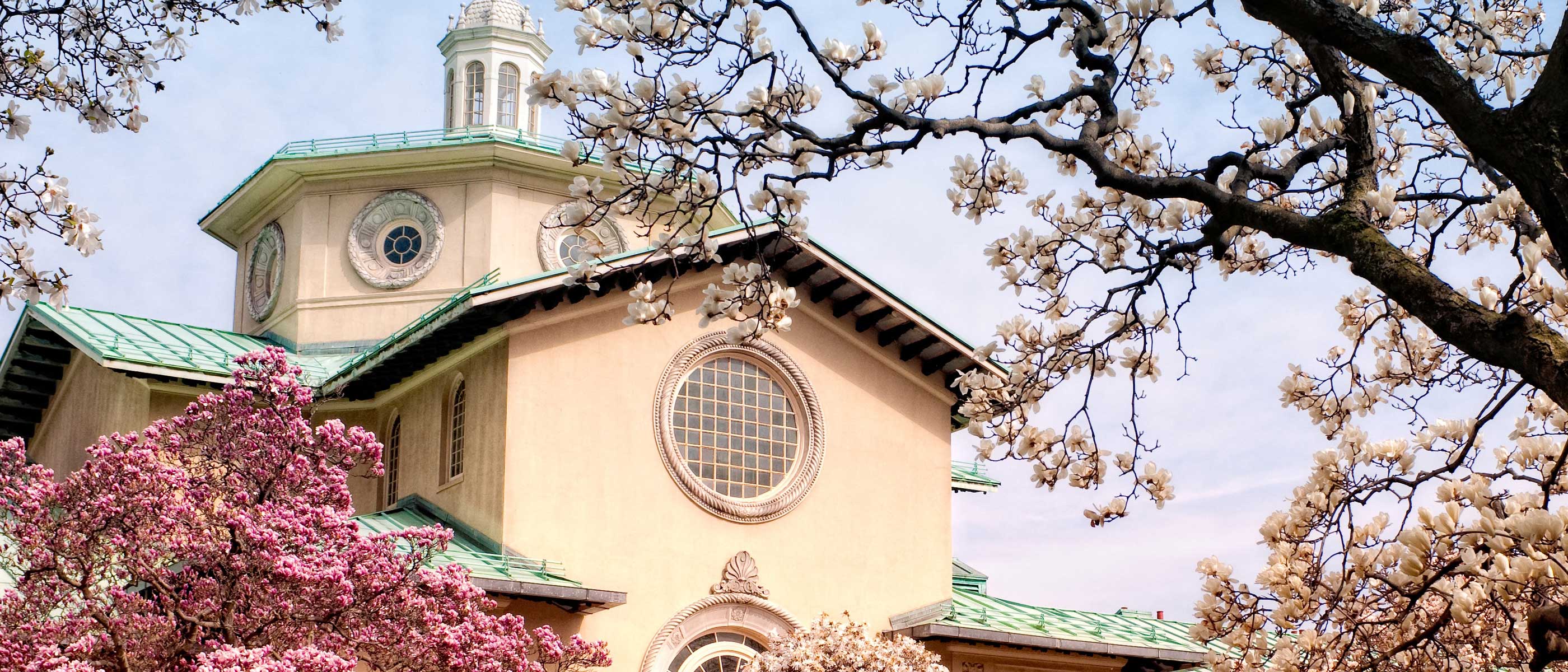


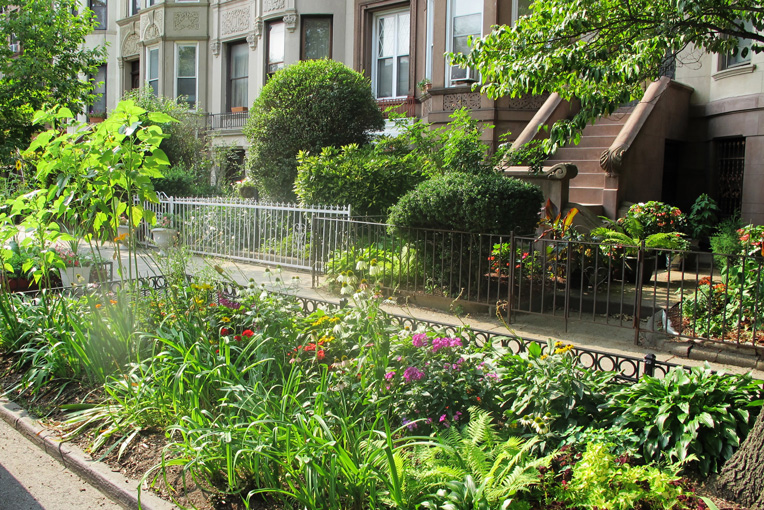


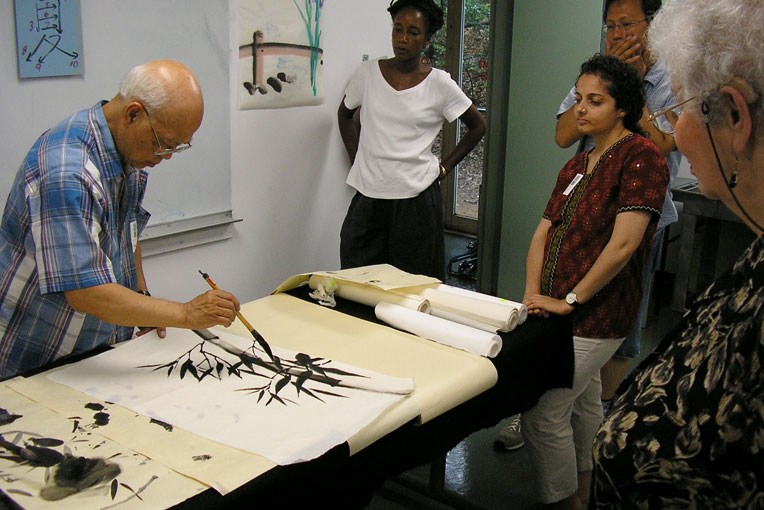


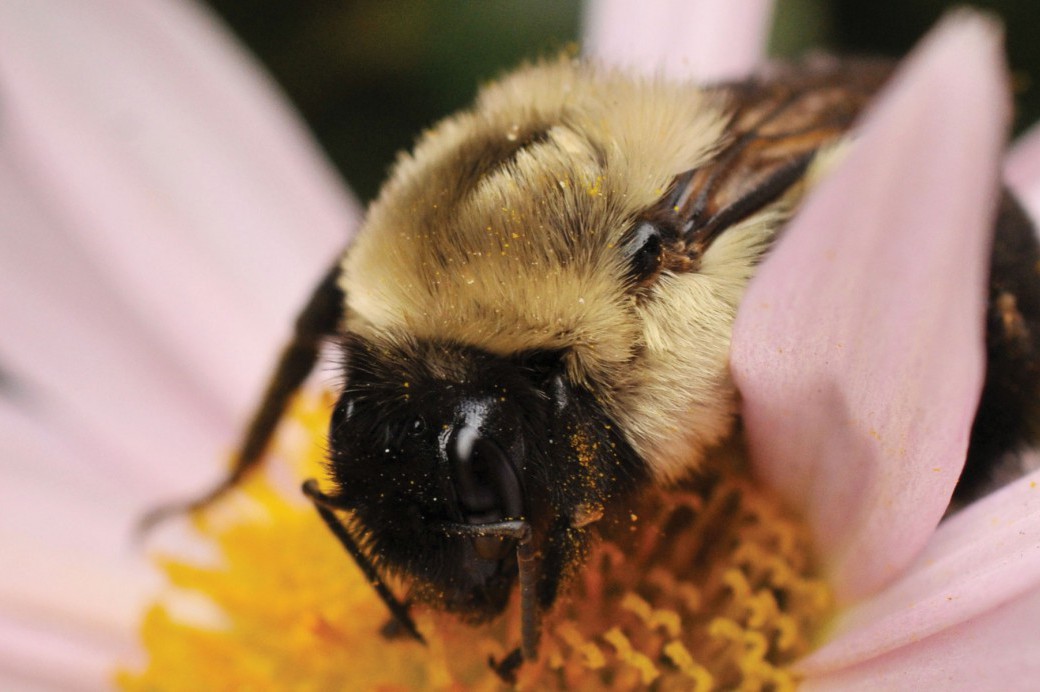


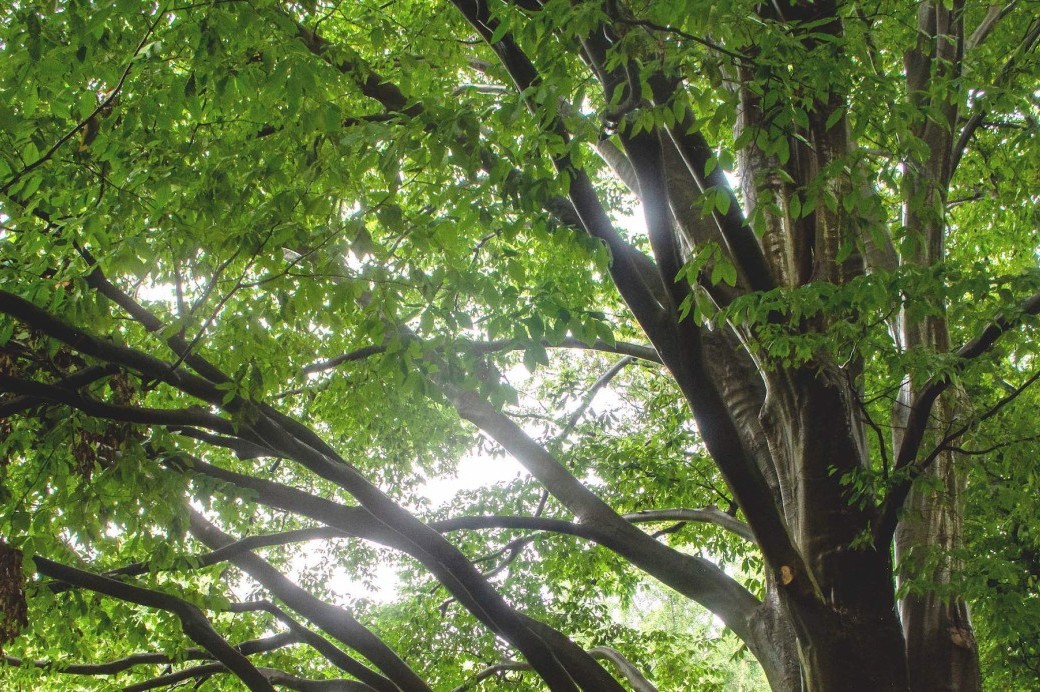





.jpg)


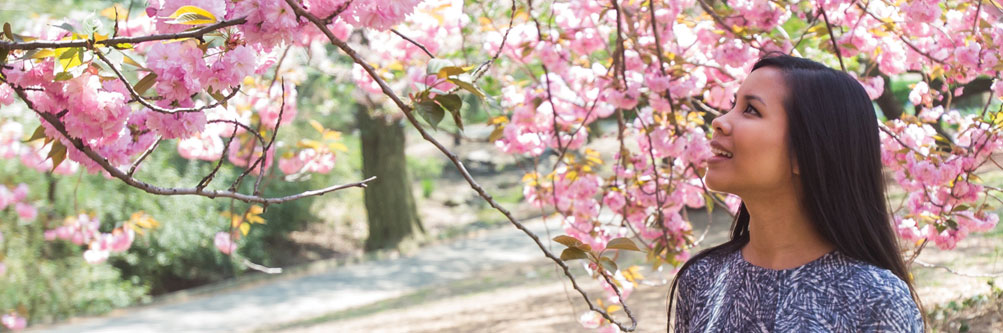











 Prebloom
 First Bloom
 Peak Bloom
 Post-Peak Bloom